To get rid of fleas in the house naturally, you have to work on two fronts at once: treat the animals living in the home and strip eggs, larvae and pupae out of carpets, bedding and upholstery. Vacuuming on a schedule, washing pet bedding at 120F, and a light dusting of food-grade diatomaceous earth in cracks and edges will get you most of the way there, and it takes 3 to 6 weeks of steady repetition because most of what is hiding in your floors right now is not an adult flea.
That timeline is the part most home fixes leave out. Fleas develop inside a protective cocoon that shrugs off sprays, vacuuming and even fogging, so a house that looked clean on Monday can wake you up with a fresh crop of itchy bites a week later. The plan below treats the pet, the floor and the timeline as one job.
Nothing in here involves a pesticide fogger, and nothing is meant to be sprayed straight onto an animal unless a veterinarian has already told you that product is safe for that species.
Table of Contents
- What You Need
- Step-by-Step
- 1. Confirm where the fleas are hiding
- 2. Treat the pet first
- 3. Vacuum carpets, furniture, and pet areas thoroughly
- 4. Wash bedding and removable covers
- 5. Clean hard floors and treat hiding places carefully
- 6. Prevent new fleas from returning
- Common Mistakes
- Treating only the room where you see fleas
- Using human medication on a pet
- Mixing cleaning products
- Leaving the vacuum contents inside
- Using essential oils indiscriminately
- Stopping prevention too early
- Tips for Keeping Fleas Away
- Frequently Asked Questions
- How long does it take to get rid of fleas in the house naturally?
- Do vinegar or essential oils really get rid of fleas?
- Can fleas live in the walls?
- Is treating the pet enough if my cat or dog never goes outside?
- When should I call a veterinarian about fleas?
- Conclusion
What You Need
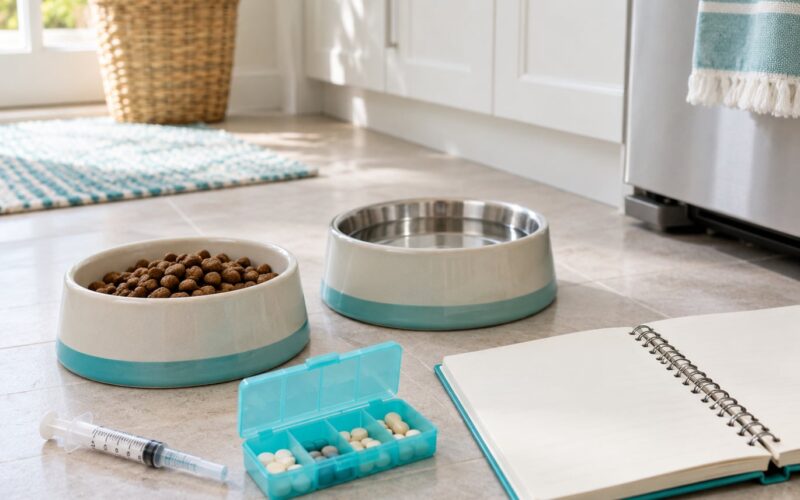
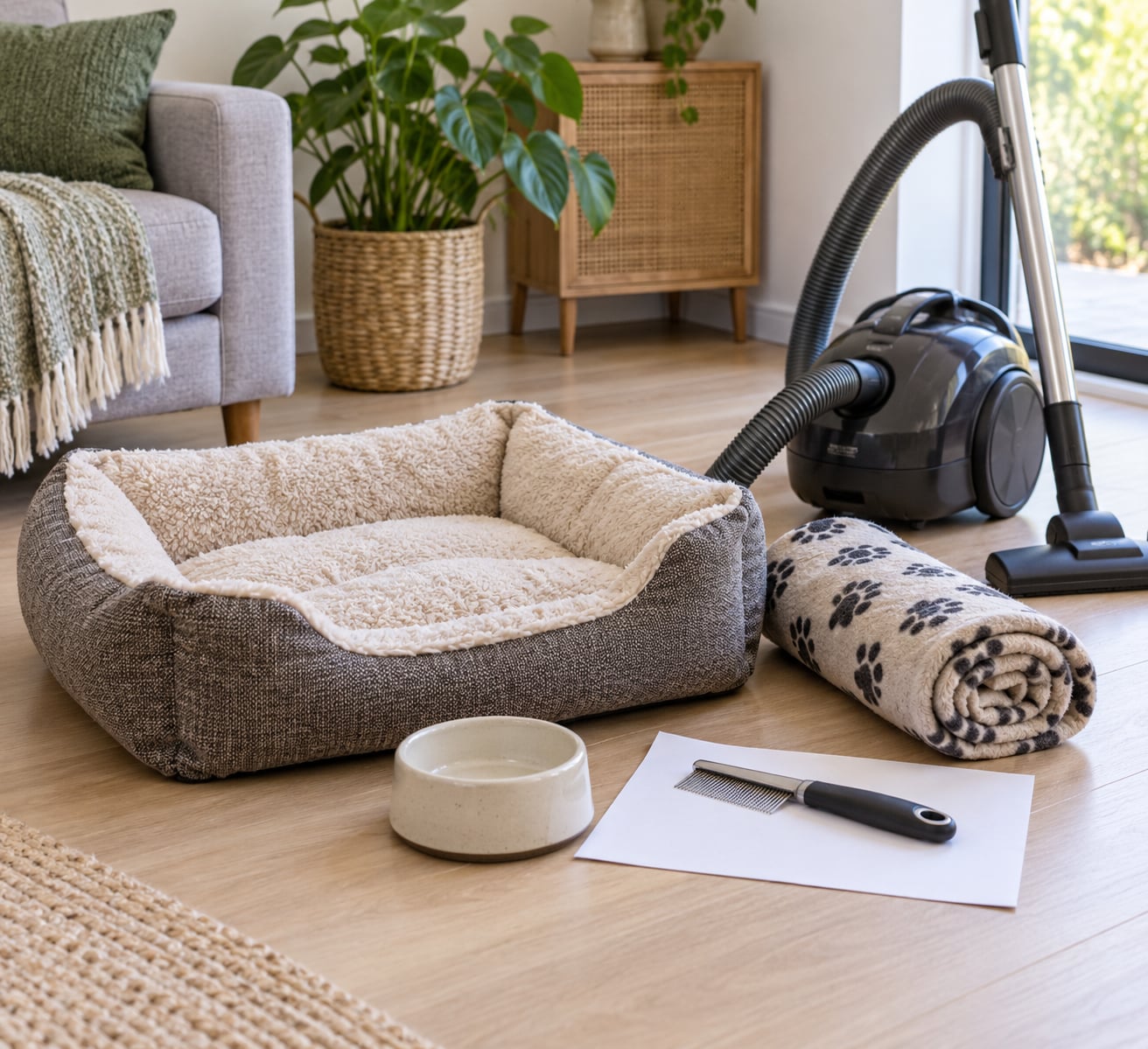
The supply list is short and mostly things you already own. What matters more than gear is having the pet treated on the same day you start on the floors.
- A vacuum with a hose attachment and a rotating brush bar. An upright or stick vacuum beats a cheap handheld for carpet work. The spinning brush agitates the carpet fibres and knocks loose things that are hiding in the pile.
- Heavy-duty sealed bags, or a vacuum whose canister you can seal shut. You are going to repeat this several times, so keep a stack.
- A flea comb with fine teeth, plus a few sheets of plain white paper and a damp cloth.
- Pet grooming basics: a pet-safe shampoo, towels, a brush, and a quiet spot your pet will tolerate being brushed in.
- Clean bedding and removable covers, including anything your pet sleeps on and any throws that touch the floor.
- A veterinarian-approved flea treatment for the pet if the animal is actively being bitten. This is the one item you cannot substitute with a household method.
- A dust mask and a broom if you plan to use food-grade diatomaceous earth. Garden-grade diatomaceous earth is not for indoor use, and the powder is an inhalation irritant even in the food-grade form.
Step-by-Step
Work through the steps in this order and repeat them rather than doing each one once. Flea eggs hatch on a variable schedule, so a single weekend of effort only removes the generation you can see.
1. Confirm where the fleas are hiding
Fleas spend nearly all of their immature life in your floors, not on your pet, which is why checking the animal alone often understates the problem. You are looking for black pepper-like specks, not just live insects.
Run the flea comb through the pet’s neck, lower back, tail base and groin, then tap what comes off onto the damp white paper. Black grit that spreads into a reddish halo when you add water is flea dirt, which is digested blood passing straight through the animal. That confirms an infestation even if you never see a moving flea.
On the home side, check in this order: the pet’s usual sleeping spot, edges where carpet meets baseboard, the underside of furniture legs, cracks in wooden floors, upholstery seams, and any rug the pet lies on. A single female can lay around 20 to 50 eggs a day, and one introduced flea can turn into a large infestation in roughly two months, so a light scattering today becomes a visible problem later if you stop.
2. Treat the pet first
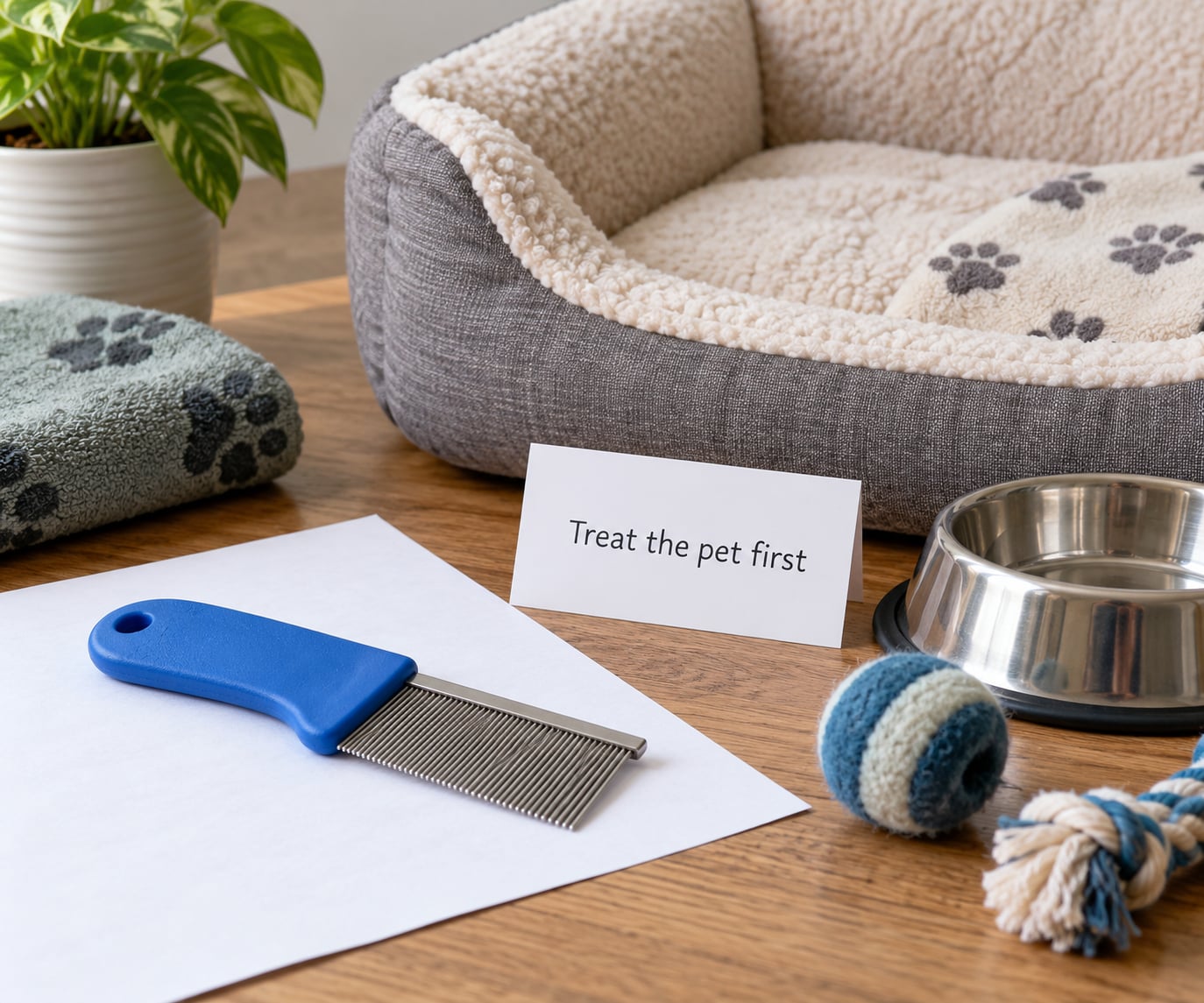
Untreated animals carry fleas in and re-seed the house while you clean, so the pet comes before the floors. Talk to your veterinarian about the right product for your animal’s species, weight and age, and follow the label schedule to the letter.
Two hard rules. Never apply a dog product to a cat, and never give an animal any human medication meant for people, including a human insect repellent. Several dog-only ingredients are severely toxic to cats, and it is not a matter of dose.
For very young kittens and puppies, or animals too small for standard products, ask your vet for a minimum-age-safe option rather than improvising. You can comb in the meantime and use a plain warm bath with a pet shampoo, then dry them properly.
3. Vacuum carpets, furniture, and pet areas thoroughly
Vacuuming is the single most useful thing you can do indoors, because it physically removes eggs, larvae, flea dirt and some adults before they finish their cycle. Slow passes beat fast ones, so give each strip at least two or three passes with the brush bar turned on.
Work from the back of the room forward, and go over the places fleas like most: along baseboards, under cushions, in upholstery seams, under furniture, behind doors, and in the deep pile where the pet lies. Carpet edges and the first two feet of wall are the areas people skip.
Here is the step that gets missed and undoes the work: seal the vacuum contents and take the bag or canister out of the house immediately. Fleas survive inside a bag sitting by the door and climb back out. Empty it into a sealed bag, tie it, and put it outside or in an outdoor bin.
While you are there, wipe hard surfaces near the floor with soapy water, because adult fleas drown readily in it. That part is a short-term hit on visible adults, not a solution for the eggs sitting in the carpet.
4. Wash bedding and removable covers
Heat is one of the few things that reliably destroys flea eggs and larvae on fabric, and it is faster than any spray you could mix yourself. Wash pet bedding, throws, blankets, removable covers and your own linens that the pet climbs on, using the hottest water the care label allows, ideally 120F or above.
Dry on high heat and make sure items stay in the dryer long enough to get genuinely hot. Air-drying leaves damp fabric that is a comfortable nursery for larvae.
Reducing clutter in the sleeping area matters as much as the wash. Fleas need undisturbed fibre to settle in, so a bare floor or a wipeable mat where the pet sleeps gives you far less surface to treat than a deep pile of covers and old blankets.
5. Clean hard floors and treat hiding places carefully
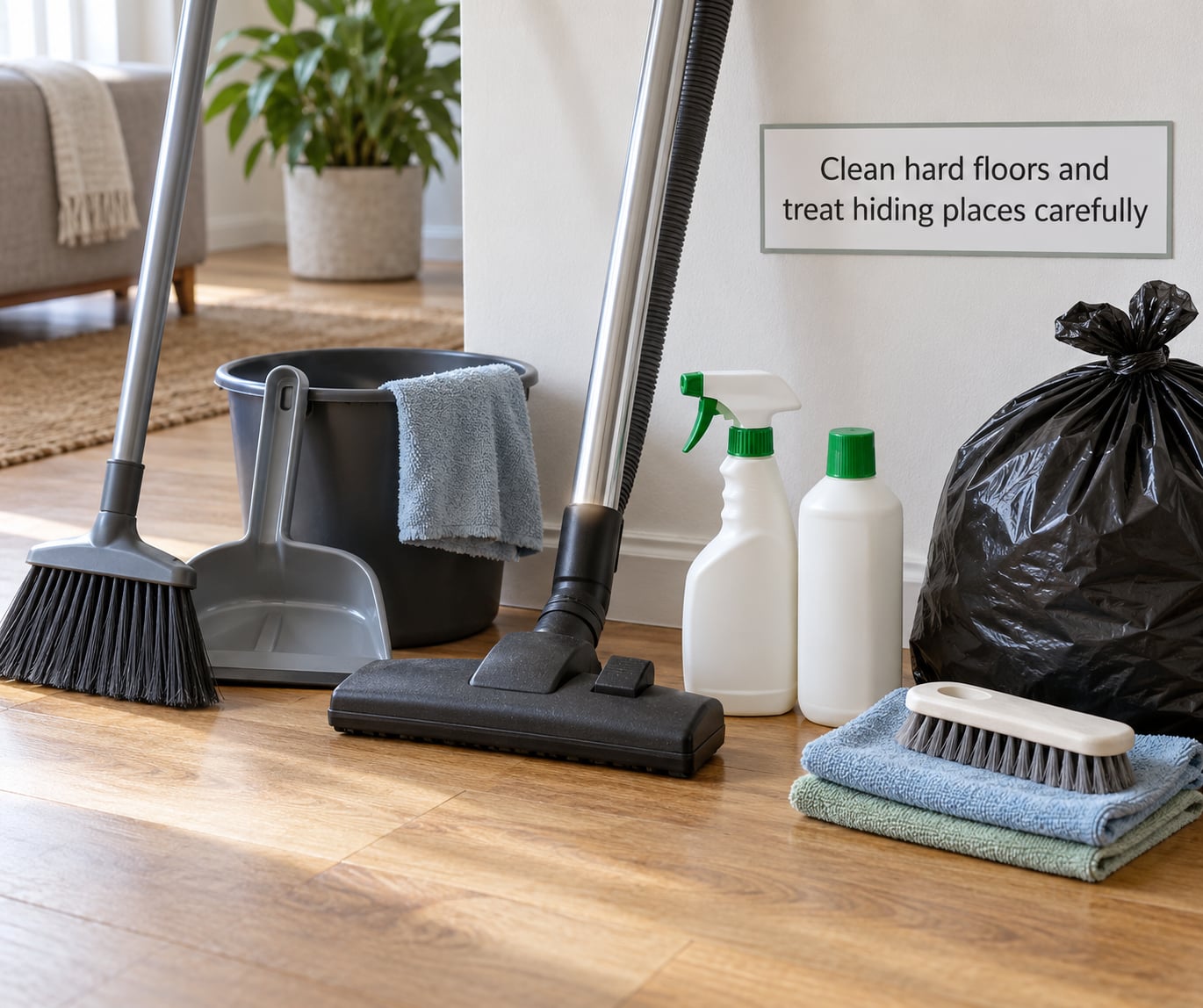
Sweep and mop hard floors, then work along baseboards, under cabinet toes, in floor cracks and around door frames. Pay attention to the pet’s water bowl spot and any rug edges taped down to the floor.
Where you want something more than water and elbow grease, food-grade diatomaceous earth is the practical option. It works by abrading the flea’s outer coating until it loses moisture, so it affects crawling stages rather than repelling them. Apply a thin, even dusting along baseboards, in cracks, under furniture edges and in fabric folds, wear a mask while you do it, leave it undisturbed for 24 to 48 hours, then vacuum it up completely.
It has honest limits. It does not reach fleas inside a cocoon, it does nothing to eggs buried deep in carpet pile, and it is not a substitute for vacuuming. If you have an aquarium, keep the powder away from the tank and out of the air supply, and never use garden-grade diatomaceous earth indoors or where a pet might lick it.
Two more behaviours do more than most people expect. Running a steam cleaner over carpets and upholstery kills fleas and larvae on contact through the heat, and while it will not clear a room on its own, it loosens what the vacuum missed. And outside, beneficial nematodes applied to shaded, moist lawn and shrub areas will reduce the outdoor population that keeps re-seeding the house, as long as you keep the soil damp for a couple of days afterwards.
6. Prevent new fleas from returning
Prevention is the stage most people skip, and it is the one that decides whether this works. Keep vacuuming at least twice a week, ideally daily for the first few weeks, and keep sealing the bag and taking it out.
Wash pet bedding on a fixed schedule, and groom or comb your pet regularly so you notice new bites early. Follow the dosing schedule your veterinarian gave you rather than stopping as soon as the scratching stops.
Check the places people forget: the car upholstery and footwells, pet carriers, cat trees and scratching posts, the dog’s bed, and any second-hand furniture or rugs brought in recently. Fleas do not need an outdoor life to survive, and heated indoor spaces in 2026 can carry them year-round, so a season indoors is not a season off.
Set a final checkpoint about 30 days out. Sit on the floor and comb the pet over white paper, then vacuum a small patch of carpet and check the debris. If the paper test is clean and you are not being bitten at ankle height when you walk into a room, the infestation is finished. If it is not clean, you still have a generation in the floor, and you repeat rather than escalate.
Common Mistakes
These are the errors that show up again and again, and each one has a straight fix.
Treating only the room where you see fleas
Fleas move through the whole home on the pet and on your clothing, so a spot-clean in the living room buys you a few quiet days and then the bites resume. Vacuum every room the pet enters, plus the car and any covered indoor play structure.
Using human medication on a pet
Human insect repellents and over-the-counter flea remedies are made for people, not animals, and some are dangerous to cats and small dogs. Ask a veterinarian for a product matched to species, age and weight.
Mixing cleaning products
Bleach, vinegar, ammonia and essential-oil sprays must never be combined. The vapour byproducts of bleach mixed with vinegar or ammonia can injure people and animals, and the result is still not a better flea treatment.
Leaving the vacuum contents inside
An open bag or canister by the door is an incubator, not a disposal. Seal it, tie it, and get it outside every single time, including during follow-up passes.
Using essential oils indiscriminately
Tea tree oil, citrus oils, clove oil, eucalyptus and pennyroyal are toxic to cats and dogs when absorbed or ingested, and a product labelled cat-safe can still list peppermint or clove as an active ingredient. Never diffuse them in a home with pets, and never put them on skin.
The question about scents comes up constantly, so it is worth answering plainly: no scent reliably keeps fleas away. Cedar and cedarwood have mild repellent activity, and lemongrass or peppermint are usually tolerated by people, but nothing in that list protects a pet or a carpet, and several items are outright dangerous for cats.
Stopping prevention too early
The last fleas you will have are the ones hatching out of cocoons that were already there when you started. If you stop vacuuming and stop prevention in the second week, they emerge in week four and the whole thing looks like a failure.
Tips for Keeping Fleas Away
A few habits do most of the long-term work.
- Vacuum on a fixed day each week, even when nothing is visible, and treat the carpet edges every time.
- Wash pet bedding every week or two, and keep one spare set so you never have to skip it while a load is drying.
- Comb and brush your pet weekly, and add a quick white-paper check whenever the season warms up.
- Inspect any new animal before it comes inside, and treat or isolate if it came from a home, shelter or boarding kennel with a known problem.
- Check car seats and footwells regularly, especially after dog-park trips or trips to a friend who has pets.
- Keep the preventive treatment on a fixed schedule all year rather than only when you see fleas.
Call a veterinarian if your pet is scratching constantly, has red or crusty skin along its back and tail base, is chewing at its feet, or seems tired or pale. Heavy infestations can cause anaemia in small animals, and a long scratching episode often turns into a skin infection. That is a medical problem, not a cleaning problem.
Call a pest professional instead of repeating the home routine if you see fleas in several rooms, there is no measurable improvement after 7 to 10 days of steady vacuuming, or there are babies, elderly residents or fish tanks in the home. Also be straight with the technician about what you have already used, so they are not repeating a treatment that failed.
Frequently Asked Questions
How long does it take to get rid of fleas in the house naturally?
Expect 3 to 6 weeks for a normal home infestation, counting from the day you start. Adults on the pet disappear within days, but eggs, larvae and pupae already in carpets and bedding keep hatching for weeks. If you are still seeing fleas past the 7 to 10 day mark without any reduction, something in the routine is missing.
Do vinegar or essential oils really get rid of fleas?
Not reliably. Vinegar does not kill fleas or eggs, and applying it to skin can dry out and damage a pet’s coat and skin. Essential oils such as tea tree, citrus, clove, eucalyptus and pennyroyal are toxic to cats and dogs when absorbed or licked, and pet-safe labels often hide peppermint or clove as active ingredients. Keep both off your pet and out of the home.
Can fleas live in the walls?
They are not usually inside the wall cavity, but they are absolutely in the places built into your walls: the gap where carpet meets baseboard, cracks in wood flooring, under skirting boards, behind appliances and inside wall-to-wall upholstery. That 10 cm strip around the base of every room is one of the most heavily infested areas in a typical home.
Is treating the pet enough if my cat or dog never goes outside?
No. Indoor-only pets still pick fleas up from a neighbour’s pet, a visitor’s dog, second-hand furniture, a cat tree or a carrier, and their own coat carries new fleas in from those places. More importantly, the pet is the host the existing eggs, larvae and pupae in your floors depend on, so treating the floors without treating the animal never breaks the cycle.
When should I call a veterinarian about fleas?
Call if your pet is scratching constantly, has red, crusty or thickened skin along the back and tail base, chews at its feet, or seems unusually tired or pale. Untreated infestations can cause anaemia in kittens, puppies and small animals, and open scratches from scratching often turn into a skin infection. Ask about a preventive product at the same time, so the pet stops re-seeding the house.
Conclusion
Start with the first three actions: confirm where the fleas are actually living, get every pet in the home onto a veterinarian-approved treatment, then vacuum every room thoroughly and seal the contents out of the house. From there it is repetition, not extra products. Wash bedding at 120F or hotter, dust food-grade diatomaceous earth into baseboards and cracks for a day or two before vacuuming it up, and keep prevention running for the full 3 to 6 weeks so the last batch of pupae has nothing left to feed on. Consistency beats intensity, and a professional visit is the sensible call when several rooms are involved or nothing has shifted after a solid week.