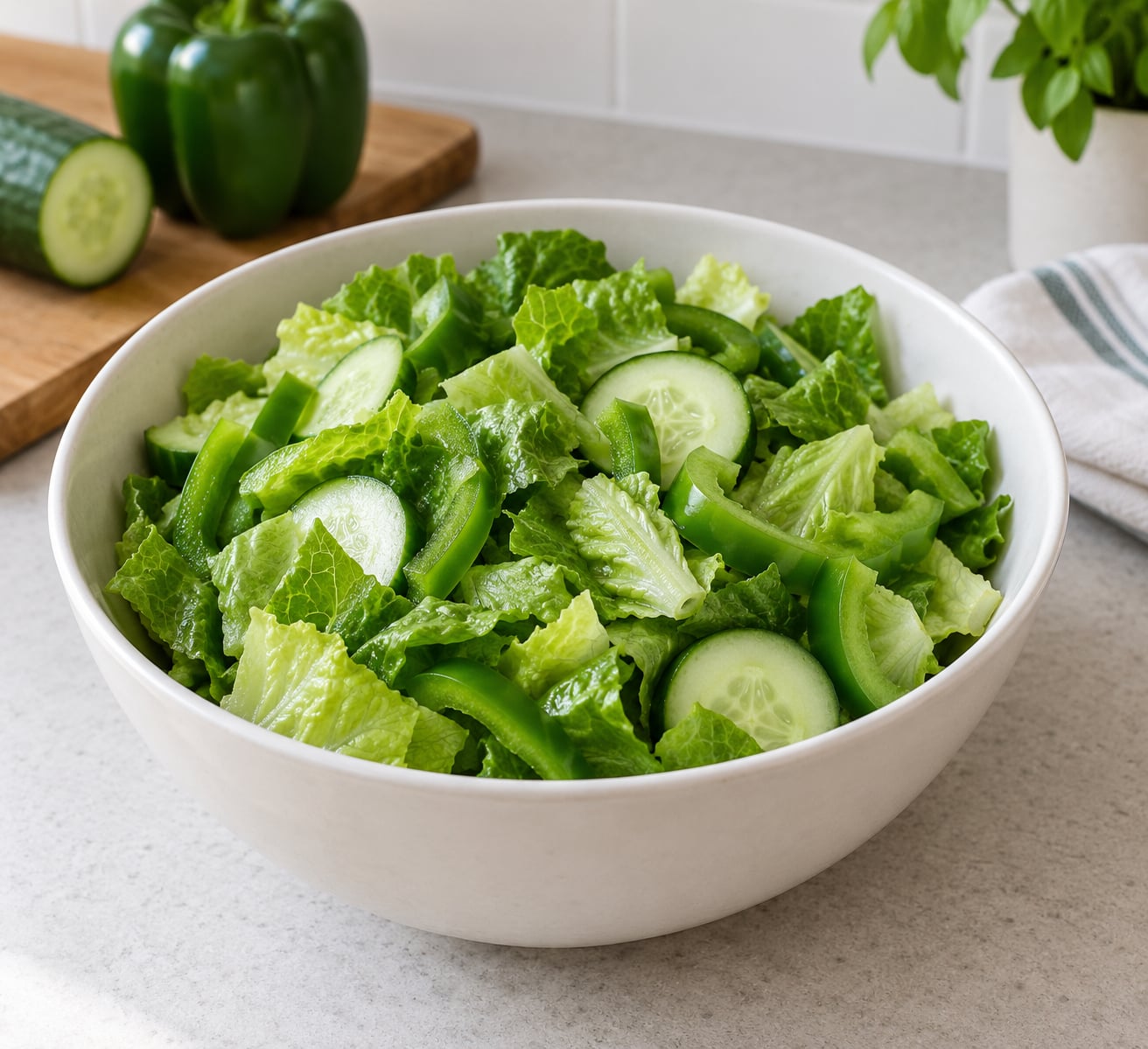
Guinea pigs can safely eat about 1 to 1.5 cups of fresh vegetables per pig per day, split into one or two servings. The best daily staples are bell pepper, romaine and other leafy lettuces, cucumber, and cilantro, with high-calcium greens like kale and parsley kept to a weekly treat. Grass hay stays unlimited alongside that.
That one-cup figure sounds vague until you have a pile of lettuce in front of you, so this guide sorts everything into three buckets: what vegetables guinea pigs can eat daily, what to limit, and what to leave out entirely. The pigs that stay the most regular are rarely the ones eating the biggest portions. They are the ones eating the widest variety.
Table of Contents
- What Vegetables Guinea Pigs Can Eat Daily?
- Best Everyday Vegetables for Guinea Pigs
- Leafy Greens and Crunchy Vegetables
- How Much Vegetable Food Should a Guinea Pig Eat?
- How to Prepare and Introduce Vegetables Safely
- Healthy Vegetable Variety and Weekly Rotation
- Vegetables to Avoid or Give Only Rarely
- Signs a Vegetable May Not Agree with Your Guinea Pig
- Frequently Asked Questions
- Can guinea pigs eat vegetables every day?
- How many vegetables should a guinea pig eat per day?
- What vegetables are best for guinea pigs?
- Can guinea pigs eat cucumber, carrots and bell peppers every day?
- What vegetables are toxic to guinea pigs?
- Conclusion
What Vegetables Guinea Pigs Can Eat Daily?
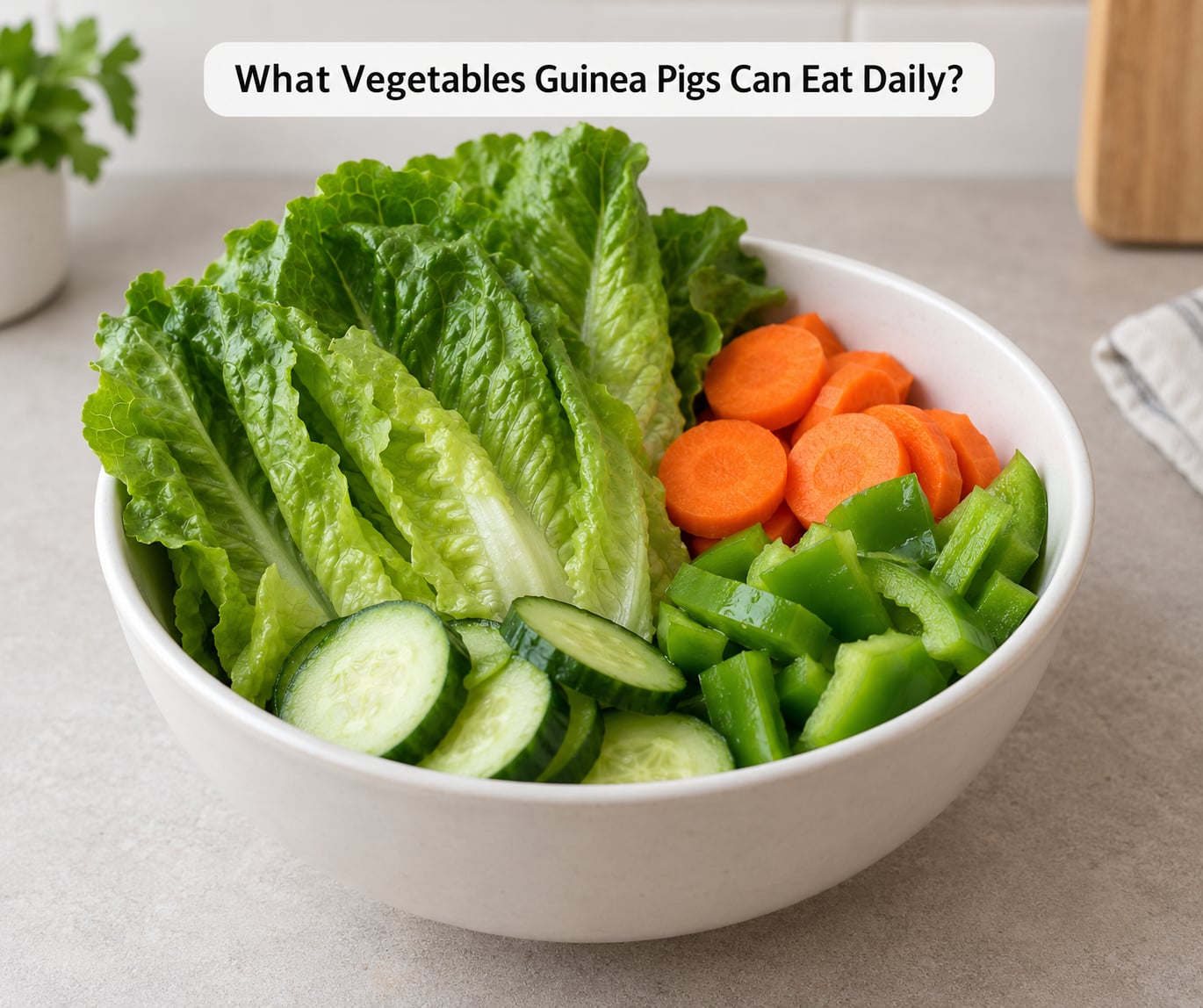
Guinea pigs can eat roughly 1 to 1.5 cups of fresh vegetables each day, and almost all of that should be low in calcium and low in sugar. A quarter of a red or green bell pepper, two or three romaine leaves, and a few slices of cucumber will do more for a pig than a mountain of one vegetable.
Because guinea pigs cannot make their own vitamin C, fresh vegetables are the main natural source alongside fortified pellets. Without enough, scurvy sets in as swollen joints, poor coat and bleeding gums. Veg also adds water and moisture, which matters for animals whose whole diet is dry hay.
The rest of the daily ration comes from unlimited grass hay, a plain guinea pig pellet, and constant fresh water. Hay should make up the bulk of every meal because it wears the teeth down and keeps the gut moving. Veg is the supplement, not the meal.
Best Everyday Vegetables for Guinea Pigs
These are the vegetables you can offer day after day without worrying about calcium load or gas. Most owners build a daily salad out of two or three of them.
- Bell pepper (capsicum) — a quarter of a pepper per pig. Red and green are both fine and yellow is the sweetest option for a reluctant eater. It is the single best vegetable source of vitamin C and it is low in calcium.
- Romaine lettuce (cos) — two or three outer leaves daily. Romaine is the standard base green because it is crisp, watery and low in calcium. Skip iceberg lettuce, which is nutritionally poor.
- Green leaf and red leaf lettuce — one or two leaves. Softer than romaine, so good for seniors and young pigs.
- Butter lettuce (bibb) — one leaf. Mild and sweet, useful for introducing a new taste.
- Cucumber — a few slices, skin on. Mostly water, so it hydrates without adding much calcium. It causes wind in a small minority of pigs, so watch the first few times.
- Cilantro (coriander) — a small handful. Owners consistently report it as the herb that even fussy pigs will eat, which makes it a useful gateway to other greens.
- Zucchini (courgette) — a slice or two, skin on. Mild and low in sugar.
Leafy Greens and Crunchy Vegetables
Rotate leafy greens and crunchy vegetables through the week so no single item dominates. A simple Monday-to-Sunday pattern works: romaine on Monday, cucumber and bell pepper on Tuesday, red leaf on Wednesday, cilantro on Thursday, romaine again on Friday, cucumber and zucchini on Saturday, butter lettuce to finish the week.
Carrot sits in a different category. It is safe, but it is sugary, and pigs that get daily carrot often refuse everything else. Treat it as a reward chopped small, not as a base vegetable.
| UK name | US name | Note |
|---|---|---|
| Cos lettuce | Romaine | Daily base green |
| Spring greens | Collard | Limit, high calcium |
| Courgette | Zucchini | Daily, skin on |
| Coriander | Cilantro | Daily, small handful |
| Rocket | Arugula | Limit, oxalates |
| Red pepper | Red bell pepper | Daily, vitamin C |
| Autumn greens | Mustard greens | Limit, spicy |
| Watercress | Watercress | Daily, small amount |
| Turnip greens | Turnip greens | Limit, calcium |
| Squash | Butternut or other | Limit, sweet |
Two regional naming traps catch new owners out. UK shops sell courgette, rocket and coriander; US shops sell zucchini, arugula and cilantro. Same vegetables, different words.
How Much Vegetable Food Should a Guinea Pig Eat?
Use about one cup of chopped vegetables per adult pig per day, split morning and evening so the pig has something to look forward to, and keep the total under about 10 percent of daily calories. A pig around 2 to 3 pounds eats roughly 1 cup; larger pigs can handle closer to 1.5 cups. Weight alone is a rough guide, so adjust if the pig is gaining or losing.
Baby pigs under about eight weeks need smaller amounts, introduced gradually, because their gut is still developing. Seniors and pregnant sows do well on the leafy end of the list.
One phrase you will meet in feeding forums is the 3-3-3 rule. There is no single official definition, but most people mean roughly three vegetables, rotated across three days, in small portions. Treat it as a mental habit for variety rather than a precise nutritional formula.
How to Prepare and Introduce Vegetables Safely
Wash everything under cool running water and peel anything with a waxy or sprayed surface, such as carrot and cucumber skin if you are unsure of the source. Cut into pieces small enough to eat easily — about the size of a fingernail — and remove hard seeds and pips.
Serve vegetables at room temperature or slightly cool. Very cold or refrigerated produce taken straight from the fridge can upset the gut. Remove leftovers within a few hours of the morning serving so nothing sits in a warm cage overnight.
Add one new vegetable at a time and give it three to four days before trying the next:
- Day 1 — one small piece, about the size of a thumbnail.
- Day 2 — two pieces, watching droppings overnight.
- Day 3 — a normal small serving.
- Day 4 — add the next vegetable at the same small size.
- Days 5 to 7 — build up both to full portion only if droppings stayed firm.
If droppings soften at any point, drop back to the previous portion size and stay there for two more days before moving on. Never introduce two new foods on the same day, because then you cannot tell which one caused the problem.
Healthy Vegetable Variety and Weekly Rotation
Variety is what keeps a guinea pig’s gut and teeth healthy over years, and it makes boredom less likely. Rotate across three axes: texture (soft leaf, crisp pepper, watery cucumber), flavour (mild lettuce, sharp herbs) and colour (green, red, yellow).
The practical rule is relative calcium. Vegetables high in calcium such as parsley, kale, dandelion greens, spinach, turnip greens, beetroot leaves and carrot tops stay occasional, and never make up more than about a tenth of the daily vegetable total.
| Vegetable | Calcium level | Suggested frequency |
|---|---|---|
| Romaine and leaf lettuce | Low | Daily |
| Bell pepper | Low | Daily |
| Cucumber | Low | Daily |
| Cilantro | Low | Daily |
| Zucchini | Low | Daily |
| Carrot | Medium | 2 to 4 times a week |
| Celery | Medium | 2 to 4 times a week |
| Snap or green peas | Medium | 2 to 4 times a week |
| Parsley | High | Once a week |
| Kale | High | Once a week |
| Spinach | High | Once a week |
| Dandelion and carrot tops | High | Once a week |
| Broccoli and cauliflower | Medium, gas forming | Small piece, once a week |
| Tomato (ripe fruit only) | Low, acidic | Once or twice a week |
| Corn kernels | Starchy, sugary | Occasional treat only |
Excess calcium is the concern behind bladder stones, which guinea pigs are prone to. Urinary sludge or white, chalky urine is a signal to talk to an exotic vet about the whole diet, not just the vegetables.
On the gas question, sources genuinely disagree. Some rescue guides say broccoli, cauliflower, cabbage and Brussels sprouts should never be offered because of wind and bloat; others say small amounts a week are fine. The honest answer is that both are defensible — small amounts are tolerated by many pigs, but these vegetables produce gas that a sensitive gut can turn into painful bloat. If your pig has a history of digestive trouble, skip them. If it does not, a small piece once a week is a reasonable test, introduced gradually like anything new.
Vegetables to Avoid or Give Only Rarely
Some vegetables are genuinely unsafe. Alliums — onion, garlic, leeks, chives and spring onion — can damage red blood cells and must never be fed. Avocado carries persin, which is toxic. Potatoes, along with tomato leaves and stems, are nightshades and unsuitable, even though the ripe tomato fruit itself is an occasional treat.
Also stay away from rhubarb (high oxalates, and the leaves are toxic), mushrooms of any kind, and dried pulses such as lentils and beans. Corn and peas are starchy and sugary, so they work as occasional treats rather than veg. Iceberg lettuce offers almost no nutrition and can upset digestion. Frozen vegetables lose both texture and vitamin C, so offer raw fresh produce instead.
Common swaps: replace potato with sweet potato in tiny occasional pieces, replace corn with a piece of bell pepper for a satisfying crunch, and replace iceberg with romaine, which looks similar and is far better for the pig.
Signs a Vegetable May Not Agree with Your Guinea Pig
Guinea pigs hide illness, so watch droppings more than you watch the animal. Normal droppings are firm oval pellets. Soft, misshapen or sticky droppings mean the gut is reacting to something, usually a new food, too much of one vegetable, or a sudden switch.
- Soft droppings or diarrhoea — remove the new vegetable, go back to the previous safe food, and keep hay and water available. Contact a vet if soft droppings continue past 24 hours.
- A hard, swollen belly — wind or a food blockage. Stop veg entirely and offer only hay. A distended abdomen is urgent; contact a vet the same day.
- No droppings for hours — gut stasis is a serious emergency in guinea pigs. Seek veterinary care without delay.
- Reduced eating, lethargy or hiding — a pig that stops eating needs to be seen quickly, because even a day of not eating is serious.
- Squeaking, straining or hunched posture while toileting — possible urinary or digestive pain. Book a vet visit.
Never give human medication to a guinea pig without veterinary instruction. If you suspect a food reaction, photograph the droppings before cleaning the cage; it is genuinely useful evidence for the vet.
Frequently Asked Questions
Can guinea pigs eat vegetables every day?
Yes. Most healthy guinea pigs can eat fresh vegetables every day, and daily veg is where they get vitamin C, which they cannot produce themselves. Keep the total near 1 to 1.5 cups per pig, choose low-calcium staples such as bell pepper and romaine, and add anything new over several days.
How many vegetables should a guinea pig eat per day?
Around one cup of chopped vegetables per adult pig per day, split into two servings, is the usual guideline. Larger pigs may manage 1.5 cups. Fresh vegetables should stay near 10 percent of daily calories, with unlimited grass hay making up the rest of the intake.
What vegetables are best for guinea pigs?
Bell pepper, romaine and other leafy lettuces, cucumber, cilantro and zucchini are the everyday favourites. Bell pepper is the strongest vitamin C source, romaine is the best low-calcium base green, and cilantro is usually accepted even by picky eaters. Rotate at least two or three daily.
Can guinea pigs eat cucumber, carrots and bell peppers every day?
Cucumber and bell pepper can be daily, since both are low in calcium and sugar. Carrot is safe but higher in sugar, so most owners offer it two to four times a week as a chopped treat. Too much carrot daily leads to weight gain and refusal of other vegetables.
What vegetables are toxic to guinea pigs?
Onion, garlic, leeks and chives can damage red blood cells, avocado contains persin, and potato and tomato leaves are toxic nightshade parts. Rhubarb leaves, mushrooms, dried beans and chocolate should also be avoided. When in doubt, keep the item out and ask your vet.
Conclusion
The safest place to start is one familiar vegetable in a small portion — a quarter of a bell pepper or two romaine leaves — while grass hay stays unlimited and fresh water is always there. From there, add one new vegetable at a time over a week and watch the droppings closely, because that is the fastest signal that something does not agree with your guinea pig.