To dry a dog’s ears after swimming, towel the head and outer ear flaps first, then blot the canal opening with cotton gauze and let air circulate. It takes about five minutes and no special equipment. Add a dog-safe drying rinse only if your dog swims often or already gets gunky ears.
Water left in the ear is the single most common trigger for otitis externa, better known as swimmer’s ear. A dog’s ear canal is L-shaped, so water that gets in does not run back out. It sits at the bottom in a warm, damp pocket where yeast and bacteria multiply fast.
This guide is general home care, not a substitute for veterinary advice. If the ear looks painful, smells strong or produces colored discharge, call your vet rather than cleaning at home. Last reviewed 2026.
At a glance
- Towel the head and outer flaps first, so dripping water does not run back inward.
- Fold a gauze square and blot the canal opening. Never push anything past the opening.
- Hold the ear flap open for about 30 seconds to let air through the canal.
- A dog-labeled drying rinse is optional, and worth it for frequent swimmers.
- No cotton swabs, no alcohol, no hydrogen peroxide, no oil, no heat.
- Call a vet for odor, discharge, swelling, pain or moisture that returns the same day.
Table of Contents
- What You Need
- Step-by-Step: How to Dry a Dog’s Ears After Swimming
- 1. Calm your dog in a safe position
- 2. Gently wipe the outside of the ear
- 3. Absorb moisture and let air move through the canal
- 4. Check the ear before you leave the area
- Common Mistakes
- Frequently Asked Questions
- What can you put in a dog’s ear to dry it out?
- How long does it take for a dog’s ears to dry after swimming?
- Should I dry my dog’s ears after swimming?
- How do I keep water out of my dog’s ears when swimming?
- What kills yeast in a dog’s ears naturally?
- Will a dog’s ear infection go away by itself?
- Conclusion
What You Need
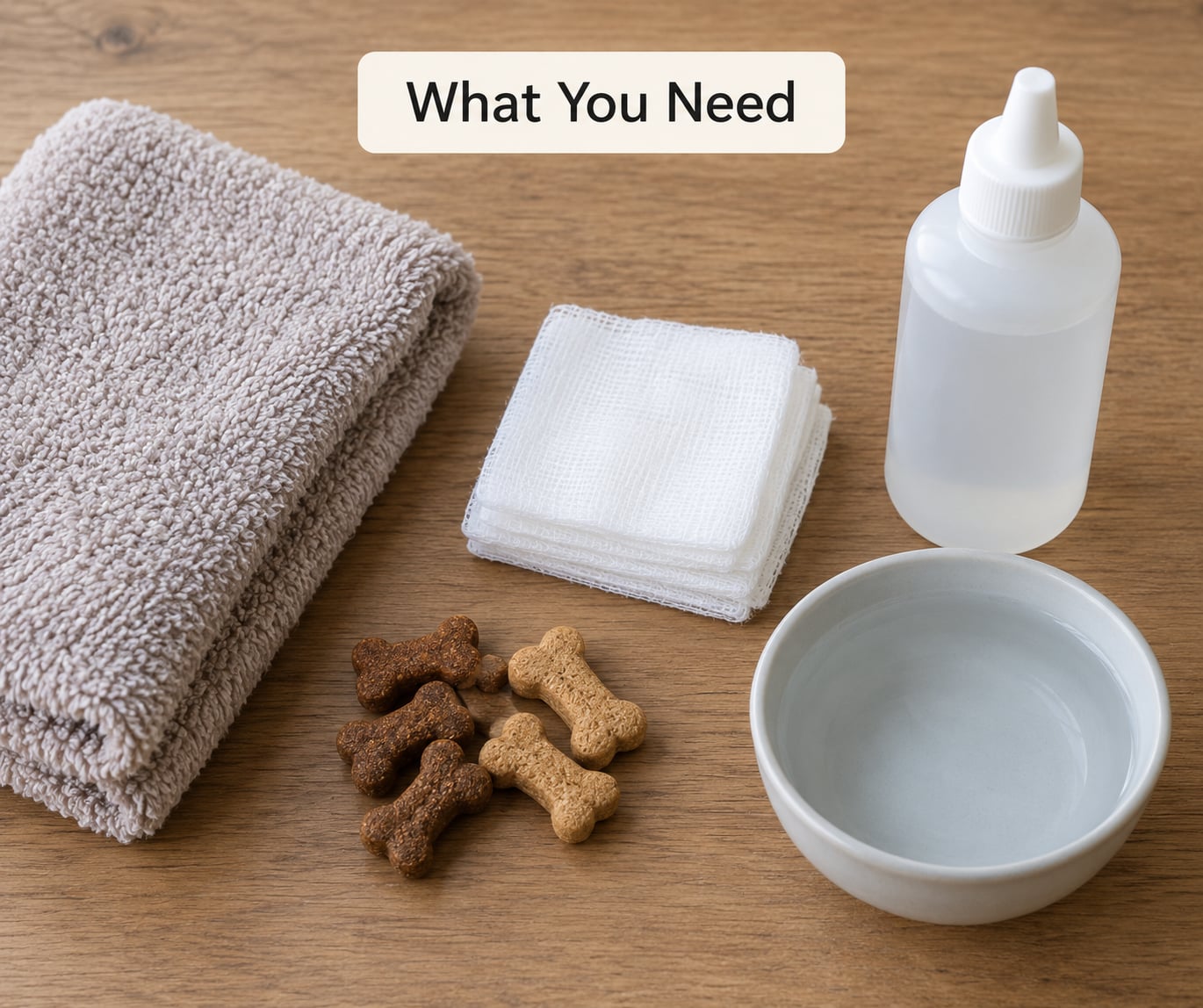
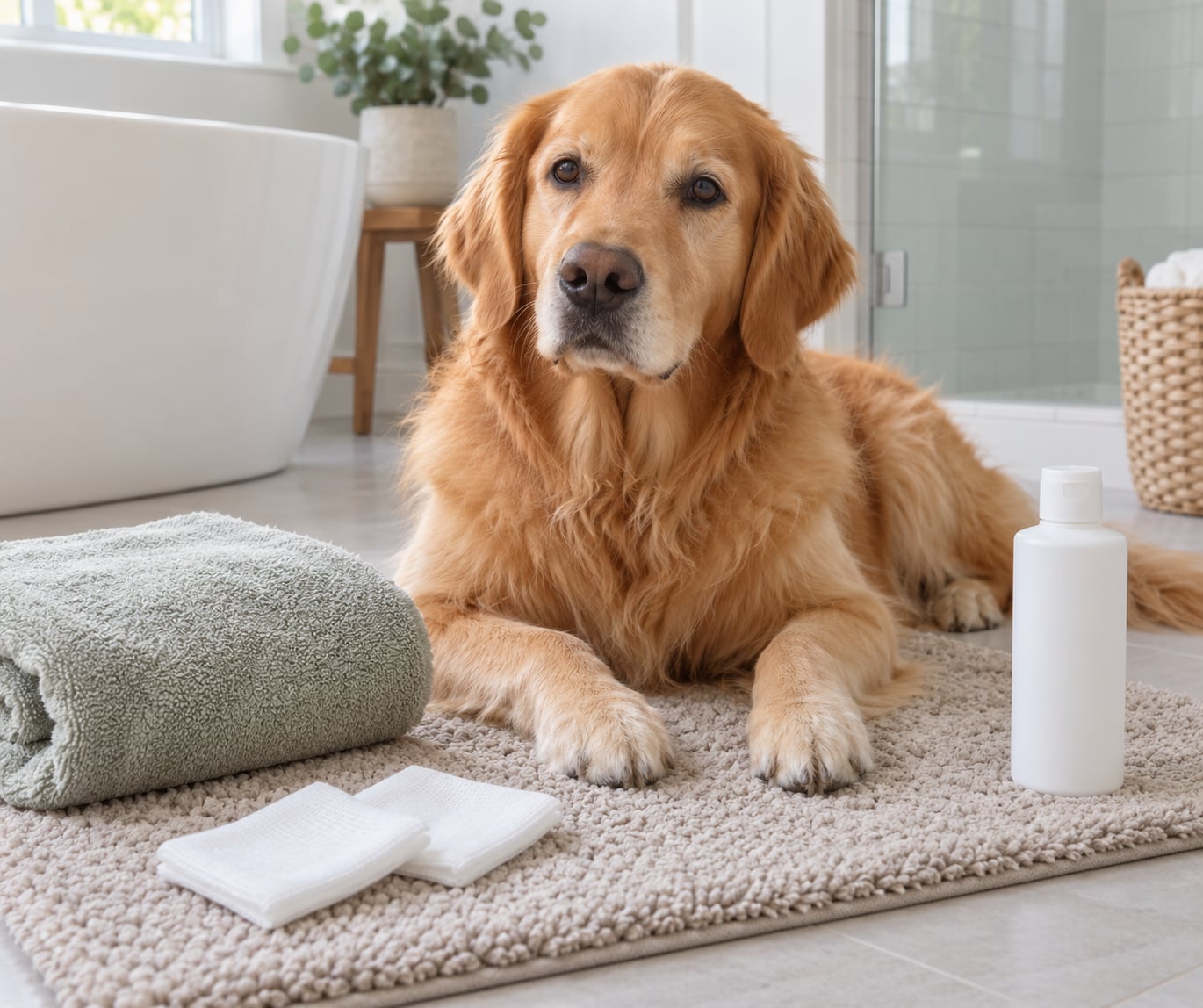
You need very little: something absorbent, something gentle to wipe with, and a way to keep your dog still for three minutes. Gather it before your dog gets out of the water, not after.
- A soft towel or microfiber cloth. Rubbing with a rough bath towel is the fastest way to make a wet ear angry.
- Cotton gauze squares or cotton balls. Flat gauze works better than a round ball because you can fold it into a thin edge that sits at the canal opening without going in.
- A dog-safe drying solution. Look for a plain drying agent or ear cleaner labeled for dogs. Never use anything made for human ears.
- Treats. Your dog’s entire cooperation in the next three minutes depends on what is in that bag.
- A quiet, well-lit space. A bathroom or a patch of carpet where your dog can stand comfortably and you can see the inside of the ear flap.
If you have a drying solution already, read the label before you open it. Some are meant for routine maintenance and some are medicated. Those are not interchangeable, and a medicated drop used on the wrong day does more harm than the water would have.
Step-by-Step: How to Dry a Dog’s Ears After Swimming
1. Calm your dog in a safe position
Stand your dog on a non-slip surface, or sit them between your legs, and reward them before you touch an ear. Calm first, then hands. A dog who is squirming and pinned down will tense the neck muscles, which pushes water deeper, so the goal is a relaxed dog rather than a restrained one.
2. Gently wipe the outside of the ear
Lift the outer flap and blot visible water from the ear flap and the fur around it with a soft towel or cloth. Work downward and outward, always moving water away from the opening. Start with the head and top of the ears so any dripping water does not run straight back inside what you just dried.
3. Absorb moisture and let air move through the canal
Fold a clean gauze square, place it lightly at the canal opening, and gently squeeze the base of the ear so the fabric wicks up trapped water. Pull it out before it goes in past a fingertip, and repeat with a fresh square until it comes out dry. Then hold the flap open for 30 seconds or so while your dog stands still so air moves through the canal.
Avoid cotton swabs for the job. A dog’s ear canal bends at an angle and ends at the eardrum, so a swab pushes water and debris further in and can rupture that membrane. The whole point of the L-shape is that nothing you put in comes back out on its own.
Canal shape and coat type change the job. Poodles, Labradoodles and Bassets have dense hair in the canal that holds moisture like a wick and blocks airflow, so they need two or three fresh gauze squares and longer air time. Hound breeds with very floppy ears seal the canal shut while wet, and upright-eared dogs usually need only a quick blot.
What got in matters too. Chlorinated pool water leaves a film that rinses out cleanly, but lake and river water carry grit and plant debris that a towel will not remove and gauze can drag toward the opening. Ocean water dries on its own fastest of the three, though salt is irritating to broken skin, so blot salt water out rather than leaving it. If your dog swims in a stagnant pond or a green pool, treat that water as a risk and check the ear properly afterward.
4. Check the ear before you leave the area
Once you have what you think you have, look at the canal opening and the inner surface of the flap. Remaining dampness is fine for a few minutes, but redness, swelling, discharge, odor, scratching at the ear or a dog who pulls away from your hand are not. Moisture that returns the same day, or any of those signs, means a call to your vet.
Common Mistakes
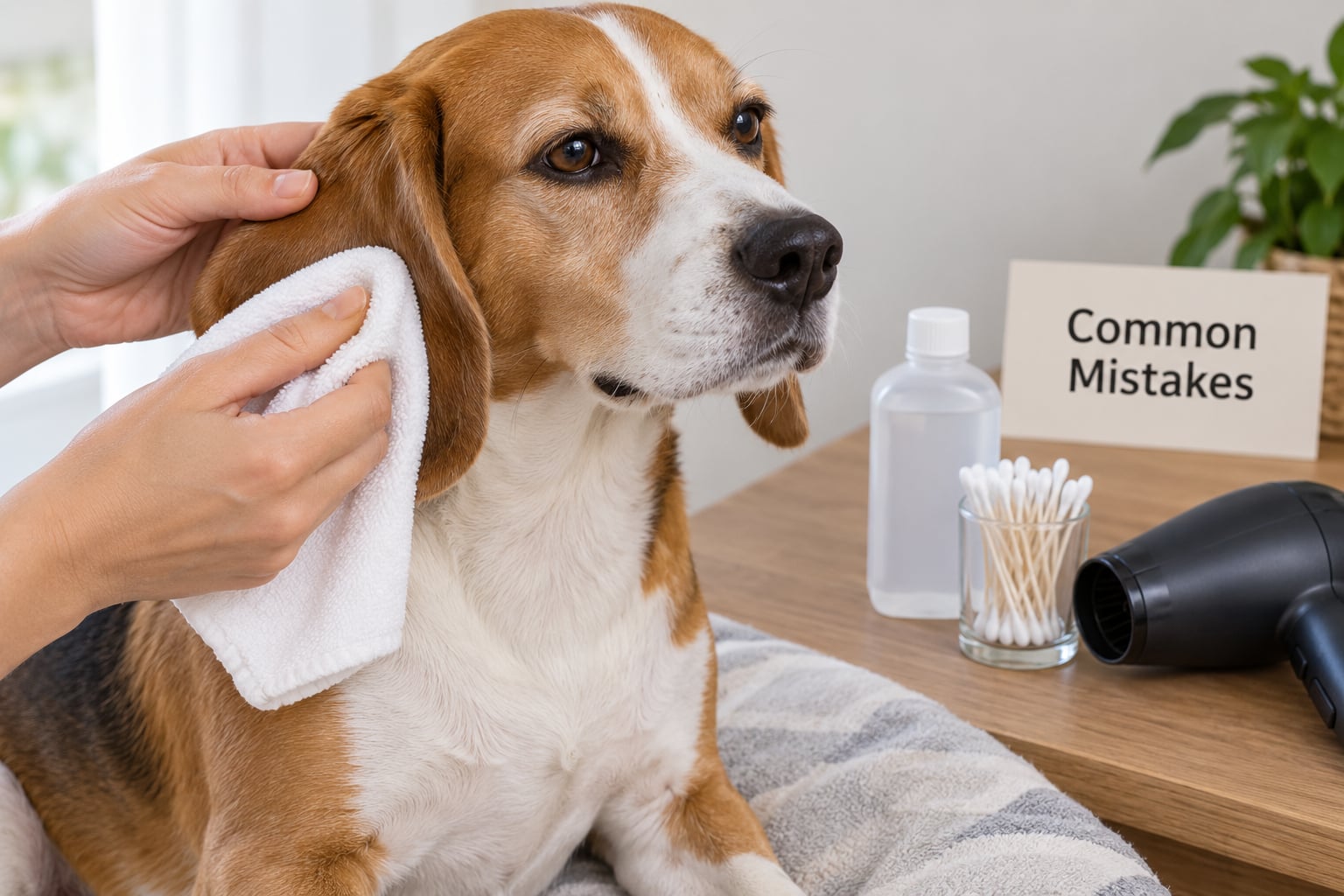
The fastest way to turn a wet ear into an infected ear is to use one of these. Each has a simple fix.
- Inserting cotton swabs into the canal. This pushes water past the narrow part of the canal where it gets trapped. Blot at the opening with folded gauze instead.
- Using human ear drops, alcohol or hydrogen peroxide. Human drops are formulated for a straight human canal and can irritate canine skin. Cornell’s Riney Canine Health Center lists alcohol and hydrogen peroxide among the things to keep out of a dog’s ear.
- Rubbing hard instead of blotting. Scrubbing a wet ear irritates the skin and usually spreads water around. Pat and press, then change to a drier part of the towel.
- Drying the whole ear with heat. Hair dryers on a warm or hot setting can scald thin ear skin, and a dryer held over the canal forces moisture inward. If you use one at all, keep it on cool, move it continuously, and hold it well away from the head.
- Waiting days because the dog seems fine. Owners often tell me the head shake seemed normal, then a week later the ear is dark, sore and smells sweet. Mild cases do not stay mild.
- Rinsing a sore ear at home. If the ear already hurts, a cleaner can sting and the dog may shake hard enough to spray the solution everywhere. Owners on r/Rottweiler describe exactly this after a bath plus drops. Vet-prescribed drops are placed by hand with the dog still; home flushing is not the same thing.
One habit worth adding to that list: a squeeze of the ear base takes about 15 seconds, and owners report dogs shaking their heads the instant any liquid lands. Have a towel under the muzzle and a treat in the other hand before the drop goes in.
Frequently Asked Questions
What can you put in a dog’s ear to dry it out?
Folded cotton gauze at the canal opening, blotted not pushed, works for most dogs after a swim. For dogs who swim often or get recurring ear problems, a dog-labeled drying rinse is the usual answer. Apply it, massage the base for 15 to 20 seconds, then let your dog shake. Never use alcohol, hydrogen peroxide, oil or human ear drops in a dog’s ear.
How long does it take for a dog’s ears to dry after swimming?
The outer ear dries in a couple of minutes with a towel, and the canal usually needs 15 to 30 minutes of open air. Densely haired canals and floppy ears take longer, sometimes an hour. If the ear still feels damp at the canal opening several hours after the swim, mention it to your vet, especially if the dog has had ear infections before.
Should I dry my dog’s ears after swimming?
Yes, every time. VCA Animal Hospitals recommends drying the ears after any swimming or bathing. A dog’s L-shaped canal holds water instead of draining it, so that leftover moisture is what turns into swimmer’s ear. Blotting takes a few minutes and removes the most common cause of ear infections in water dogs.
How do I keep water out of my dog’s ears when swimming?
Cotton balls placed before a swim only help dogs who sit still during bathing. In water they shift, fall out or sit at the wrong angle, and they can carry grit inward. Better options are a well-fitted dog swim cap, limiting deep dives, and drying the ears immediately on the way out. Floppy ears that cover the canal block even more water than upright ears do.
What kills yeast in a dog’s ears naturally?
Nothing home-based kills a yeast infection, and no home remedy should be used for one. Yeast needs veterinary treatment, usually a cleaner plus an antifungal drop. Gentle drying after every swim prevents yeast from starting, but once you see a dark, crumbly discharge and a strong smell, that needs a vet appointment.
Will a dog’s ear infection go away by itself?
Rarely, and waiting usually makes treatment harder. A mild case may settle, but infections that spread deeper or perforate the eardrum take far longer to resolve and can leave hearing damage. If there is odor, discharge, swelling or the dog is in pain, book an appointment instead of waiting a few days to see whether it clears.
Conclusion
Keep the whole routine short: calm the dog, blot the head and outer ear first, then wick up canal moisture with folded gauze and hold the flap open so air gets through. Put nothing inside the canal except a dog-labeled drying product, and skip cotton swabs, alcohol, peroxide and heat entirely.
If the ear is still damp hours later, or if you see redness, swelling, discharge, odor or pain, call your vet. That is the point where drying stops and treatment begins.