A Shih Tzu needs daily brushing, a bath every four to six weeks, ear checks once a week, nail trims every three to four weeks and a full haircut every four to six weeks. That is the short version of this shih tzu grooming and care guide, and it is the schedule most owners settle into within a year.
The reason the breed needs so much attention is physical. A Shih Tzu grows a long double coat with a dense undercoat that sheds slowly and tangles where it rubs against itself: behind the ears, under the collar, between the back legs and around the sanitary area. Add a short, flat muzzle that makes breathing during a bath harder than it is for a longer-nosed dog, and you have a dog whose grooming is genuinely a health routine rather than a cosmetic one.
I keep a short list on the fridge for our own dog, and it has survived two moves and a shed-heavy autumn. The version below is that list, expanded, with the reasoning behind each line and the parts that can go wrong.
Table of Contents
- What Does a Shih Tzu Need for Everyday Care?
- How Do You Keep a Shih Tzu’s Coat Healthy?
- Shih Tzu Grooming and Care Guide Checklist
- How Often Should You Groom a Shih Tzu?
- How Do You Safely Clean a Shih Tzu’s Face and Ears?
- What Health Problems Can Shih Tzus Develop?
- How Do You Build a Healthy Routine for Your Shih Tzu?
- Frequently Asked Questions
- How frequently should a Shih Tzu be bathed?
- How often do Shih Tzus need their nails trimmed?
- How often should I clean my Shih Tzu ears?
- At what age should a Shih Tzu be groomed?
- What are the most common Shih Tzu grooming mistakes?
- How do I remove mats from a Shih Tzu coat at home?
- Conclusion: Start With Brushing and Regular Health Checks
What Does a Shih Tzu Need for Everyday Care?
Six areas cover most of it: coat, face and eyes, ears, teeth, nails, and general wellbeing through food, movement and vet visits. The coat usually takes the most time. Everything else takes minutes if you stay ahead of it and becomes a fight if you let it slide.
Individual needs shift more than most breed guides admit. A dog in a puppy cut needs far less brushing than one in a full show coat. A puppy, a senior and a dog with a thyroid problem are three different grooming projects. Households with small children or a busy schedule should plan for a professional groom more often than for a retired owner with a slicker brush and an hour spare each morning.
Here is what each area actually involves, day to day.
- Coat. Brushed through daily, line brushed when the coat is long, washed every four to six weeks, dried properly and trimmed to a length your dog can live with.
- Face and eyes. Tear staining wiped daily, hair around the eyes kept short enough that the dog can see, and a weekly look for redness or discharge.
- Ears. Checked weekly, wiped out with a dog-safe ear cleaner, and never cleaned with a cotton swab pushed into the canal.
- Teeth. Brushed with a dog toothpaste most days if the dog tolerates it. Small breeds get periodontal disease early, often before the owner notices anything.
- Nails. Trimmed every three to four weeks, with the paw pads checked for hair and small stones at the same time.
- Wellbeing. Measured daily food, fresh water, several short walks or play sessions, parasite prevention on schedule and a veterinary checkup at least once a year.
How Do You Keep a Shih Tzu’s Coat Healthy?
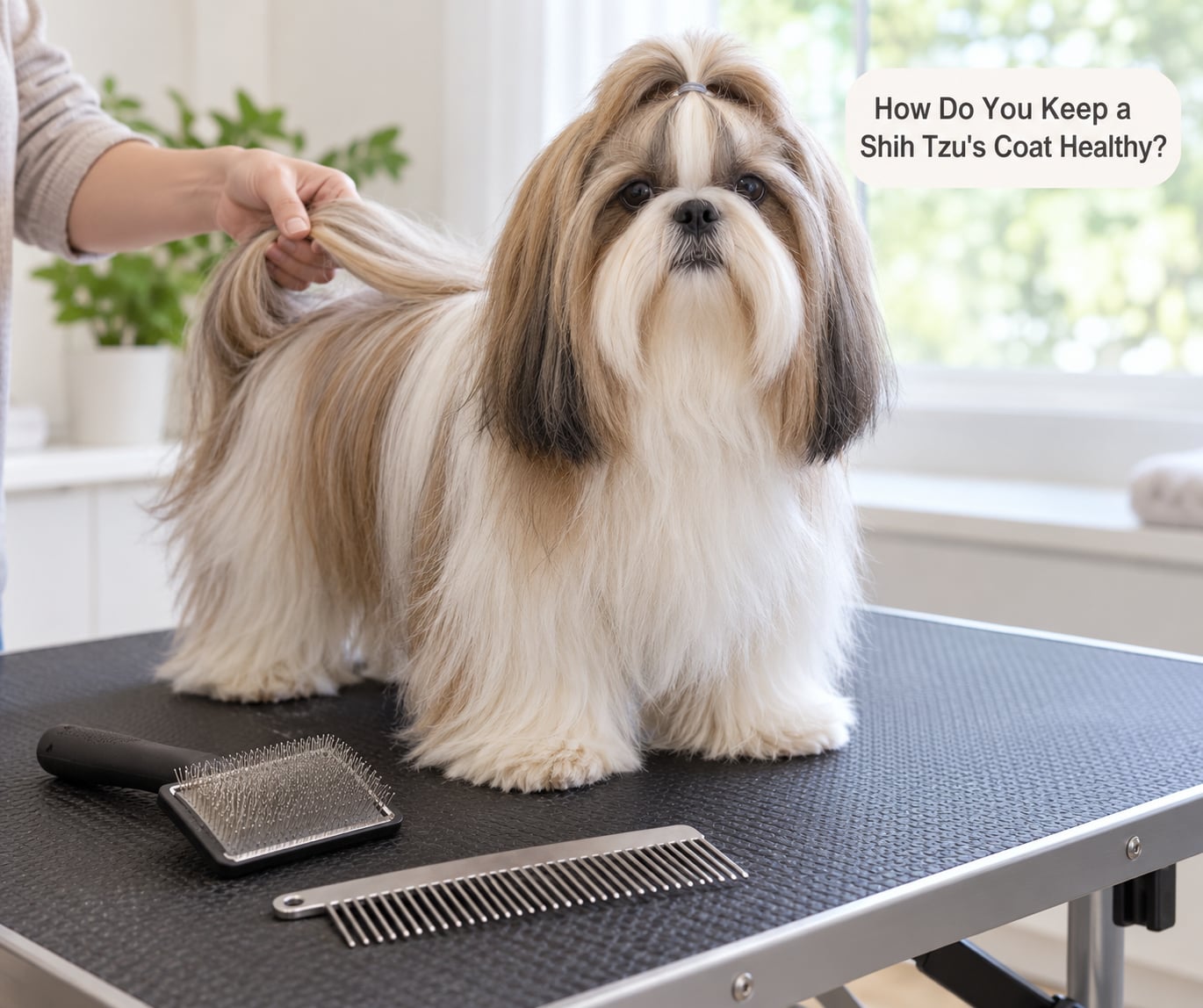
The goal is a coat with no mats, no loose hair in the undercoat and clean skin underneath. Everything else is technique. Coat work comes down to five things: brushing, detangling, bathing, drying and trimming, plus a professional groom on a schedule you keep.
Start at the feet and work upward in sections. Professionals call this line brushing and it is the single most useful habit for a long-coated Shih Tzu. Brushing the whole dog at random misses the places tangles actually form, and you find those tangles later, when they have become mats.
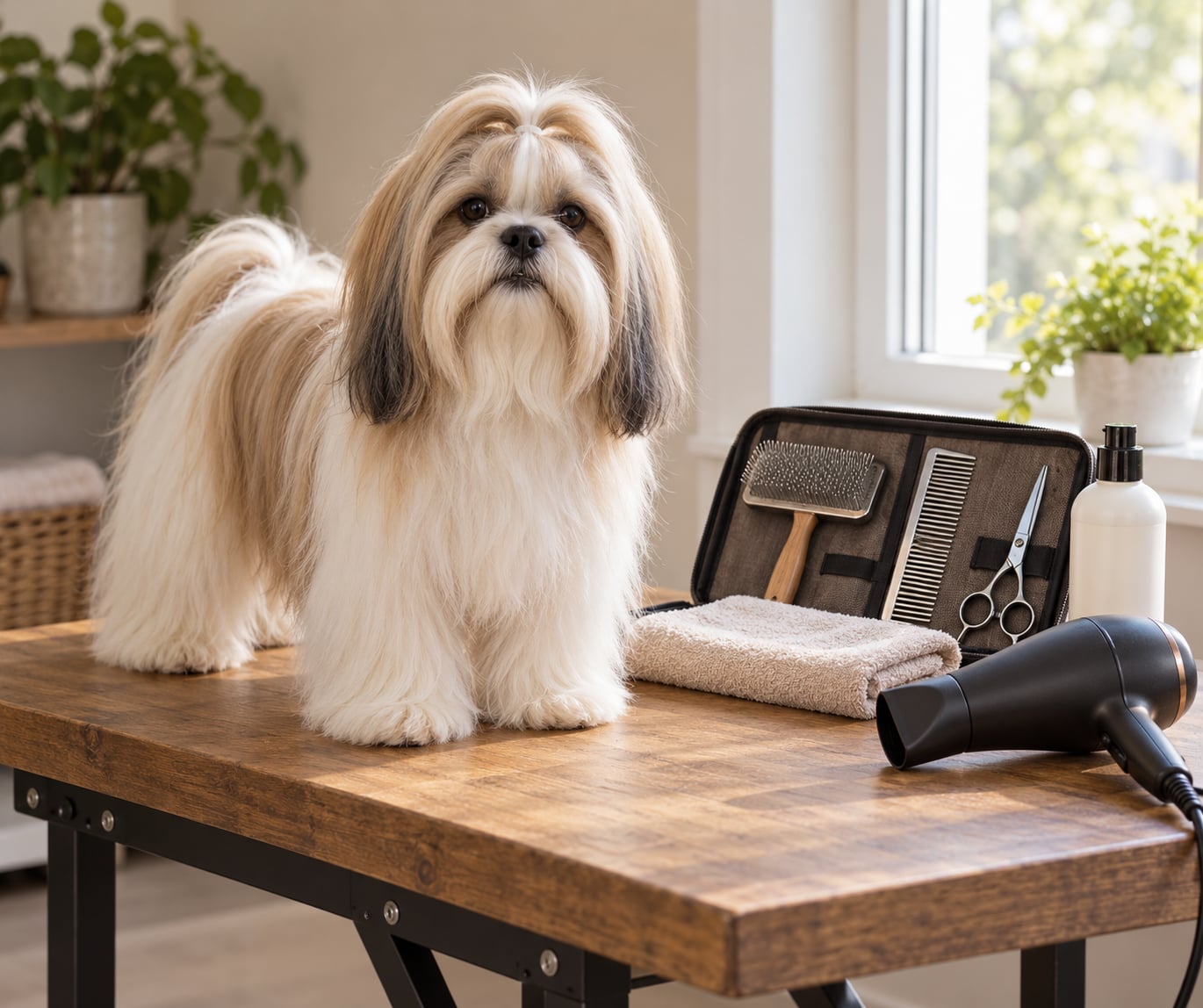
A wire slicker brush opens the coat and lifts loose undercoat. A wide-toothed metal comb follows it to check the result, and a metal comb with fine teeth for the top knot, face and feet. Work a small section at a time, from the skin outward, and if you hit resistance, stop and use the comb at that spot rather than pulling harder with the brush. Pulling creates brush burn, which shows up as sore patches under the coat days later.
Bathing is easier than most owners expect once the coat is under control. Wet the coat fully, use a dog-safe shampoo worked in with your hands rather than scrubbed in circles, and rinse longer than you think you need to. Shampoo residue is one of the most common reasons a coated dog smells bad a week later.
Drying is where a lot of home grooms go wrong. Towel blot first, then a high-velocity dryer on cool or low while you brush the section out as it dries. Long coats dry from the skin outward and need the whole drying time budgeted. Short coats are done faster and need less attention, because the undercoat is not holding as much water.
Trimming is the part most owners should hand to a groomer until they have practised on a relaxed dog. The face is the risk area, and the eyes sit right where the hair grows back every few weeks. If you cut at home, keep the scissors pointed away from the eye, use a comb as a shield between the blade and the eyeball, and stop the moment the dog struggles.
Mat prevention is less about products than about contact. Mats form where coat rubs against coat, so the behind-the-ears area, the armpits, the collar line, the trousers and the sanitary area all need checking by hand, not just by eye. Run your fingers through those areas twice a week and you will find the small tangles long before they harden.
If you find a mat, do not cut it out with scissors. A mat tightens against the skin and lifts it with the hair, so scissors take skin with it, and a small wound under a thick coat can turn into an infected sore within days. Use a de-matting tool, a wide-toothed comb and a little detangling spray, and work from the outer edge inward in short pieces. If the mat is flat against the skin or the coat has to be shaved to reach it, that is a groomer job, and sometimes a vet job if the skin underneath is already broken or weeping.
Shih Tzu Grooming and Care Guide Checklist
Print this or pin it up. It is the whole routine in four buckets.
- Every day: brush the coat out, check the eyes for redness or discharge, wipe tear staining from the hair under the eyes, offer measured meals and fresh water, take a walk or a play session, brush teeth if your dog allows it.
- Several times a week: check behind the ears and between the legs by hand, trim nails if needed, wipe the face folds, check the paw pads for hair and stones.
- Every two to four weeks: a full bath, dry and brush-out, sanitary trim, check the ears and clean them with a dog-safe product, brush the teeth.
- Every four to six weeks: a professional groom if the coat is long or the dog is anxious. Book before the coat is matted, not after.
How Often Should You Groom a Shih Tzu?
Daily brushing, weekly ear checks, a bath every four to six weeks, nail trims every three to four weeks and a haircut every four to six weeks. Those numbers assume a healthy adult dog in a short or medium coat. Long coats and double coats need brushing every single day without exception, and thick undercoats often need a second pass in the evening.
| Task | How often | Time it takes | What you need |
|---|---|---|---|
| Full brush-out | Daily in a long coat, two to three times a week in a short one | 10 to 30 minutes | Wire slicker brush, wide-toothed comb |
| Tangle check behind ears, legs and collar | Twice a week | 2 minutes | Fingers, metal comb |
| Tear staining and face folds | Daily | 1 minute | Damp cloth or dog-safe wipes, plain water |
| Ear check and clean | Check weekly, clean as needed | 2 to 3 minutes | Dog-safe ear cleaner, cotton |
| Nail trim and paw pad check | Every 3 to 4 weeks | 5 minutes | Sharp nail clippers or grinder |
| Bath, dry and brush-out | Every 4 to 6 weeks | 60 to 120 minutes | Dog-safe shampoo, conditioner, high-velocity dryer |
| Face, foot and sanitary trim | Every 4 to 6 weeks | 30 to 60 minutes | Thinning shears, detailing scissors, clipper with a #15 to #40 blade |
| Professional groom | Every 4 to 6 weeks for long coats | 2 to 3 hours door to door | A groomer who handles small, anxious dogs |
| Teeth brushing | Daily if tolerated | 1 minute | Dog toothbrush, canine toothpaste |
Adjust those intervals in three situations. A long show coat roughly doubles the brushing time and adds a second full brush-out most days. A dog that swims or walks in long wet grass after every outing needs the coat dried and checked the same day. A puppy needs the same tasks in much shorter sessions so the routine stays familiar rather than frightening.
How Do You Safely Clean a Shih Tzu’s Face and Ears?
The face is where grooming injuries happen, and it is where Shih Tzus are most likely to fight you. That makes the technique and the temperament as important as the tool.
Tear staining is the reddish-brown discoloration under and beside the eye. Tear drainage is normal for the breed’s shallow eye sockets, and the staining shows where tears have run down the hair. Wipe the area with plain water or a damp cloth once a day, working outward from the tear duct, and dry it after. Cleaning it removes staining that has not set; it does not change the shape of the eye or the volume of tears, so persistent staining alongside redness, squinting or cloudiness deserves a vet.
For hair around the eyes, trimming with scissors is the higher-skill option and clippers the higher-scrape option on such a small face. Most owners do best with small detailing scissors, a comb used as a shield, a calm dog, and treats. Trim in small snips and change position rather than reaching over the top of the head.
Never use human eye drops, steroid eye preparations made for people, or human eye makeup removers on a dog. If the eye needs treatment, that is a veterinary decision.
Shih Tzus are brachycephalic, meaning the skull is shortened and the muzzle flattened. Water in the nasal passages during a bath is a genuine risk with this anatomy, so never rinse the face directly. Use a damp cloth for the face instead, sponge rather than pour, and let the dog stand or hold the head upright while drying rather than tipping it back.
For ears, check weekly. Wipe the outer ear and the visible part of the canal with a dog-specific ear cleaner and a wisp of cotton, and leave the inside of the canal alone. Cotton swabs push material deeper. A foul odor, dark or bloody discharge, intense redness, a head-shaking dog or a dog scratching at the ear is a vet appointment, not a cleaning job.
Toxic foods and plants matter more here than people expect. Chocolate, grapes, raisins, onions, garlic, xylitol products, macadamias and cooked bones do not belong anywhere near a grooming table, and lilies, yew and oleander in the garden are a risk to any dog that wanders off mid-session.
What Health Problems Can Shih Tzus Develop?
None of this is a diagnosis, and none of it replaces an examination. It is a list of things a groomer or an owner might notice first, and what to do about the noticing.
Eyes. Large, prominent eyes are exposed to scratches, dryness and injury. Redness, discharge, frequent blinking, squinting, cloudiness or a dog pawing at the face all mean a veterinary visit rather than another round of face trimming.
Dental disease. Small breeds often develop plaque, gingivitis and lost teeth before eight. Bad breath that will not shift, red or swollen gums, chewing on one side, or eating only soft food deserves attention. Daily brushing with a dog toothpaste is the cheapest prevention there is.
Skin and allergies. Itching, redness, bald patches, hot spots, a strong skin odor or a coat that suddenly thins can point to an allergy, a bacterial or yeast infection, or a hormonal condition. Owners frequently reach for a different shampoo; a vet usually needs to look at the skin first.
Ears. Because the ear canal is narrow and often hairy, infections are common and progress fast. The signs are odor, discharge, redness and head shaking.
Joints and mobility. Hip dysplasia, patellar problems and arthritis show up as stiffness, reluctance to jump, a changed gait or difficulty on stairs. Short, trimmed coats are not a treatment, and dogs that struggle on floors benefit from rugs and non-slip mats more than people expect.
Breathing and airway. Short-nosed breeds can suffer from restricted airways, and snoring that occasionally pauses is worth mentioning at a checkup. Being overweight makes every one of these harder, so measured feeding is medical care rather than fussiness.
And keep this one in mind: a groomer is not a vet. A coat problem that smells, weeps, crusts or bleeds is a reason to stop grooming that area and make a call.
How Do You Build a Healthy Routine for Your Shih Tzu?
Grooming is easier to keep up when it is bolted onto habits that already exist. Water gets refreshed when meals happen. The walk happens after the morning coffee. The grooming table is set up on the same evening each week.
Feeding. Measure meals rather than eyeballing them, use a food formulated for small breeds, and treat treats as part of the day’s total. Ask your vet which food suits your dog rather than following a breed-wide rule; individual needs differ a lot.
Movement. Shih Tzus do not need long runs. Several short walks, some floor play, and a few training minutes that use up mental energy suit a small, indoor-friendly dog far better than one exhausting hike.
Rest and enrichment. This breed was built to be a companion. Puzzle feeders, sniffing walks and short training sessions tire a Shih Tzu better than physical play.
Dental, nails and ears. Build them into the walk routine rather than treating them as occasional jobs. Tooth brushing after the evening meal attaches it to something the dog already does.
Preventative care. Keep vaccinations, parasite prevention and weight checks on a schedule your vet sets, and tell them about any coat or skin change at the appointment rather than mentioning it afterwards.
A simple weekly plan: one longer grooming session on a non-slip table, one nail and ear check, and a look at the feet and sanitary area on the other days. Yearly, book the professional groom and the vet exam so the coat is short enough for a vet to actually examine the skin underneath.
Frequently Asked Questions
How frequently should a Shih Tzu be bathed?
Most Shih Tzus need a bath every four to six weeks, and less often if the coat stays clean and dry between outings. Puppies, dogs with allergies, and dogs who walk in wet grass every day need more regular washing. Use a dog-safe shampoo, rinse thoroughly, and dry the coat fully with a high-velocity dryer while brushing, because a damp undercoat is what mats and smells.
How often do Shih Tzus need their nails trimmed?
Every three to four weeks is a good average for a healthy adult Shih Tzu, though some dogs need it monthly. Nails that curl under, catch on fabric, or click loudly on the floor are already due. Trim small amounts at a time, stop if you see a dark oval the pink centre of the nail, and check the paw pads in the same sitting for hair growth and small stones.
How often should I clean my Shih Tzu ears?
Check the ears weekly and clean them only when you see wax or dirt, usually every one to four weeks depending on the dog. Wipe the outer ear and the visible canal with a dog-specific ear cleaner and a little cotton, and never push a swab deeper than the opening. Odor, redness, discharge, scratching or head shaking means a vet, not a cleaning session.
At what age should a Shih Tzu be groomed?
Introduce grooming early rather than waiting. A puppy can meet the brush and get a gentle towel bath around six to eight weeks, meet clippers with the noise alone at eight to ten weeks, and have a first light haircut around ten to twelve weeks. Keep sessions short and end them while the puppy is still relaxed. Owners who push to a first salon visit at a year often end up with a dog who panics.
What are the most common Shih Tzu grooming mistakes?
The big five are skipping daily brushing in a long coat, cutting mats out with scissors, shaving the coat to the skin, rinsing water straight over the face and muzzle, and ignoring tear staining around the eye. Add bathing with human shampoo, skipping the dry-out, and trimming nails too short. Most of these trace back to rushing, and each one is easier to prevent than to undo.
How do I remove mats from a Shih Tzu coat at home?
Work with your fingers first, then a wide-toothed comb and a small amount of detangling spray, breaking the mat into small pieces from the outside inward. Never use scissors on a mat, because the mat pulls the skin up and the cut takes skin with it. If the mat sits flat against the skin, the coat around it is damp, or your dog is struggling, stop and book a groomer.
Conclusion: Start With Brushing and Regular Health Checks
Three things matter more than the rest. Brush the coat every single day, work from the feet upward and check the friction zones by hand. Look at the face, ears and teeth weekly so small problems show up early. And book the professional groom and the vet check before you need them, not after.
Everything else in this shih tzu grooming and care guide is detail built on those three. Get them right and the daily version becomes ordinary, which is the whole point.