Ich in aquarium fish treatment and prevention comes down to three things: confirm what you are actually looking at, treat the whole tank rather than the one fish that shows spots, and keep going after the spots have gone. Most mild freshwater cases clear with warmth, aquarium salt and unhurried maintenance, and the setup takes an afternoon.
What follows is the sequence I would run myself, written for keepers who have never handled a parasite before. Any medication, product or dose should follow the label on the bottle or the directions of an aquatic veterinarian, never a number copied out of somebody else’s aquarium.
Last updated: October 2026
Table of Contents
- What You Need
- Step-by-Step: what to do in the first hour
- Confirm the outbreak and protect the other fish
- Ich in aquarium fish treatment and recovery support
- Prevent ich from returning
- Common mistakes
- Frequently Asked Questions
- Are all white spots on aquarium fish a sign of ich?
- Can ich infect people or make a household unsafe?
- How long does an ich outbreak last in an aquarium?
- Do I need a separate quarantine tank to treat fish for ich?
- When should I contact a veterinarian about ich in aquarium fish?
- Conclusion
What You Need
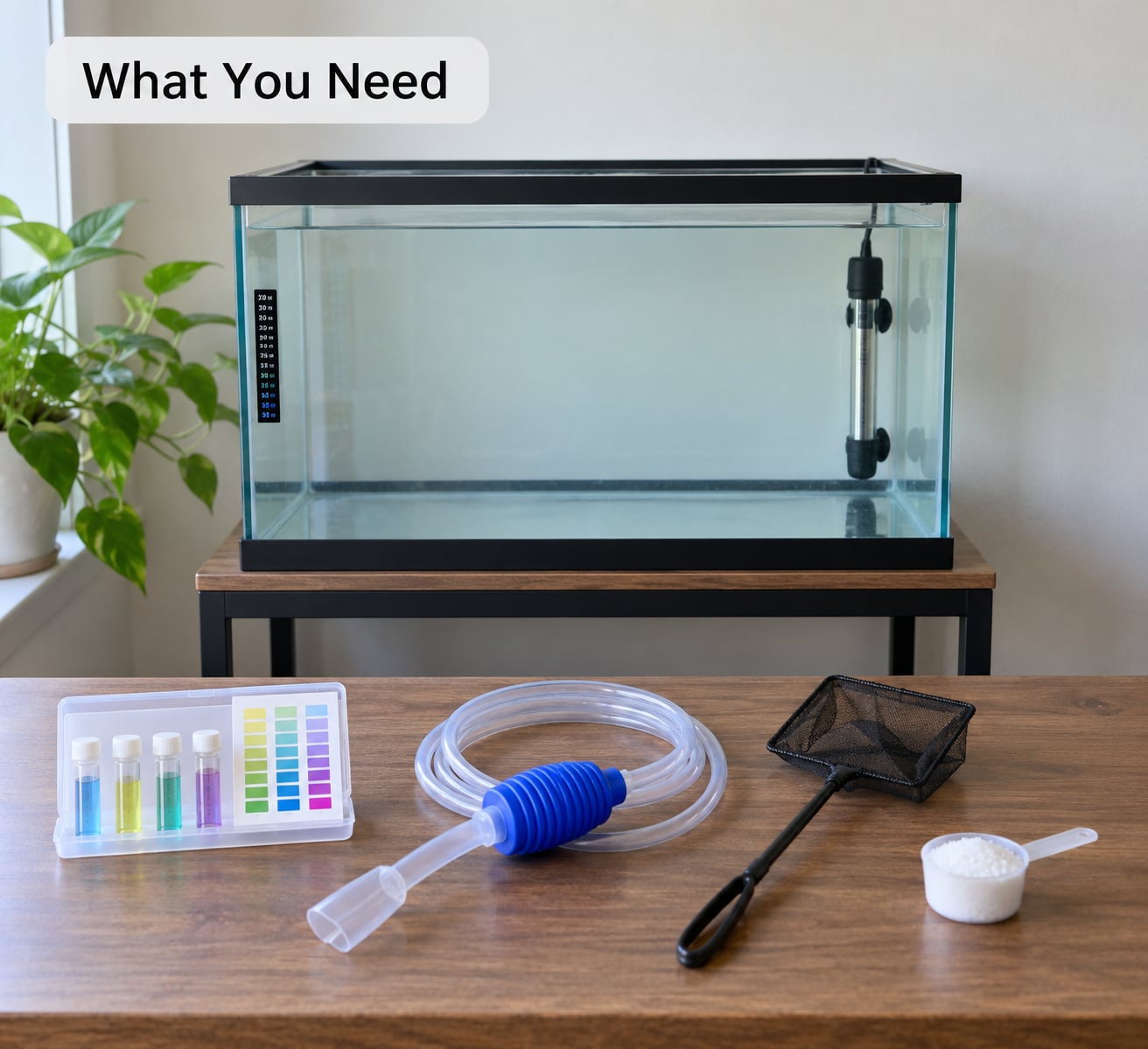
Gather everything before you open the lid. A rushed mid-treatment shop trip is how half-strength doses and half-measures happen.
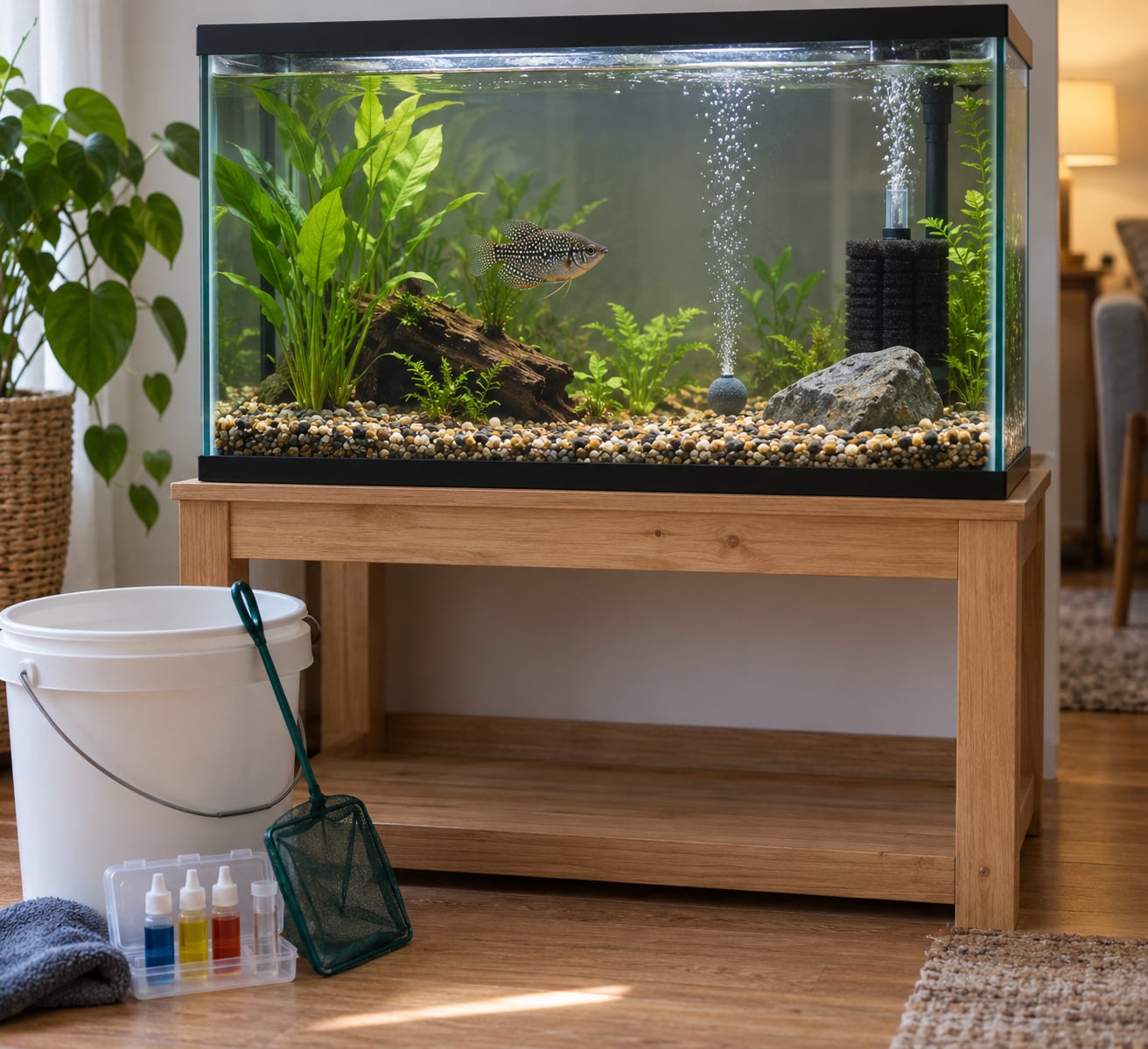
- A separate quarantine tank. A plain 10 to 20 gallon setup with a lid, a sponge filter and a heater. It does not need to be pretty.
- An adjustable heater. One where you control the setting, not a fixed-temperature preset unit.
- An aquarium thermometer. The number on the heater is a guess. The thermometer is the truth.
- A water test kit for ammonia, nitrite, nitrate and pH. Liquid tests beat strips when something is going wrong.
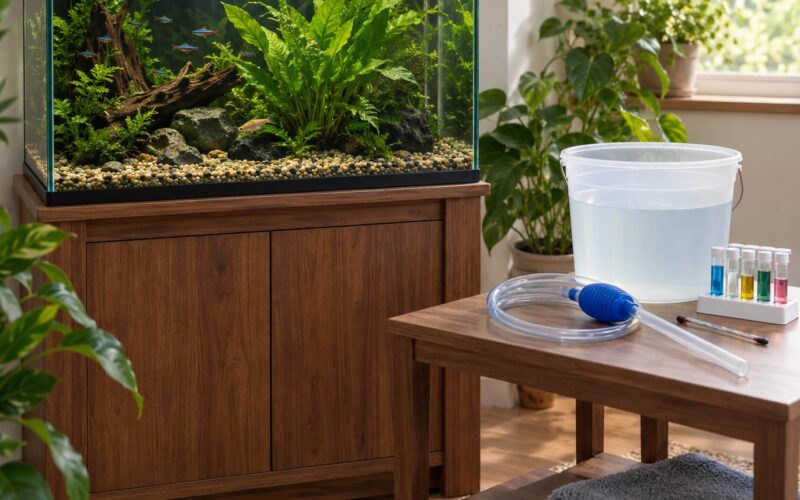
- A siphon and gravel vacuum, plus a clean bucket that only ever touches this tank.
- A fish net per tank. Two nets, two systems, no sharing. This one habit prevents more outbreaks than any product.
- A salt measure. A kitchen teaspoon works, but a dedicated measure keeps dosing consistent.
- An air stone or extra aeration. You will need it the moment you raise temperature.
- The medication itself, still boxed, with the label readable. Read it before the tank is already in trouble.
The point of the list is separation. Water, tools and hands are the routes this parasite travels, and a single shared siphon is enough to move it between tanks.
Step-by-Step: what to do in the first hour
Look before you treat. Test the water before you touch the fish, because ammonia and nitrite produce a lot of the same listlessness and gasping that people blame on parasites.
- Observe the fish in good light. Turn the room lights off and use a bright lamp, and check the fins, gills, flanks and tail base as well as the body.
- Test the water. Ammonia and nitrite should both read zero. If either does not, fix that before you add anything else to the tank.
- Count the affected fish and note how many spots each one carries. A single fish with spots in an otherwise calm tank is a very different situation from half the population.
- Isolate new or visibly sick fish in the quarantine tank if you have one ready and the fish is strong enough to be moved. Add fish to quarantine water slowly, the same way you would acclimate any newcomer.
- Write down the basics: current temperature, how many fish are in the tank, what was added in the last few weeks, when the last water change happened, and the first day you saw spots.
- Get a second opinion when you are not certain. A skin scrape under a microscope by a store with a real microscope, or an aquatic veterinarian, settles a diagnosis in minutes and saves weeks of wrong treatment.
That log sounds fussy, but it is the difference between a targeted fix and a month of guessing. It also tells you whether a later relapse is a treatment failure or a fresh introduction.
Confirm the outbreak and protect the other fish
Ich shows as tiny white spots roughly the size of grains of salt. Fish with only a few spots often rub or flash against the substrate and gravel before you see anything on the body itself.
Look for the full picture rather than a single sign:
- White spots scattered over the body, fins and gills, sometimes with a faint cloudy sheen around them
- Flashing, which is repeated rubbing against hard surfaces in a frantic, scratching motion
- Clamped fins, held tight against the body instead of spread
- Lethargy, hiding, and a fish that no longer comes up for food at the surface
- Gasping at the surface or very rapid gill movement, which signals gill involvement
- Cloudy skin, frayed fin edges or fuzzy white patches, which usually mean a secondary bacterial infection has taken hold
Transmission is straightforward because the parasite lives in the water as well as on the fish. Shared water, a wet net, a siphon, damp hands, live plants and moved gravel all carry it, and a heavily populated tank spreads it faster than a quiet one.
Stop the cross-contamination before you start treating. Dedicate nets, siphons and buckets per tank, change your sleeves, wash your arms, and do not pour water from a suspect system into another. Inspect the exposed fish once a day so you know exactly which ones are affected.
Then treat the system rather than the individual. Because the free-swimming stage lives in the water, moving one fish to a hospital bowl and treating it there slows nothing down, and you end up treating two tanks. The main exceptions are a fish too weak to stay in the main tank, and a heavily infested tank where lowering the number of hosts genuinely helps.
Ich in aquarium fish treatment and recovery support
There is no single best medicine, and the most useful treatment is the one the fish can tolerate while the life cycle runs its course. Work from the label on the product you bought, or from an aquatic veterinarian’s written directions, and change one thing at a time so you know what worked.
- Keep conditions stable and suitable. Zero ammonia and nitrite, no abrupt swings in temperature or pH. A stressed fish loses the fight much faster than a healthy one.
- Raise temperature only when the species allows it. Warmth speeds the parasite’s life cycle so the vulnerable free-swimming stage is shorter and more exposed to treatment. Coldwater and pond species run much cooler targets than tropical fish, and some species should not be heated at all. Confirm suitability first, and raise the setting in small steps rather than cranking it up in one jump.
- Add aeration the same hour you heat. Warm water holds less dissolved oxygen, and damaged gills use more of it. Most fish lost during heat treatment were suffocated, not overheated.
- Remove activated carbon and switch off any UV sterilizer before dosing. Both quietly strip medication out of the water, which is one of the most common reasons a correctly chosen treatment appears to fail.
- Vacuum the substrate. Siphon the gravel thoroughly so encysted stages that have settled there are pulled out instead of hatching in place.
- Never combine two ich medicines, and never use a human or household medication. Overlapping actives and overdosing are the fastest way to kill healthy fish while the original problem continues.
- Use salt only after checking every species in the tank. Salt supports a fish’s osmoregulation and thickens the slime coat, which makes the parasite harder to burrow into, but it burns scaleless and soft-bodied species. Loaches, catfish, corydoras, shrimp, snails and a good many aquarium plants are not salt tolerant.
Recovery looks like this: spots stop spreading, then stop appearing, then the last ones fall away, and finally the fins open up, the colour comes back and the fish starts feeding normally again. That sequence takes days, not hours, and the disappearance of the spots is the least meaningful part of it.
Once the spots drop off, the parasite forms a protective cyst on the bottom and then releases hundreds of free-swimming individuals to find new hosts. That is why treatment has to continue for several days to two weeks past the final visible spot, following the label’s duration. Stopping the moment the tank looks clean is the single most common reason ich returns a fortnight later.
Prevent ich from returning
Prevention is far more reliable than curing an established outbreak, and it is mostly routine work that pays off even in a quiet month.
- Quarantine every new arrival for two to four weeks in the separate tank, fed and observed but kept apart. Live plants and second-hand equipment get the same quarantine treatment where practical.
- Acclimate slowly. Float the sealed bag to equalise temperature, then add water in stages. Sudden changes in temperature, pH or osmoregulatory stress are what let a carried parasite take hold.
- Test water on a schedule and keep ammonia and nitrite at zero. Stable parameters matter more than any supplement.
- Keep the population at a density the filtration can carry and reduce aggression, because crowding and fighting are stress that shows up as disease later.
- Disinfect nets, siphons and hands between systems, and never share water between tanks for any reason.
- Buy from sellers you trust. Bagging and shipping are stressful, and latent parasites in store tanks often only become visible days after the fish reaches your water.
Medicated foods have a place in that list, but as a preventive support during stress and shipping, not as a cure. Once a fish is visibly spotted and feeding less, food is not the answer.
Common mistakes
Almost every failed treatment comes down to one of the following. Each has a simple correction.
- Treating spots without confirming the cause. Fungus, velvet, flukes, lymphocystis and even stuck air bubbles all produce white marks. Confirm first, or you will medicate a fish that never had ich.
- Adding medicine to a community tank without checking what lives in it. Copper-based and malachite-green products are toxic to shrimp, snails and many plants. Remove or move the invertebrates, or choose a route that suits the whole tank.
- Raising temperature too quickly. A sudden jump shocks an already sick fish and instantly lowers the oxygen level. Step the setting up in increments over a day or two and keep the air stone running.
- Under-dosing, or mixing two products. A weak dose kills the weakest parasites and breeds tolerance, so the next outbreak is harder. Dose at full strength exactly as the label states, and use one product at a time.
- Reaching for household or human remedies. Human medication and household cleaners are designed for a body that can metabolise them. In a fish they burn gills and slime coat and can wipe out the whole tank.
- Stopping treatment when the spots go. That is the moment of maximum release of free-swimming parasites. Follow the label’s duration past the last spot.
- Skipping quarantine on new fish. One unquarantined bag can reintroduce ich into a tank that was clean for years. A cheap spare quarantine tank pays for itself the first time.
To keep an aquarium at low risk, keep a spare quarantine tank running with a sponge filter, test water on a fixed day each week, and log temperatures and additions. Stable, boring maintenance catches problems when there are only a few spots, which is the easiest version of this problem to fix.
Frequently Asked Questions
Are all white spots on aquarium fish a sign of ich?
No. Fungal growth, velvet, lymphocystis, flukes and even tiny air bubbles can all look like white spots. Ich spots are flat or slightly raised and about the size of a grain of salt, while fungal patches read as fuzzy or cotton-like, velvet gives a fine dusting that catches the light, and bubbles wipe away with a finger. If you cannot tell, ask an aquatic veterinarian to check a skin scrape.
Can ich infect people or make a household unsafe?
No. Ichthyophthirius multifiliis is a fish parasite that cannot grow or reproduce in human tissue, so it is not a human health risk. It needs an aquatic host and tank water to complete its life cycle. Washing your hands and forearms after tank maintenance is plenty. The only sensible precaution is keeping aquarium tools out of food preparation areas.
How long does an ich outbreak last in an aquarium?
It depends on temperature, how crowded the tank is, and how early you caught it. In warm water the life cycle runs in a few days, so a mild case in a quiet tank can clear in roughly a week. Heavier infestations usually take two to four weeks, and treatment continues for several days to two weeks after the last spot falls off. Warmer water shortens the cycle but holds less oxygen, so add aeration.
Do I need a separate quarantine tank to treat fish for ich?
Usually not, because the parasite lives in the tank water as well as on the fish, so isolating one animal does not treat the system. A quarantine tank earns its place in two situations: new fish arriving before they go anywhere near your main aquarium, and a fish too weak to stay in the main tank, where a small separate volume is easier to heat, salt and medicate safely. Many keepers simply keep one running.
When should I contact a veterinarian about ich in aquarium fish?
Call an aquatic veterinarian or a fish-experienced specialist when several fish are affected at once, when fish are gasping at the surface or their gills look damaged, when spots return within weeks of a finished course, or when you cannot confirm the parasite visually. Get advice before treating if the tank holds invertebrates, scaleless species or valued plants, and whenever you are considering a human or household product.
Conclusion
For ich in aquarium fish treatment and prevention, the first actions are simple: confirm the parasite, isolate the new or sick fish and stop water and equipment moving between systems, check what species live in the tank before choosing a treatment, and follow the label or an aquatic veterinarian’s directions through the full course.
Most cases end well, and the reason is simple. Ich is the most common aquarium disease and usually shows up when a fish is already stressed or adjusting to new water. Keep a quarantine tank ready, test your water on a schedule, and hold the treatment for the full duration after the spots vanish, because that is where outbreaks are actually won or lost.
For anything you cannot confirm visually, anything affecting several fish at once, or any decision involving medication, dosage or a species you are unsure about, talk to an aquatic veterinarian before you add a single dose.