Fin rot is a bacterial infection of fin tissue, and treating it means putting the fish in clean, stable water, removing whatever caused the stress, and keeping a close eye on how the fins change. Most early cases reverse with basic care; advanced cases need a veterinarian and can leave permanent fin-ray damage. Most owners can cover the first steps in a weekend.
The part people get wrong is treating the frayed fins while leaving the cause alone. If ammonia is still rising in the tank, or a cichlid is still nipping a slower fish’s tail, the infection comes back within weeks and the damage becomes harder to reverse. So the order matters: confirm what you are looking at, fix the water, reduce stress, then decide whether the fish needs isolating.
This guide covers freshwater and marine tanks, bettas and gouramis, tangs in reefs, and community tanks of guppies, angelfish, goldfish and cory catfish. It is general husbandry and first-aid information, not a diagnosis. Any medication, concentration or treatment length needs to come from a veterinarian or other qualified aquatic professional, because the right approach depends on the species and the organism involved.
Updated for 2026.
Table of Contents
- What You Need
- Step-by-Step: How to Treat Fin Rot in Aquarium Fish
- 1. Confirm the signs and assess the fish
- 2. Test the aquarium water
- 3. Isolate the fish when appropriate
- 4. Maintain clean, stable water
- 5. Support feeding and recovery
- 6. Contact a veterinarian for medical treatment
- Common Mistakes
- Frequently Asked Questions
- Is fin rot contagious to other fish?
- Is aquarium salt always safe for fin rot?
- Can a fish regrow fins damaged by fin rot?
- How long does it take for fin rot to heal?
- When is a fish with fin rot an emergency?
- Can a treated fish go back in the main aquarium?
- What to Do First
What You Need
Most of what you need is already on hand if you keep fish. The list below covers what to have ready before you start working on a fish with damaged fins.
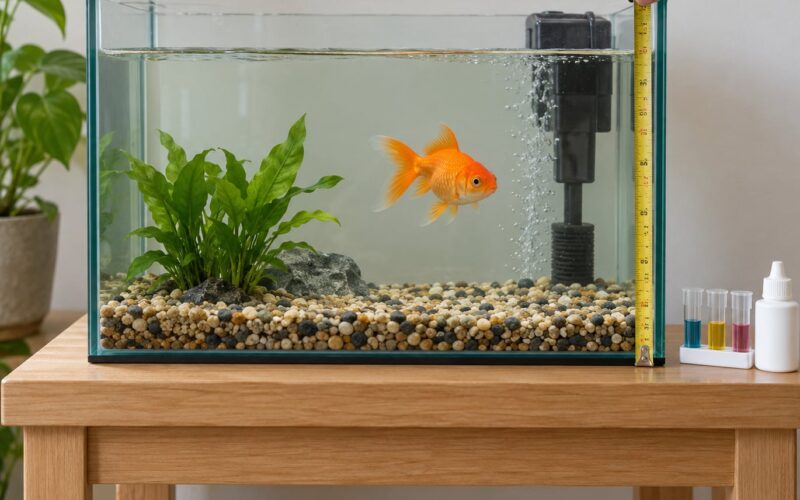
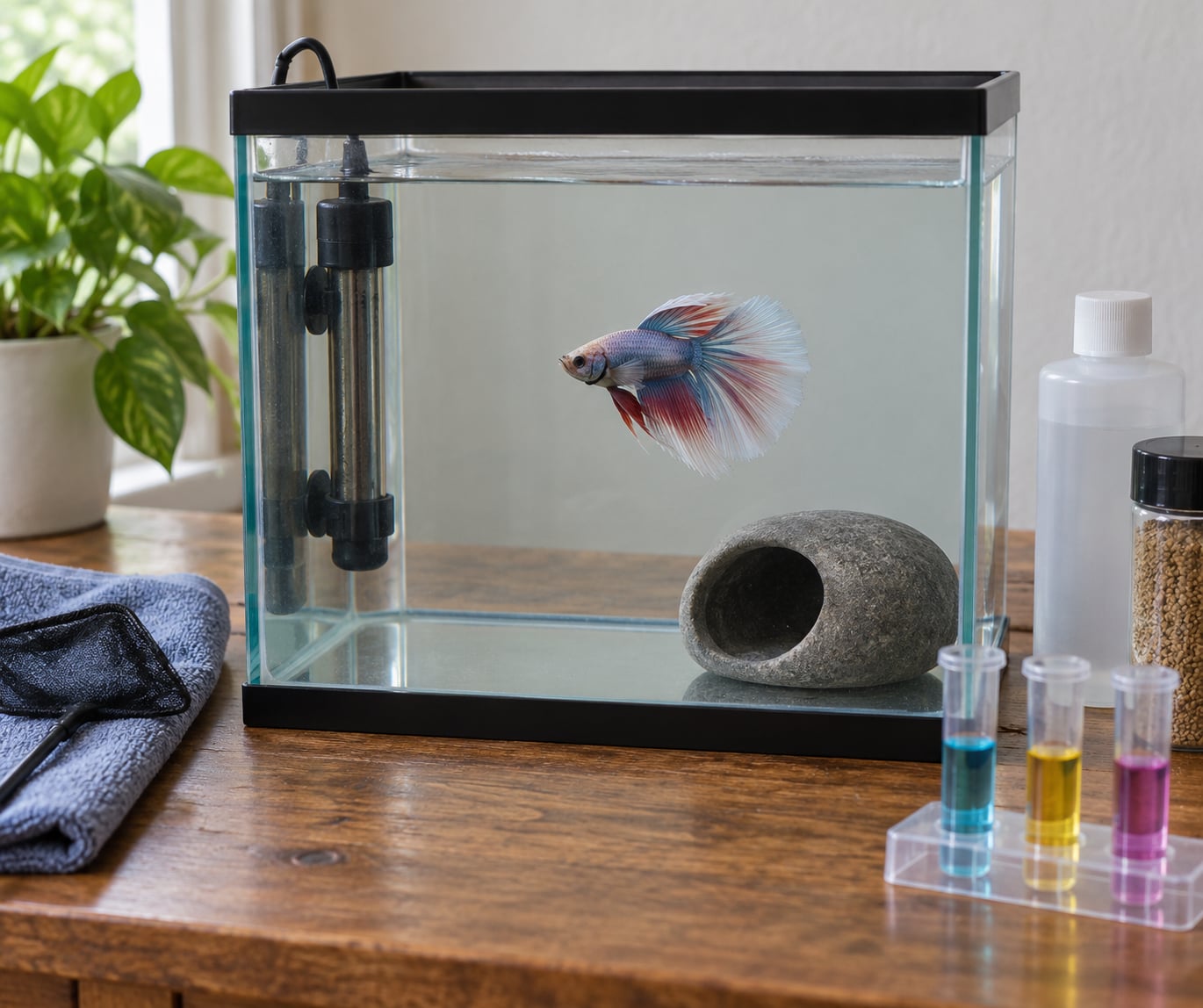
- A quarantine tank. A bare 5- to 10-gallon tank with a lid works. It should hold nothing but water, a heater and a hiding place. A separate tank lets you protect the fish and protect the rest of the display at the same time.
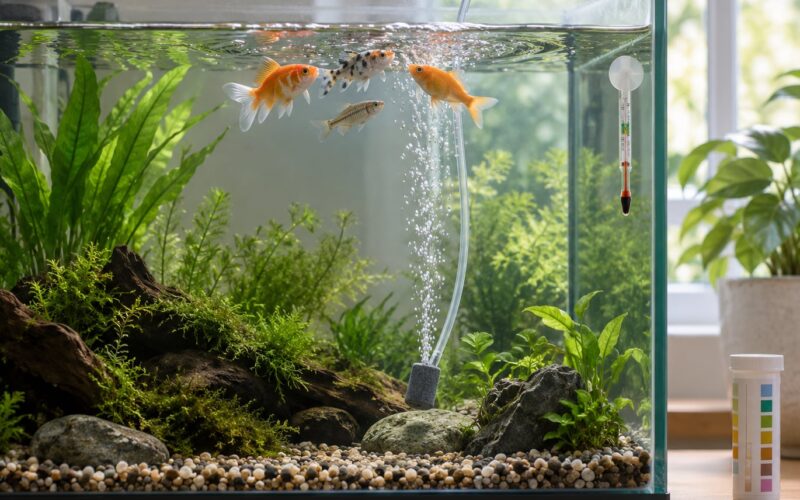
- A heater and a thermometer. Sick fish are stressed by temperature swings, and you need to confirm the quarantine tank actually holds a steady temperature rather than assuming it does.
- A liquid water test kit. Ammonia, nitrite, nitrate, pH and temperature. Test strips are fine for routine weekly checks, but a liquid kit gives you numbers you can trust when a fish is sick.
- Water conditioner that removes chlorine. Tap water straight into a tank burns gills and fins and makes everything worse. Newly treated fish should never be moved into untreated tap water.
- Hiding places. A small cave, a plant or a piece of clean driftwood. A fish that feels exposed will not rest, and rest matters more than most keepers realise.
- Aquarium salt, only if your species tolerates it. Plain aquarium salt is not the same as table salt, which contains anti-caking additives. Some species do poorly with salt, so read the step about salt carefully before you use it.
- A spare filter media or a small sponge filter for the quarantine tank, if you already run one you can safely seed.
- A notebook or your phone. You want to note today’s water readings and take a photo of the fins. Comparing photos over a week tells you far more than memory does.
One thing you should not prepare on your own is medication. Aquarium medicines are sold over the counter and it is tempting to reach for one immediately. Hold off until a veterinarian has looked at the case, because the wrong product in the wrong tank can kill the fish outright, and some antibiotics wipe out the bacteria that keep a tank clean.
Step-by-Step: How to Treat Fin Rot in Aquarium Fish
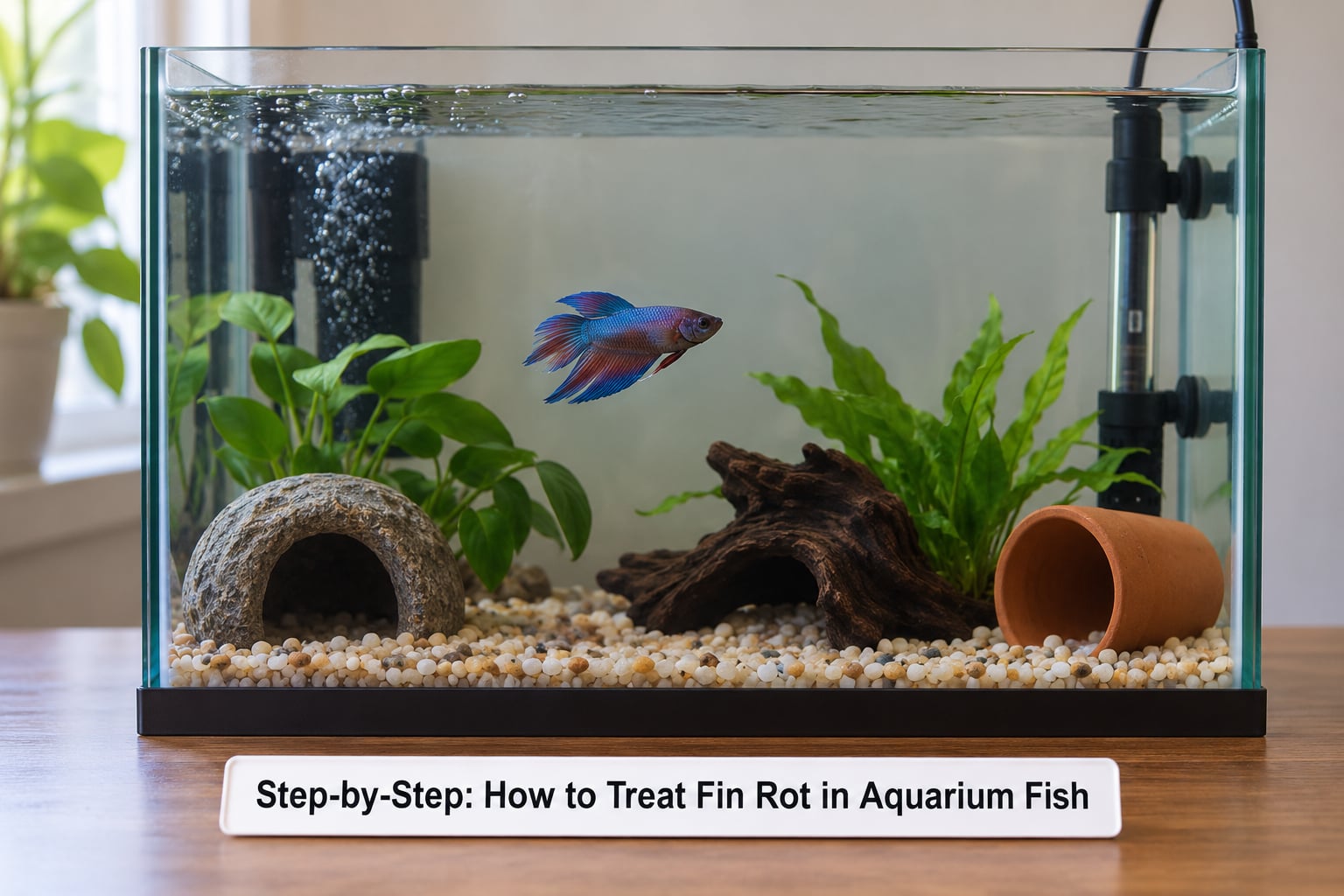
1. Confirm the signs and assess the fish
Fin rot shows up as fin tissue that looks frayed, eroded, shortened or white along the edges. In early cases the fins develop pale or translucent margins and the rays begin to separate. As it progresses the membrane between the rays wears away, holes open, and the fin can end up looking like a ragged stump.
Before you treat, rule out the lookalikes. Fin nipping leaves clean, straight or triangular bites and usually a healthy-looking edge on the remaining membrane. Cotton wool or fungus adds a fluffy white growth rather than a smooth fade. Velvet gives a fine dusty sparkle over the whole body and fins, and fish usually scrape themselves against the glass. Head and lateral line erosion produces sunken areas along the head rather than a frayed tail. A bloated body and a pinched scales pattern point to dropsy, which is a whole-body problem and not a fin problem.
Look at the fish’s behaviour too. Hanging near the surface, gasping, clamped fins and refusal to eat all matter more than how dramatic the fin damage looks.
2. Test the aquarium water
Test the main tank for ammonia, nitrite, nitrate, pH and temperature, then compare the numbers with what your species actually needs. Ammonia and nitrite should read zero in a healthy established tank. Nitrate rises with stocking and feeding and should stay within the range your species tolerates over time.
If ammonia or nitrite is above zero, that is the first thing to fix, not the fins. Elevated ammonia burns gills and fins, keeps a fish stressed, and stops a fish from fighting off anything else. Correcting water quality is treatment; everything you do on top of it is support.
Write the readings down. If the tank has been freshly cycled, overstocked, or recently medicated, ammonia can be rising without any visible change to the water. Clear water does not mean safe water.
3. Isolate the fish when appropriate
Quarantine is worth the trouble when the infection is spreading, when the tank water is not reliably clean, when you have corals or invertebrates you want to protect, or when several fish are affected at once. It also makes dosing and observation far easier.
Setting it up is straightforward. Fill the tank with conditioned, dechlorinated water, add the heater, keep the temperature the same as the main tank, and add a hiding place. If you use a sponge filter, seed it from established media so biological filtration is not starting from zero.
Move the fish gently. Net it, keep it submerged, and shorten the trip. A fish with frayed fins bleeds more easily than a healthy one, so avoid chasing it around the tank.
Now the part most guides skip: sometimes staying put is kinder. If your water tests clean, the cause has been removed and the fish is eating and active, moving it to a bare quarantine tank adds stress to a fish that is already stressed. Forum experience is mixed on this, and the decision depends on the individual fish. Social, active fish often settle faster with their tankmates; shy, cold-water and long-finned fish often do worse in a bare box.
Whichever you choose, decide once and stay there. Repeatedly shuttling a sick fish between tanks is a common and avoidable mistake.
4. Maintain clean, stable water
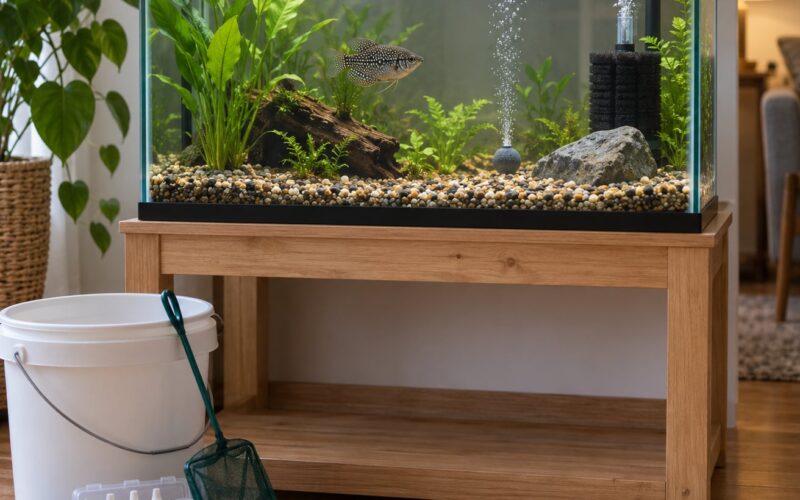
Change water on a regular rhythm rather than in one dramatic reset. In a quarantine tank without mature filtration, plan on frequent partial changes, replacing a portion of the water each day with conditioned, temperature-matched water. The goal is steady ammonia at zero, not a spotless tank.
Keep the temperature identical between old and new water. A sudden drop of even a few degrees shocks a weakened fish and can restart the damage you were trying to stop.
Check the heater and the filter every day while treating. If you medicate a tank, expect the biological filtration to be affected, and test ammonia at least daily. This is the single most common failure in home treatment: the medicine works, the fish is recovering, and then ammonia builds in the background and undoes the progress.
If you are using aquarium salt, work out the dose for the actual volume in the tank, not the nominal tank size. Roughly one tablespoon of salt per gallon of actual water is the most commonly repeated community figure, dissolved fully before it goes in. Redissolve the same proportion into every replacement water. Do not use salt in marine or reef systems, and check before using it with catfish, loaches and other soft-water or scaleless species, which may not tolerate it.
Signs that conditions are improving look like normal fish behaviour: fins held away from the body, steady breathing, interest in food, and active use of the whole tank. Signs going the wrong way are the opposite: clamped fins, gasping at the surface, sitting on the bottom, or a fish that stops eating.
5. Support feeding and recovery
Feed a normal, balanced diet in small amounts. A fish that is eating is a fish with a functioning immune system, and appetite is the most useful daily signal you will get. Remove anything uneaten within a few minutes so it does not break down and add to the ammonia load.
Reduce handling to almost nothing. Skip water changes that are not needed, keep lids on where possible, and dim the lights if the fish is a shade lover like a betta. Minimise aggression by separating fish that fight rather than hoping the injured one toughens it out.
Watch for the warning signs that mean you should stop waiting. These are worsening erosion, bleeding from the fin base, a fish that hides constantly, complete loss of appetite, breathing difficulty, or a fish lying on its side. Rapid decline is a reason to get veterinary help the same day.
Healing takes time, and the pattern is gradual rather than instant. A fish that is stable within days may show new fin growth over several weeks. Fins usually regrow after the infection is controlled, though heavily eroded fin rays can come back ragged, and colour in a damaged area may not fully return. Photograph the fins every few days from the same angle so you can see progress that is easy to miss day to day.
6. Contact a veterinarian for medical treatment
Aquarium fish should be seen by a veterinarian with fish experience for anything beyond basic supportive care, and many clinics will review photos, water parameters and a written history without an in-person visit. That is the right conversation to have before any medicine goes near the water.
Veterinary involvement matters here because fin damage is a symptom, not a diagnosis. Antibiotics used in aquariums commonly target Gram-negative bacteria such as Pseudomonas and Aeromonas, which cause most fin rot, but the species that is actually infecting your fish may be different, and some treatments kill the nitrifying bacteria in the tank. That is why a veterinarian asks for water test results and fish history before recommending a course.
Never give a fish human medication. Human antibiotics, pain relievers and antifungal creams are designed for a body with kidneys, a liver and a dosing history, and they will harm a fish. If something like that has already been added to the tank, tell the veterinarian immediately, because the treatment plan changes.
Keep a written record to hand before you call: species, sex and size, how long the fish has been in the tank, when the fin damage started, recent additions or water changes, water test readings, temperature, and everything you have already tried. Aquarium vets can often work from that faster than from a phone call alone.
Common Mistakes
Most setbacks come from a handful of repeated errors.
Treating every frayed fin as fin rot. Fin nipping, fungus, velvet and head and lateral line erosion all get medicated with the wrong approach. Look at the pattern of the damage and at the rest of the fish before deciding.
Doing a full tank reset instead of partial changes. Replacing all the water at once drops the bacterial colony, produces an ammonia spike and can kill the fish you were trying to save. Change water in smaller, repeated steps.
Adding medication without identifying the cause or checking species tolerance. Some species react badly to salt or to certain medicines, and an unnecessary antibiotic course can wipe out a working biofilter.
Using human medicines. This is the mistake with the worst consequences. No human antibiotics, no creams, no pain relievers, unless a veterinarian tells you otherwise, which for a fish they will not.
Reaching for household products. Table salt with anti-caking agents, bleach, vinegar, tea tree oil from a bathroom cabinet and unlabelled online remedies can damage fins and gills faster than the disease was.
Raising temperature without monitoring. Warming the water to speed up disease is an old idea with little support behind it, and it raises oxygen demand at the same time. If you change temperature at all, do it deliberately, change it slightly, and keep an eye on breathing.
Returning the fish too early. A fish that looks better today may still be carrying the problem. Wait until the fins show clear, sustained regrowth, the fish is eating normally, and the water has stayed clean through that whole period.
Prevention is simpler than any of the fixes above. Test the water weekly and act on the numbers rather than on how the tank looks. Keep water changes on a schedule. Stock fish that suit the tank and each other, especially if you keep fin-nipping species. Quarantine new arrivals before they go near the main tank. Keep feeding consistent, and give fish a place to get away from each other. The majority of fin rot cases trace back to one of those five things.
Frequently Asked Questions
Is fin rot contagious to other fish?
Fin rot itself is not caught like a cold, but the conditions that cause it spread easily. Bacteria that infect fins live in all aquarium water, so a susceptible fish can pick up an infection from a shared tank. The bigger risk is the trigger itself: an aggressive tankmate, ammonia, or a cycle that never finished will keep hitting every fish in the tank. Quarantine an affected fish when you can, and treat the water and the cause, not just the fins.
Is aquarium salt always safe for fin rot?
No. Aquarium salt helps many freshwater fish by raising osmoregulatory support and discouraging some organisms, but sensitive species may do badly with it. Scaleless fish such as catfish and some loaches, and certain soft-water species, can react negatively. Salt is not for marine tanks or for tanks with live plants you value. Ask a veterinarian whether salt suits your specific fish before adding it.
Can a fish regrow fins damaged by fin rot?
Usually yes, as long as the tissue that produces the fin is still intact and the infection is fully controlled. New fin growth appears as a clear or pale fringe at the damaged edge and thickens over weeks. Severely eroded or missing fin rays may regrow unevenly, and colour often returns only partly. Growth stalls or stops entirely when the cause, such as poor water quality or aggression, is still present.
How long does it take for fin rot to heal?
With clean, stable water and the trigger removed, you should see improvement within several days and visible new fin growth within two to four weeks. A full recovery of a heavily eroded tail can take much longer, and a badly affected fish may never regain its original shape. If nothing improves after a week of correct water conditions, or the fish declines instead, treat it as an emergency and seek veterinary help.
When is a fish with fin rot an emergency?
Get help the same day if the fish is gasping at the surface, lying on its side or on the bottom, bleeding from the fin base, completely off food, or if the erosion is spreading quickly to other fins. Any sign of a swollen body, popped eyes or a pinched scale pattern suggests a systemic problem rather than fin rot. Rapid decline in any fish is a reason to contact an aquarium-experienced veterinarian immediately.
Can a treated fish go back in the main aquarium?
Only after clear, sustained recovery, not as soon as the fish looks better. Wait for visible new fin growth, normal eating, active behaviour, and a period of clean, stable water with ammonia and nitrite at zero throughout. Returning a fish too early is one of the most common reasons fin rot comes back. Continue to watch it closely for several weeks, and remember that the original cause still needs fixing.
What to Do First
Test the water today and write the numbers down. That single step separates a water problem from a disease problem, and most cases improve considerably once the tank is clean and the trigger is gone. Then photograph the fins, decide whether the fish should stay or move, and keep the conditions steady while you watch for regrowth. If the fish is declining or not eating, contact an aquarium-experienced veterinarian rather than reaching for a medicine off the shelf.