Dogs get car sick because their eyes and their inner-ear balance organs send conflicting signals during travel, and the fix that works most often is a combination: an empty stomach before the trip, a cool and quiet car, and a vet-approved anti-nausea medicine given ahead of time. Add short, positive practice rides and most dogs improve within a few weeks.
This guide walks through that plan step by step, in the order you would actually do it on the morning of a trip. Nothing here needs a prescription unless your veterinarian decides your dog needs one, and nothing replaces a vet call when the symptoms are severe or suddenly new.
Table of Contents
- What You Need
- How to Help a Dog With Car Sickness Step by Step
- 1. Identify the Cause and Check for Other Problems
- 2. Prepare the Car and Reduce Motion
- 3. Use a Calm Pre-Travel Routine
- 4. Use Vet-Approved Support to Help a Dog With Car Sickness Safely
- 5. Take Breaks and Watch Your Dog’s Response
- Common Mistakes
- Frequently Asked Questions
- What can I give my dog for car sickness?
- How soon should I feed my dog before a car trip?
- Can human motion-sickness medicine be given to a dog?
- How can I stop my dog from vomiting in the car?
- Is motion sickness in dogs dangerous?
- Can I train my dog to enjoy car rides?
- Start Here First
What You Need
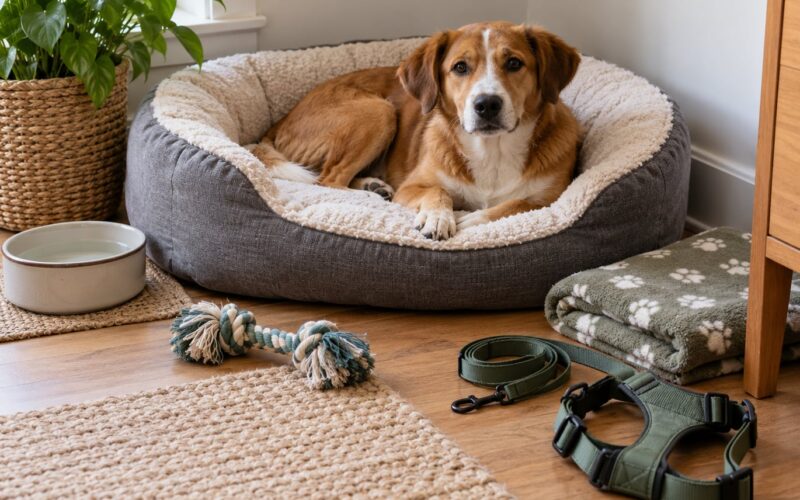
Most of this list costs nothing more than a few minutes of setup, and you can do all of it the night before or early on travel day.
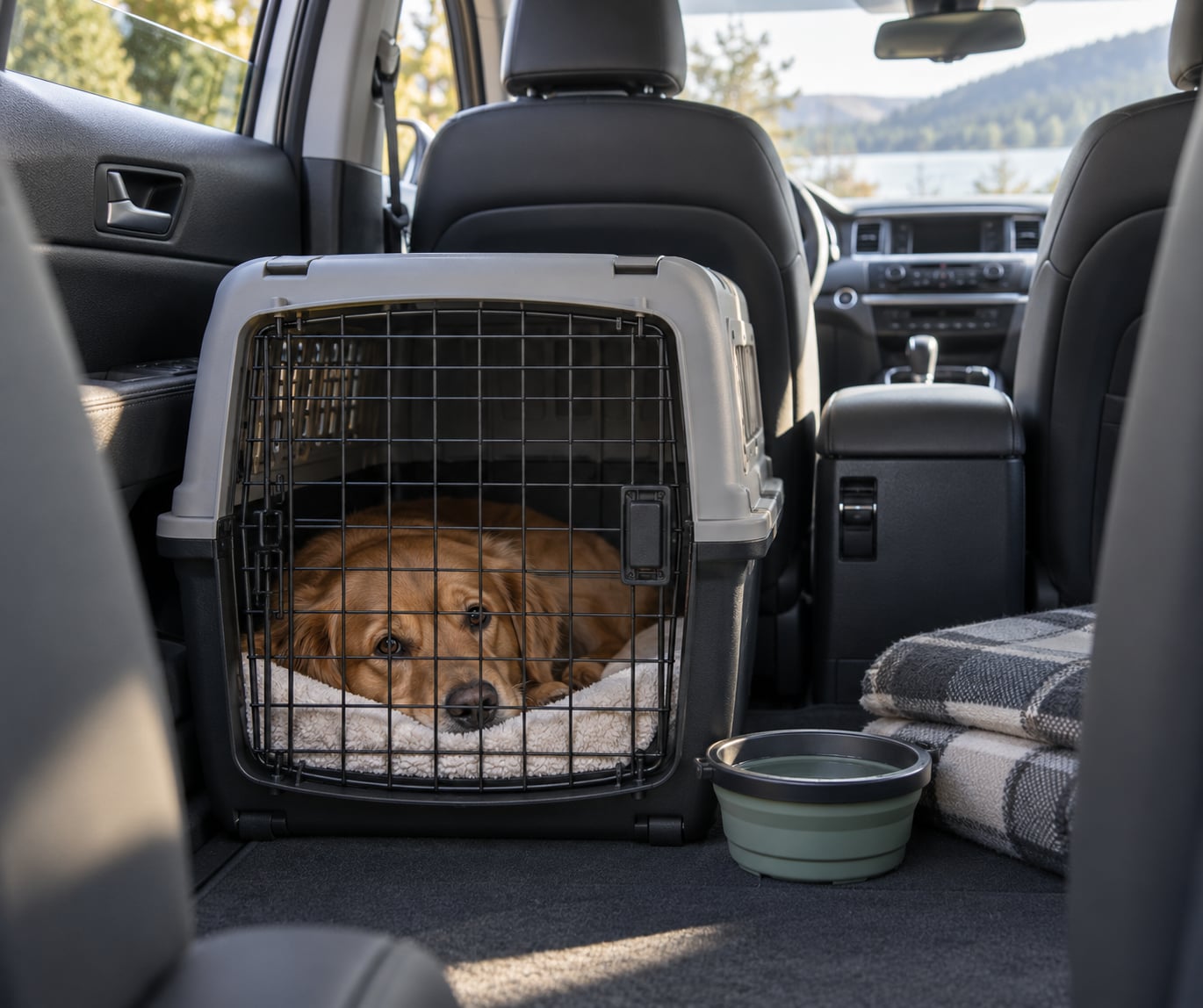
- A secure crate or a car harness. A solid-sided crate on the floor behind the front seats limits both movement and the view of the road, which is where a lot of nausea comes from. A harness clipped in is the alternative if your dog already hates the crate.
- Ventilation. Crack two windows a few inches on opposite sides. Fresh air helps equalise cabin pressure, which some dogs find nauseating on their own.
- Water. A spill-proof bowl or a travel water bottle, plus a familiar bowl your dog knows. Withholding food does not mean withholding water.
- A familiar scent. A blanket from the couch or a worn T-shirt of yours goes in the crate with your dog.
- One travel-only toy. Something your dog never sees outside the car, so the car stays linked to good things.
- A pheromone spray. The spray-type calming products go on the crate bedding about 20 minutes before you leave, never straight onto your dog.
- Your vet’s phone number. If your dog is a puppy, is sick in the car more than once a month, or you are considering any medicine, that conversation saves a ruined trip later.
How to Help a Dog With Car Sickness Step by Step
1. Identify the Cause and Check for Other Problems
Car sickness in dogs usually shows up as drooling and lip licking first, then restlessness, then vomiting, often within the first fifteen minutes of moving off. Most dogs with genuine motion sickness are completely fine the moment they step out of the car, and their appetite returns shortly after.
That recovery pattern is the clue. If your dog vomits at home, refuses to eat for a day, or has a head tilt, drifting eye movements or a loss of balance on flat ground, the problem is probably not the car at all. Inner-ear vestibular disease and other conditions look similar from the back seat and need a veterinary exam.
No breed is proven more prone to motion sickness. Puppies under a year are the most affected group simply because their balance system is still developing, and many of them grow out of it by their first birthday. A few dogs never do, and for those a plan built around prevention is better than a plan built around rescue.
2. Prepare the Car and Reduce Motion
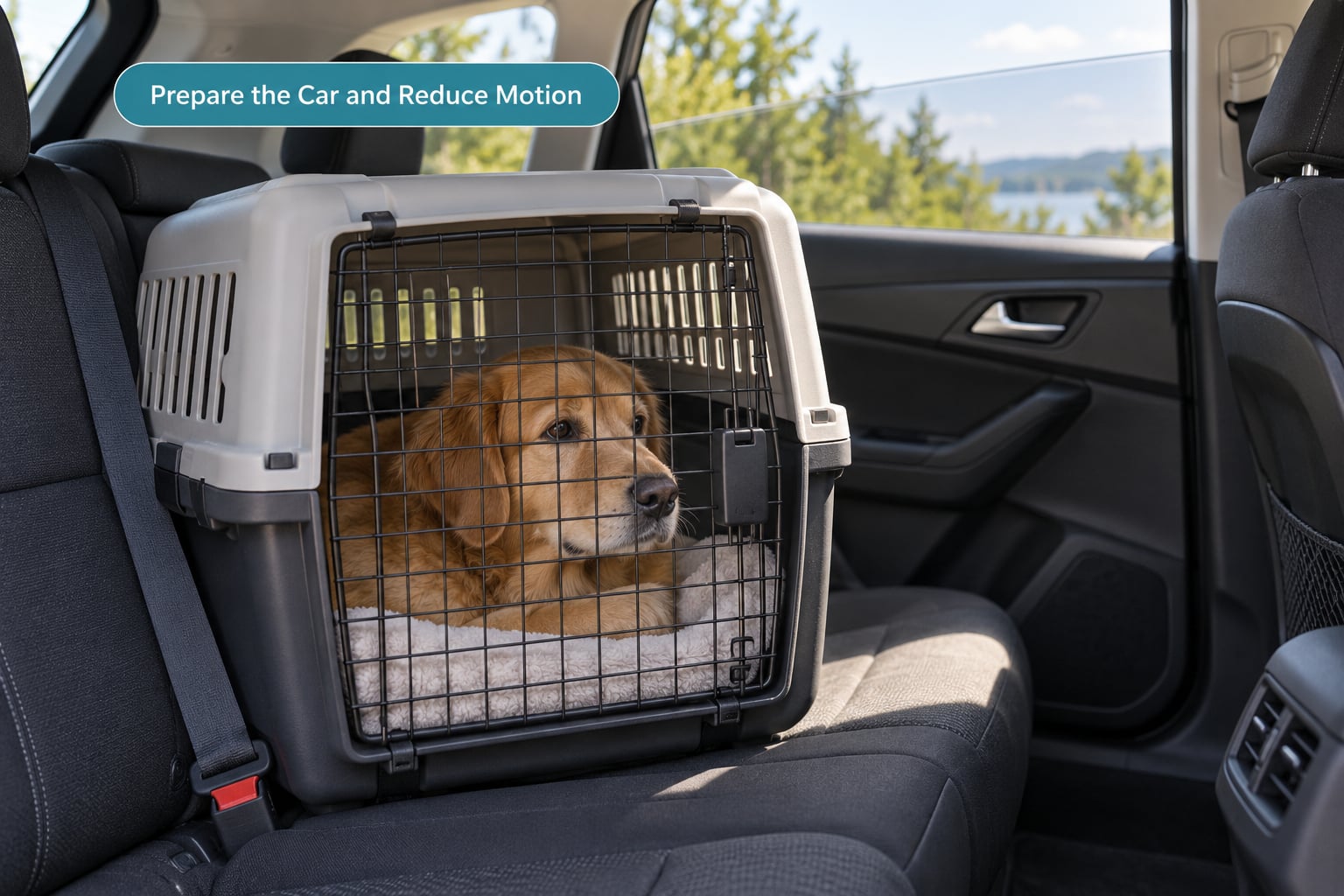
Where your dog sits matters as much as what you feed them. The floor behind the front passenger seat is the stillest spot in most cars, and putting the crate there cuts both sway and the shifting horizon that triggers nausea.
A solid-sided crate helps further because your dog cannot watch the road sweep past. If you use a harness instead, clip it in and keep the lead short enough that your dog cannot stand up and pace. Blocking the view works too: a fitted sheet over the crate door is a cheap fix that some owners notice helping within one trip.
Crack the windows before you leave, not after your dog starts pacing. Keep the cabin cool and quiet, and skip loud music. The temperature and the air are doing more work here than most people expect.
3. Use a Calm Pre-Travel Routine
Withhold food for 2 to 12 hours before departure, with the longer fast reserved for trips where vomiting is a certainty. Water stays available the whole time. Then take a short, calm walk, keep the house routine normal, and load the car before your dog is anywhere near it.
Do the timing math backwards from when you plan to leave. Pheromone spray goes on the bedding roughly 20 minutes ahead, any vet-approved medicine goes in 1 to 2 hours ahead depending on the product, and the walk happens right before you open the door. A rushed morning is how a well-planned trip turns into a car wash.
4. Use Vet-Approved Support to Help a Dog With Car Sickness Safely
Never give a dog human medication on your own decision. Antihistamines sold for people are dosed by weight and by drug, and two different products can share the same active ingredient. Ask your vet for the product, the amount and the timing, then write them down.
| Option | Type | When to give it | What to watch |
|---|---|---|---|
| Maropitant (sold as Cerenia) | Anti-nausea, vet prescribed | Usually 1 to 2 hours before the trip | Not for puppies under a certain age without a vet’s dosing; prescription needed |
| Dimenhydrinate (Dramamine) | Over-the-counter antihistamine | About 1 to 2 hours before, short trips | Drowsiness, dry mouth, limited effect if anxiety is the main cause |
| Meclizine (Bonine) | Over-the-counter antihistamine | As directed by your vet | Same sedation caveats; never combine with another antihistamine |
| Diphenhydramine (Benadryl) | Over-the-counter antihistamine | As directed by your vet | More sedating than the other two, often not worth it for a car ride |
| Trazodone or similar anti-anxiety medicine | Prescription calming medicine | Timing set by your vet, often the evening before | Helps anxious dogs only; does not treat nausea on its own |
| Sedatives | Prescription only | Vet directed | Leaves a dog unable to respond normally during the drive |
The key distinction owners miss: nausea medicine and anxiety medicine solve different problems. A dog who is calm but drooling needs nausea support. A dog who is barking, pacing and trembling needs calming support, and some need both.
Natural options such as ginger, valerian, passionflower or skullcap come up constantly in owner discussions. Evidence for these in dogs is thin, so treat them as a low-risk experiment for mild cases and not as a substitute for a vet conversation about a dog who is reliably sick every trip.
5. Take Breaks and Watch Your Dog’s Response
Between trips, build tolerance in stages rather than gambling on a four-hour drive. Owners on r/DogAdvice and r/Dogtraining consistently report that a crate and a slow ladder made more difference than anything they tried after the dog was already sick.
| Stage | What you do | You know it is working when |
|---|---|---|
| 1. Nearby | Sit with your dog next to the parked car, treats in hand, for a few minutes | Your dog looks at the car without leaving |
| 2. Inside | Open the door, place your dog on the crate bedding, feed a lick mat | Your dog eats inside the car calmly |
| 3. Engine on | Start the engine, stay parked, keep the session short | No drooling, no pacing |
| 4. Short move | Drive around the block and straight home | Calm arrival with no vomiting |
| 5. Building up | Extend to 20 to 30 minute trips, then to the real destination | Your dog settles for most of the ride |
Repeat each stage until it is boring, then move up. Stop the session early if your dog starts licking lips or scanning the window, because those are the early signs, and push back one step at the next attempt.
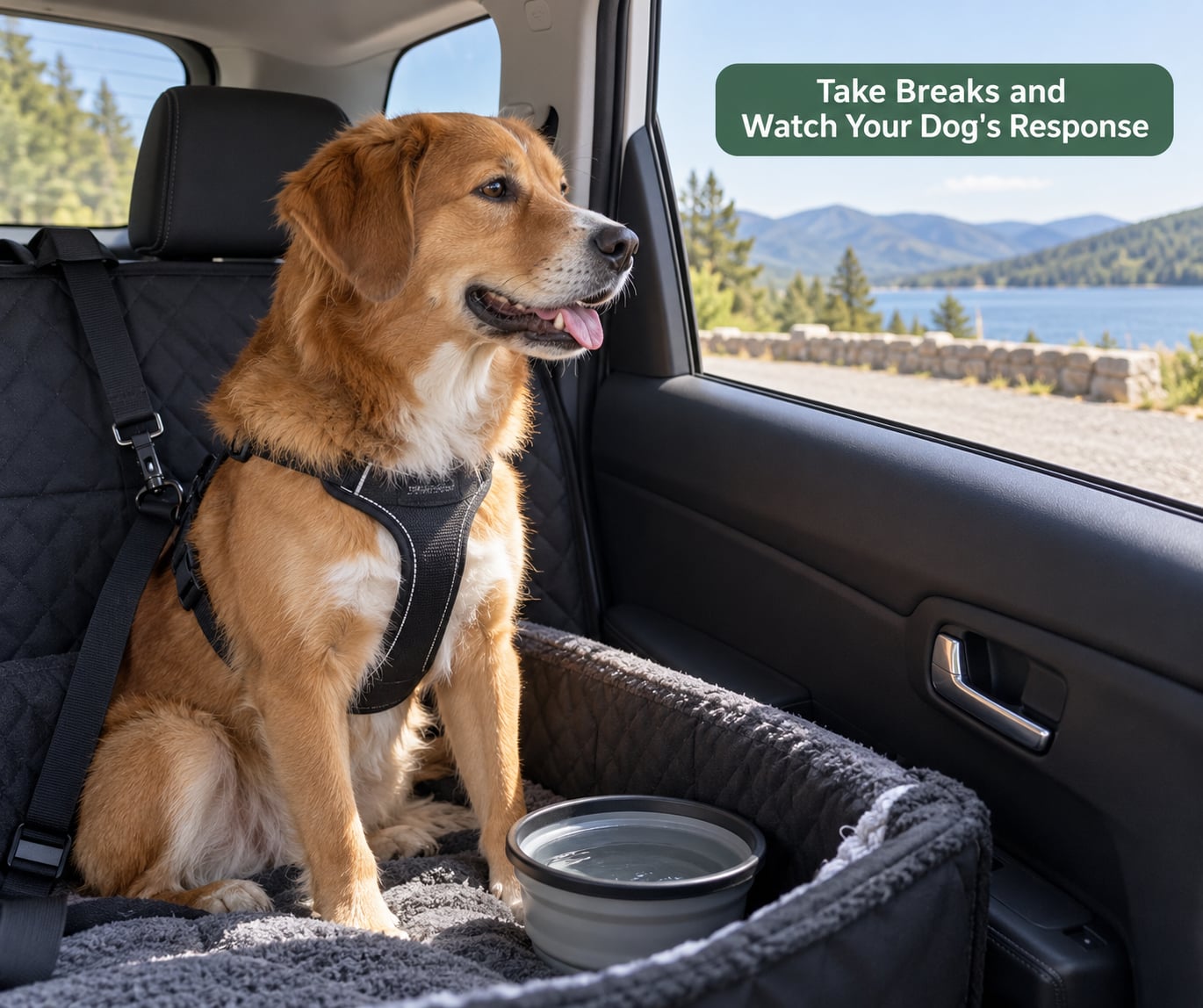
For a long road trip, stop every two hours for water, a bathroom break and five minutes of fresh air. If your dog does vomit, pull over somewhere safe, let it walk, offer water and stay calm yourself. Scolding a sick dog amplifies the stress that caused the problem.
Clean the interior properly afterwards. Remove any solid mess, rinse with an enzyme cleaner rather than a scented spray, and cover the seat or crate base with a washable pad. Acidic stomach contents can damage upholstery, and the smell of a previous episode makes some dogs anxious all over again.
Common Mistakes
Feeding a big breakfast before the trip. A full stomach has somewhere to go. Withhold food instead, keep water available, and save the meal for when you arrive.
Giving human medication without asking. This is the most common and most avoidable mistake on the list. Owners on Reddit threads about dog car sickness describe repeatedly waiting days for a vet appointment because they did not want to give an OTC pill unconfirmed, and that is the right instinct to keep. Ask first, every time.
Letting your dog roam the car. A dog loose in a moving vehicle slides, braces against the door and reads every swerve as movement. Crate it or clip it in.
Yelling after an episode. Vomiting already makes a big deal out of the car in your dog’s mind. Loud reaction and pointing at the crate teach your dog that something is wrong with the car, which makes the next trip harder.
Assuming every vomit is car sickness. A dog that is sick at home, off food, or showing a head tilt or drifting eyes needs a vet, not another crate ride.
Combining remedies without checking. Two antihistamines, an antihistamine with an anti-anxiety drug, or a calming supplement alongside a sedating medicine can add up to something stronger than you intended.
Also on the do-not-give list: essential oils diffused in the car, which can harm dogs through inhalation, and any human gummy or chewable marketed for people. Many are flavoured with xylitol or chocolate, and neither is safe for a dog. If your dog swallows something meant for you, call a veterinarian straight away rather than waiting for symptoms.
Frequently Asked Questions
What can I give my dog for car sickness?
The usual first choice your vet reaches for is maropitant (Cerenia), an anti-nausea medicine given about 1 to 2 hours before the trip. Over-the-counter antihistamines such as Dramamine or meclizine are sometimes used for short trips, but both cause drowsiness and neither helps a dog whose real problem is anxiety. Ask your vet for the product and the amount before you buy anything.
How soon should I feed my dog before a car trip?
Withhold food for 2 to 12 hours before leaving, and use the longer end of that range when your dog is reliably sick on the car. Water should stay available the whole time, since dehydration makes a rough ride much worse. Feed a normal meal once you arrive and your dog has settled. For puppies and small breeds, ask your vet about a shorter fast.
Can human motion-sickness medicine be given to a dog?
Sometimes, but only with your vet naming the product and the dose. Human motion-sickness medicines are dosed by weight and by active ingredient, and dimenhydrinate, diphenhydramine and meclizine are different drugs even though they are sold for similar purposes. Giving two of them together, or combining one with a calming supplement, can sedate a dog far more than expected.
How can I stop my dog from vomiting in the car?
You cannot always stop it, but you can make it far less likely. Travel on an empty stomach with water available, keep the car cool with windows cracked, secure your dog in a crate on the floor behind the front seats, and give any vet-approved medicine ahead of time. Then grade up short, pleasant rides so the car stays linked to treats and calm instead of illness.
Is motion sickness in dogs dangerous?
An occasional episode is uncomfortable rather than dangerous. Repeated vomiting brings dehydration, and dogs can inhale stomach contents, which is a serious emergency that needs a vet straight away. Be more concerned when the sickness happens outside the car, when your dog is off food afterwards, or when you see a head tilt, drifting eyes or loss of balance. Those signs point to an inner-ear problem instead.
Can I train my dog to enjoy car rides?
Yes, most dogs who are sick from nerves can be retrained. Work up slowly: sit beside the parked car, then feed your dog inside it, then start the engine, then drive around the block, then extend the time. End every session while your dog is still enjoying it. Puppies often improve on their own by their first birthday, and a crate with bedding helps more than most owners expect.
Start Here First
If you only do three things, do these. Take the meal away 6 to 8 hours before you leave while keeping water available, secure your dog in a crate on the floor behind the front passenger seat with the windows cracked, and ring your vet about an anti-nausea medicine before your next trip rather than after the next bad one.
Everything else in this guide, the training ladder included, is there to make the fourth trip boring instead of awful. Tell your vet what you have noticed and when, because a short honest account of the timing helps more than any guess you make at home.