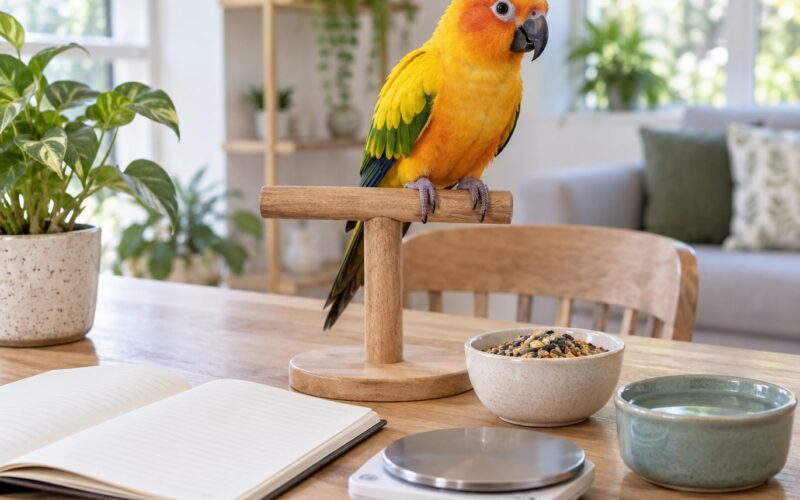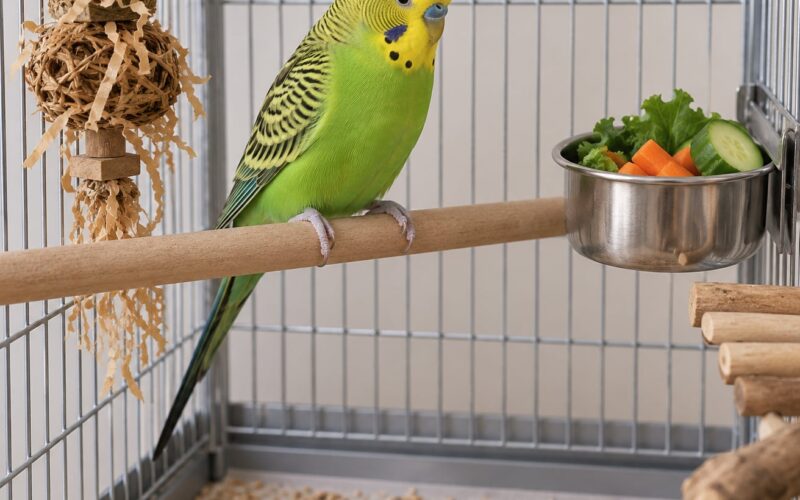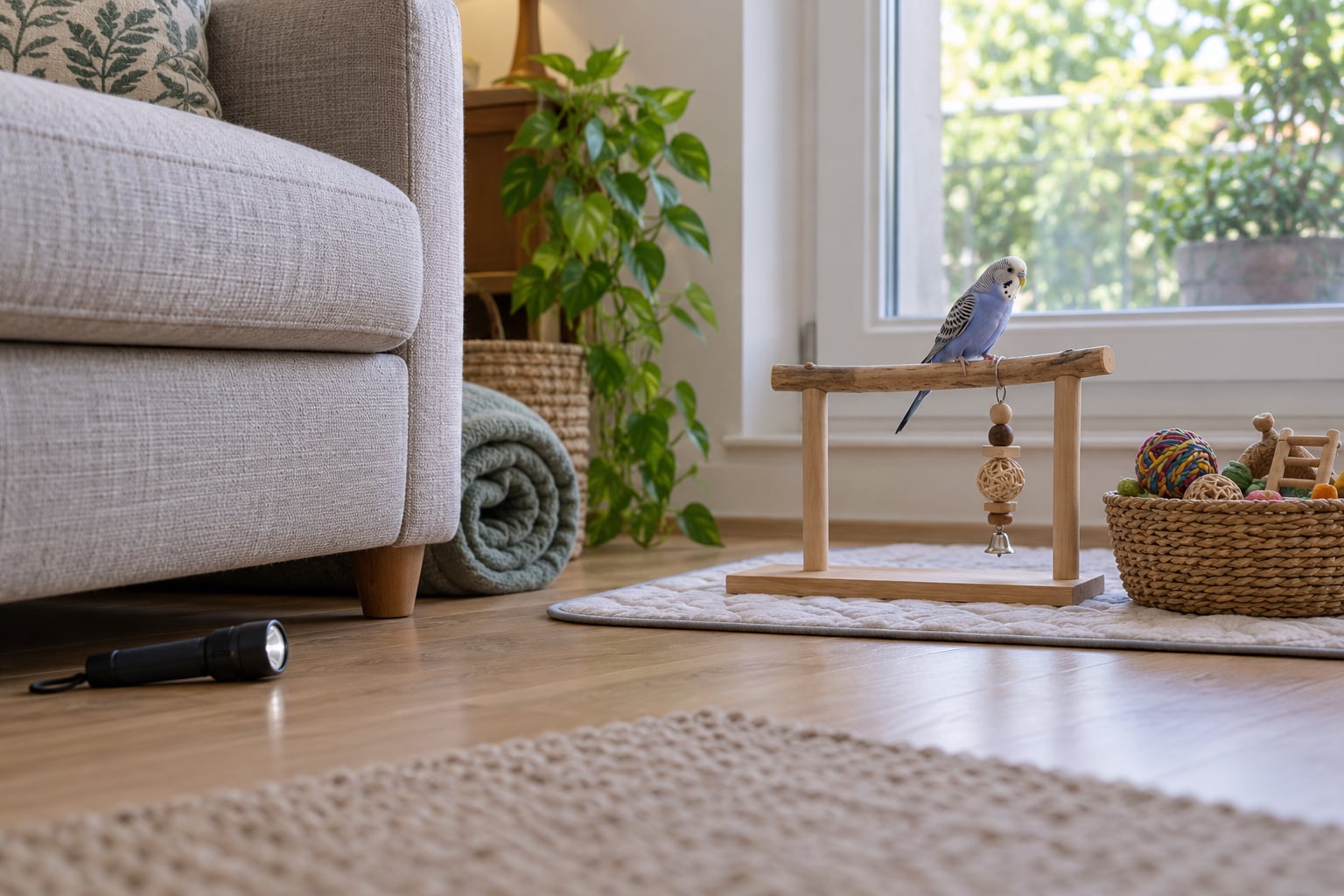
To bird proof a room before letting a bird out, walk the space at the bird’s own height, close every window and door, kill the ceiling fans, put away the cords, hot pans and open water, shut the other pets in another room, and then stay in the room for the whole session. It takes 15 to 30 minutes the first time and about 30 seconds a day after that.
Most owners think bird-proofing means keeping the bird inside. That is only half of it. There are two separate jobs: escape prevention, so the bird cannot get out through a window or a door, and injury prevention, so nothing in the room can hurt it once it is flying. A room can pass one test and fail the other completely.
The good news is that neither job is expensive or complicated. It is a habit, and once the room is set up it stays set up. You just re-check it before every outing.
Table of Contents
- What You Need
- Step-by-Step: How to Bird Proof a Room Before Letting a Bird Out
- Inspect the Room at Bird Height
- Close Escape Routes and Secure Openings
- Remove or Protect Household Hazards
- Create a Safe Landing and Viewing Area
- Test the Room Before Free-Roam Time
- Common Mistakes
- Frequently Asked Questions
- How long does it take to bird proof a room?
- Can I let my bird out if the windows and doors are closed?
- What is the safest room for a bird to explore?
- Are window screens safe for birds?
- How should I introduce my bird to free-roam time?
- What household plants and foods are dangerous for birds?
- Conclusion
What You Need
Gather these before you start. Most of them are already in a drawer somewhere.
- A small flashlight. Needed for looking behind appliances and inside gaps. A phone flashlight works fine.
- A small mirror or your phone camera. Slide it under furniture to spot gaps you cannot see or reach.
- Something to mark glass. Static window film, a pack of dots or decals, or strips of coloured tape. Blinds alone leave clear strips of glass at the edges.
- A door barrier. Magnetic insect netting, an insulated door blanket, or a tall curtain hung on a track.
- Cord covers and tubing. Split-sleeve cord organizers or PVC conduit for blind cords and lamp cables.
- Cleaning supplies. A damp cloth, because a dusty perch or a grimy windowsill is worth wiping before anyone handles the bird.
- A second person. Not for the room prep, but for the first session. One of you watches the bird while the other shuts things.
Step-by-Step: How to Bird Proof a Room Before Letting a Bird Out
Inspect the Room at Bird Height
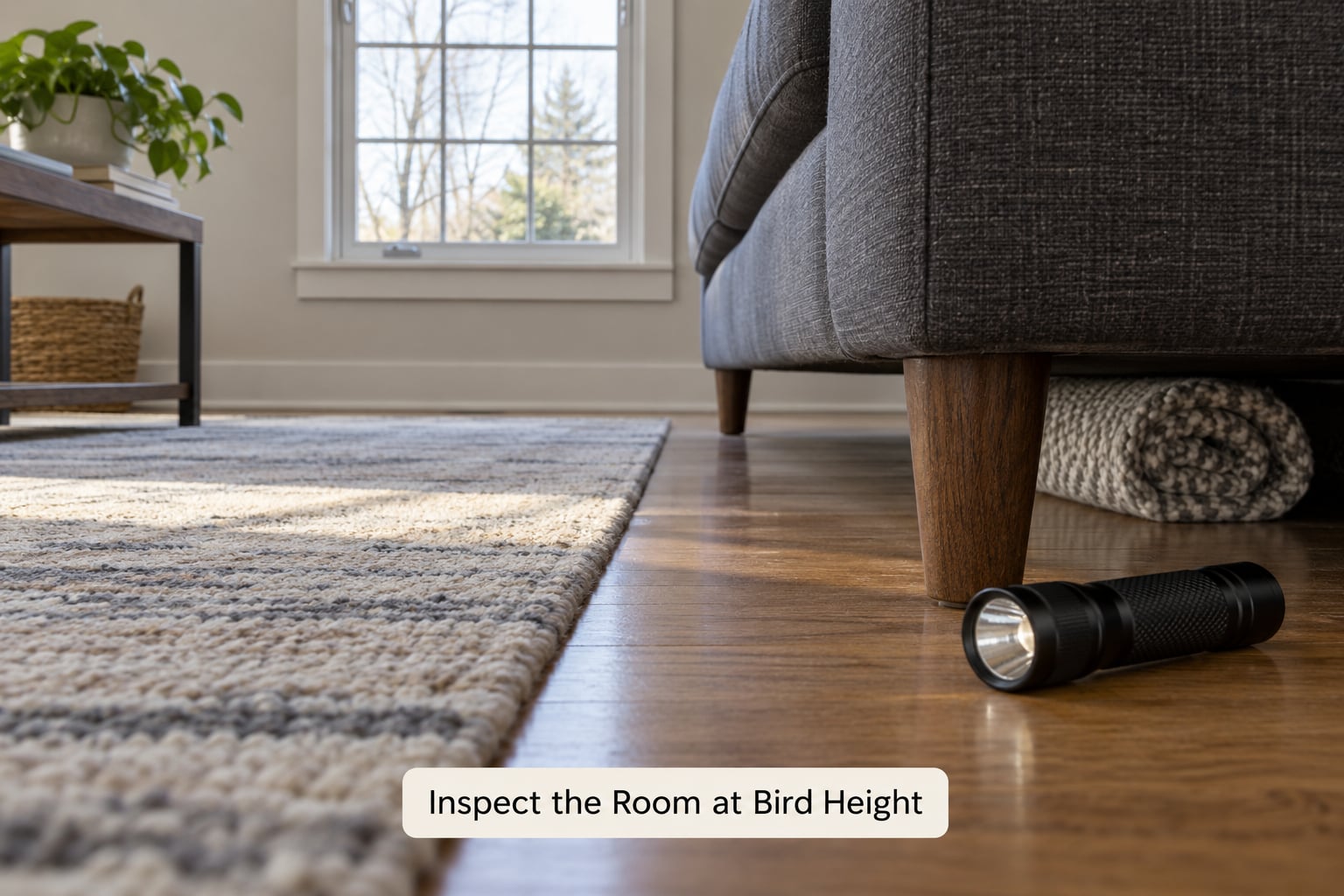
Birds do not see the room the way you do. They live in the 30 centimetres above the floor and the space above head height, and they fit into spaces you would walk past without noticing.
Kneel down and look at the room from that level first. Then stand on a chair and look at it from above, checking the tops of the fridge, the wardrobe and the door frames.
Pay attention to the gap between the back of the sofa and the wall, the space beside the refrigerator, the slot under the bed, and the gap under any cabinet with a kick plate. Owners on r/parrots describe wedging as the most common near-miss they deal with. A rolled towel or a folded blanket pushed into the gap closes it in about a minute.
Look for water while you are down there. A dog bowl, a plant saucer, a bathroom door standing open, a half-full sink, a toilet with the lid up. All of it goes.
Close Escape Routes and Secure Openings
Windows first, because glass is the hazard that kills the most pet birds. A startled bird at full speed does not see glass. Field research on window collisions, including the widely cited Klem study from the early 1990s, found that birds hitting windows is one of the leading causes of avian death in populated areas.
Cover every window the bird can reach. Blinds help, but they leave gaps; close them fully and cover the gaps with film, dots or decals. A dark curtain pulled over the whole window works even better, because a bird cannot see through what it cannot see.
Doors are the second one, and this is not a hardware problem, it is a people problem. The most reported cause of lost pet birds is a door left open by a family member or a guest. Put a barrier up if you can, and tell everyone in the house out loud before the cage door opens. Say it every single time.
Then the ceiling fan, which must be off, not just slowed down. A fan at low speed is still a moving blade at head height. Stand fans, oscillating heaters, and the blades of a ceiling fixture all count.
Vents and fireplaces too. A fireplace with a screen in front of it is still an open hole to a bird, and cold air from a vent can make a room drafty enough that a door blows open.
Remove or Protect Household Hazards
Work through this in order: air, then surface, then floor.
In the air: no scented candles, no diffusers, no aerosol sprays, no air fresheners, no smoke, no frying. Overheating non-stick cookware is the one people miss. When PTFE coating gets hot enough it releases fumes that are acutely dangerous to birds, and birds have far more efficient lungs than we do. That includes self-cleaning oven coatings and some air fryers. Cook in the kitchen with the bird shut out, or wait until the pan is cold and the room has aired out.
On surfaces: move the medicines, the vitamins, the human snacks. Chocolate, avocado, onion and garlic, alcohol and caffeine are all things a parrot will find interesting and that are not good for it. Remove anything with a loose foil wrapper, and put small items like paper clips, coins and hair ties in a drawer.
Plants are a separate category and a common accident. Lilies are deadly for cats and a bird will chew a leaf out of curiosity. Check every plant in the room against a toxicity list before you assume it is fine.
On the floor: cords go into tubing or under cord covers. Blind cords are looped and clipped up out of reach, because a bird can entangle a loop and break a leg or a wing.
Other pets go in a separate room. Every time, not just the first time. A closed door is the only thing between a bird and a cat.
Create a Safe Landing and Viewing Area
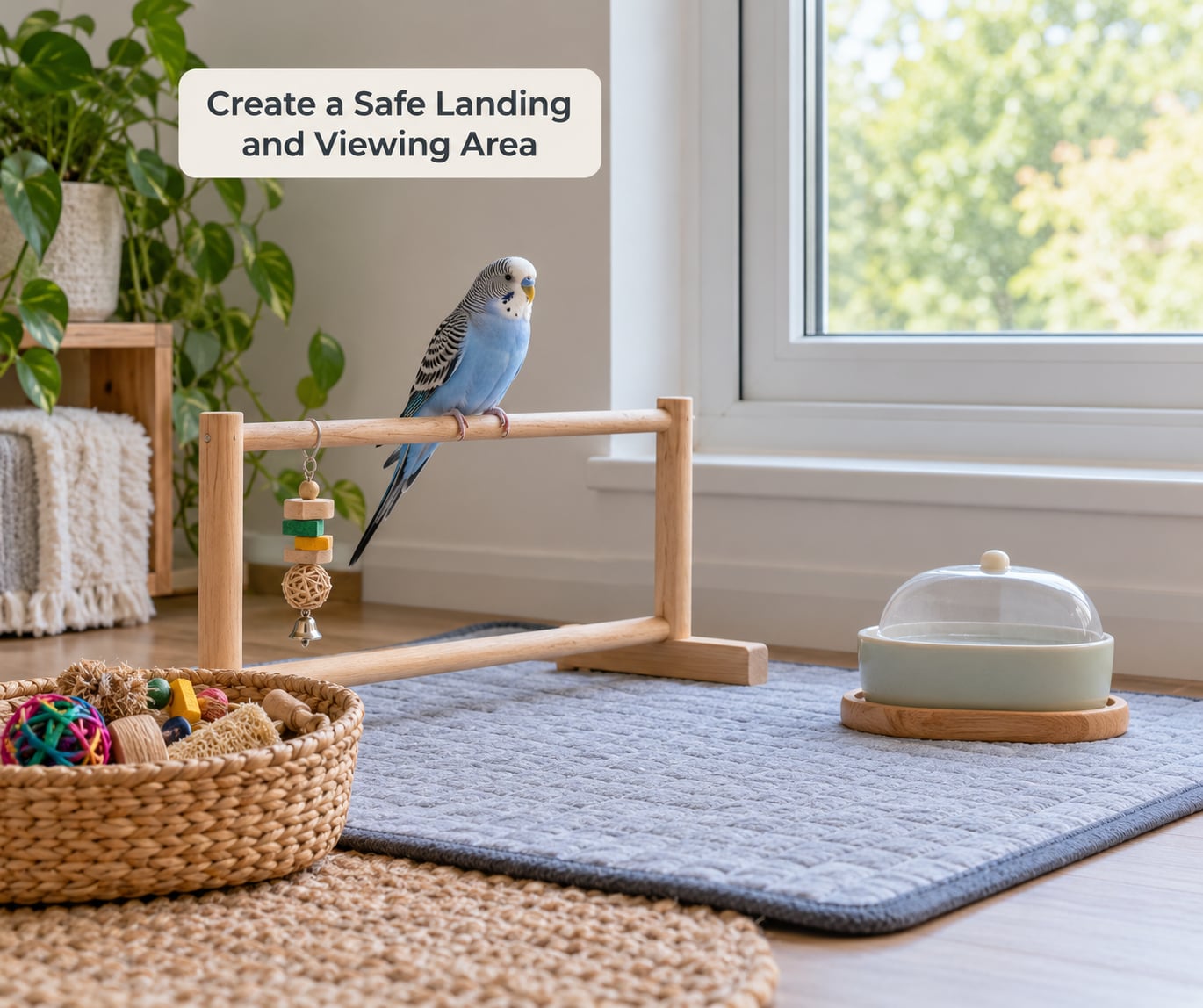
Give the bird somewhere it is meant to be. A stable perch that does not rock, a washable mat underneath it, and a toy basket that is not a loose pile on the floor.
Put the water station somewhere the bird cannot be stepped on and cannot fall into. A shallow dish on a stand works better than a bowl on the floor.
Leave the cage in view and ideally in sight of the perch. That makes the cage a landmark the bird can navigate back to, which is the whole basis of recall training and the reason birds come down more often.
Keep the play area away from the kitchen doorway and away from the path between the front door and the outside. Those are the two routes a bird takes when something frightens it.
Test the Room Before Free-Roam Time
Once the room is clear, spend a few minutes standing still in the middle of it and looking around as if you were the bird. You are checking for the last 5 percent, the thing you already know is there.
For the first session, have a helper in the room. Open the cage, step back, and let the bird come out on its own rather than trying to coax it. Budgies and cockatiels often need a couple of sessions before they will leave, and that is normal.
Keep the first session short, about ten minutes, in the smallest room you have. Small means the bird is closer to you, closer to the cage, and closer to the perch if something goes wrong.
If the bird lands somewhere you cannot reach, do not chase it. Dim the lights in the room and leave a night light near the cage. Birds navigate back to familiar light, and most of them come down within a few minutes on their own.
Common Mistakes
- Leaving a window bare. A bird at full speed does not see glass, and the result is usually head or neck injuries. Fix: static film, dots, or a full curtain over every reachable pane.
- Counting an insect screen as bird-proof. Most mesh is thin enough for a parrot or cockatiel to chew through within weeks, and the flap left behind is worse than no screen at all. Fix: mark the glass itself, not the frame.
- An open door. The bird is gone in seconds, usually when a visitor or a child opens it. Fix: a door barrier plus a spoken reminder to everyone in the house, every session.
- A fan left on low. A slow blade is still a blade at head height, and the cage hanging from a ceiling fixture swings right into the path. Fix: off, not low, checked before every session.
- A hot pan or a running oven. Burns hit feet and chest, and fumes from overheating PTFE coating cause sudden respiratory distress. Fix: the bird stays out of the kitchen until the pan is cold and the air has cleared.
- Loose cords and blind loops. Chewing, electrocution, or a leg caught in a loop. Fix: cord tubing, outlet covers, blind cords clipped up and out of reach.
- Open water. Drowning in a toilet, a sink or a dog bowl. Fix: lid down, bathroom door shut, bowls emptied, sinks dry.
- Other pets in the room. A cat strike is almost always fatal and it takes seconds. Fix: a second room behind a closed door, every single time.
- Furniture gaps left open. A bird wedges into the space behind a sofa and cannot be reached. Fix: a rolled blanket or towel in every gap beside appliances and behind seating.
The mistake behind almost all of these is the same one: assuming. Assuming the bird cannot fly that far, that the screen is enough, that the fan is too high to reach, that you will be the only person in the room. Bird-proofing is the opposite of assuming. It is checking the thing, every time, even on the days you did not expect anything.
Two more mistakes are worth naming. The first is proofing once and forgetting. New furniture, a renovation, a new plant, a birthday with extra people in the house, and you are back to square one. Owners on Avian Avenue and Parrot Forums both describe a quick re-check routine as the thing that actually keeps a room safe, and it is short.
The second is treating a proofed room as permission to leave the bird alone in it. A proofed room lowers the risk. It does not remove it. A bird is a prey animal, and fright and flight overrides weeks of training in a fraction of a second. Owners are consistent about this on every bird forum I have read: a bird-proofed room plus a person in the room is a safe outing. A bird-proofed room on its own is not.
Frequently Asked Questions
How long does it take to bird proof a room?
The first pass takes 15 to 30 minutes for a normal living room, longer if there are gaps behind furniture to close or doors to cover. After that, a room with fixed window coverings and a door barrier needs a 30-second check before each session: fans off, no hot pans, no open water, other pets shut away. Do the full walkthrough again whenever you move furniture, add a plant, or have people over.
Can I let my bird out if the windows and doors are closed?
Closed windows and doors handle escape, but they do not handle injury. A closed window is still a sheet of glass a startled bird can hit, a closed kitchen door is still a risk if a hot pan is on the stove, and a closed front door does nothing about a ceiling fan, a loose cord or an open toilet. You also need the hazards cleared, and you need to stay in the room the whole time the bird is out.
What is the safest room for a bird to explore?
The smallest room you can make work is usually the safest, because everything is closer together and closer to you. A spare room, home office or study is a good pick: predictable, easy to clear, and no through-traffic. Avoid the bathroom, the kitchen and any room with a ceiling fan. Whatever room you choose, the cage should stay in sight as a landmark so your bird knows where to return.
Are window screens safe for birds?
Standard insect screens are not bird-safe. Most mesh is thin enough for a parrot or cockatiel beak to chew through, and once there is a flap in the screen the bird can push into it and get stuck or slip out of the room. Screens also do nothing to stop a collision with the glass behind them. Mark the glass itself with static film, decals or dots, or hang an opaque curtain over the whole window.
How should I introduce my bird to free-roam time?
Start in the smallest room, with a stable perch, a washable mat and the cage visible in the same space. Do not coax or carry the bird out; open the cage and step back, because being placed on a perch that is not its own startles many birds. Keep the first session to about ten minutes, stay in the room, and end it calmly by offering a treat near the cage door rather than chasing your bird to catch it.
What household plants and foods are dangerous for birds?
The safe list is short. Chocolate, avocado, onion, garlic, alcohol and caffeine are all toxic, and so are xylitol and anything salty. On the plant side, lilies are fatal to cats, and oleander, philodendron, pothos, dieffenbachia and yew are all problems in a home with a bird. Before you let a bird loose in a room, check every plant against a toxicity list rather than guessing, and keep new cuttings out of reach for a few weeks.
Conclusion
Start at floor level with a flashlight and look at your room the way your bird sees it. Cover the glass, close and secure every opening, put away the cords, the medicines and the hot pans, empty the water, and shut the other pets away. Then stay in the room.
Do it once properly and the daily version takes half a minute. Any bird can show you something new to worry about, so if your bird is flopping, sneezing, breathing hard or acting dull after time out of the cage, stop and speak to an avian vet rather than guessing at it.