If your parakeet is pulling out its own feathers and leaving bare patches, the short answer is that something is bothering it: an itch, a pain, a sudden change in its routine, boredom, loneliness, or a habit that formed while one of those was going on. The three most common reasons are boredom or lack of activity, stress after a change in the household, and irritation from parasites, a skin problem or a diet that is mostly seed. The part most owners miss is that plucking usually keeps going after the original trigger is gone.
This guide walks through how to tell normal grooming apart from real plucking, the nine causes worth ruling out one by one, and the changes that tend to help. It is general information, not a diagnosis. Anything medical needs an avian vet, the kind of veterinarian who treats birds daily rather than a general practice that sees dogs all week.
One note before we start. The word for this in veterinary circles is feather destructive behavior, and that shift in language matters. It tells you the plucking itself becomes part of the problem. Removing feathers soothes the bird for a moment, and that relief teaches the behaviour to repeat.
Table of Contents
- Is Your Parakeet Plucking Feathers or Just Grooming?
- Why Is My Parakeet Plucking Feathers?
- What Environmental Changes Can Trigger Plucking?
- What Can You Do to Help Your Parakeet?
- How Can You Tell Stress Plucking From a Health Problem?
- When Should You Take Your Parakeet to the Vet?
- Frequently Asked Questions
- Is my parakeet plucking its feathers or just molting?
- Should I put a collar or anti-plucking garment on my parakeet?
- What foods can support feather health in a parakeet?
- Can a female parakeet pluck feathers because of hormonal changes?
- How long does it take for a parakeet to stop plucking its feathers?
- What to Do First
Is Your Parakeet Plucking Feathers or Just Grooming?
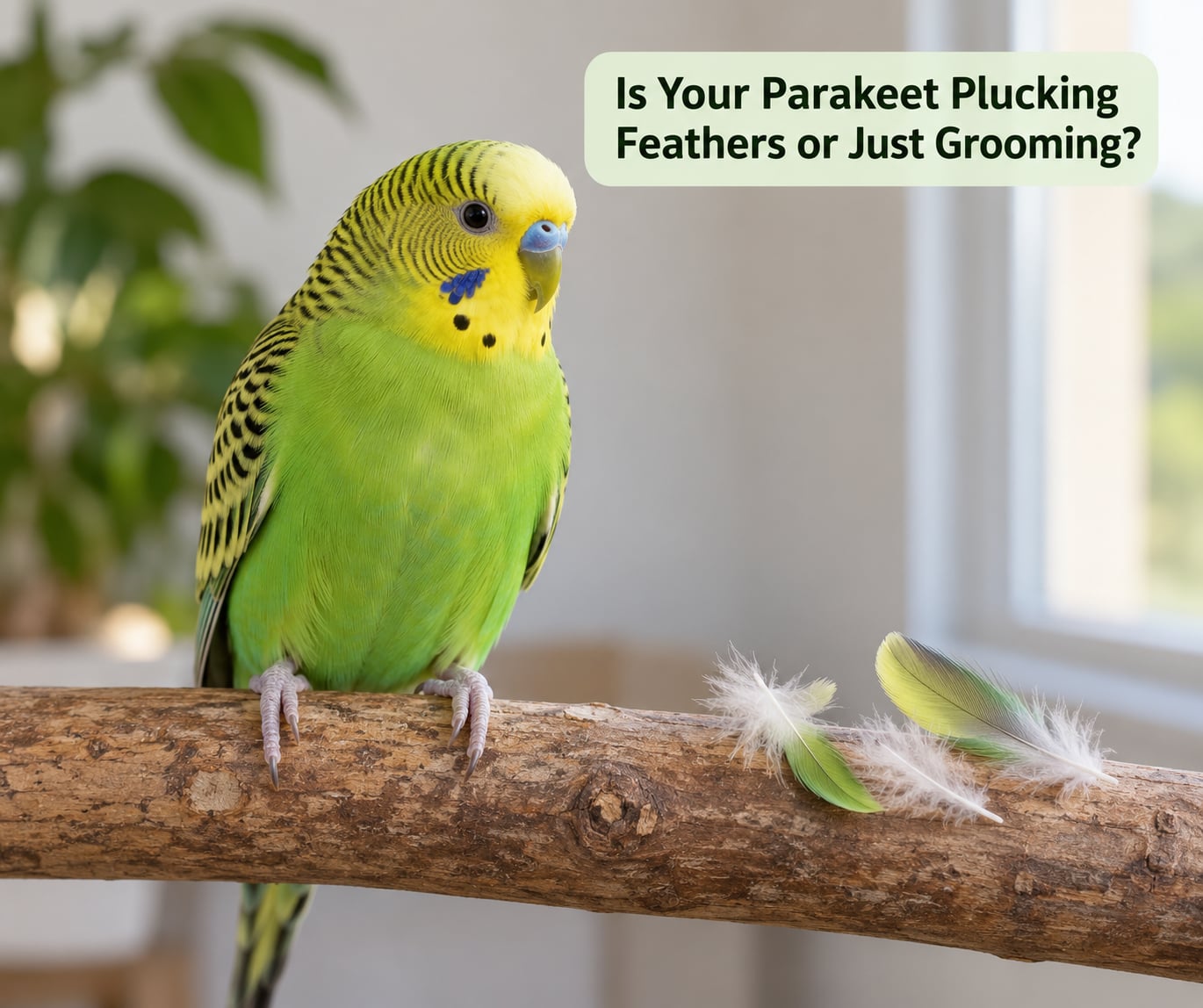
Parakeets groom themselves several times a day. That is normal, and a healthy bird working through a feather loses the old one and leaves it in the bottom of the cage. Real plucking looks different, and the difference is easier to spot than most people expect.
| What you are seeing | Where feathers are missing | What to look for | What to do |
|---|---|---|---|
| Normal preening | Nowhere, feathers stay in place | Beak running down feather shafts, whole loose feathers in the cage, plumage looks smooth | Nothing. Let it happen. |
| Moulting | Evenly all over the body, both sides | Lots of down in the cage, new pin feathers poking out, a scruffier look for a few weeks | Nothing. Support with bathing and steady humidity. |
| Over-preening | Feathers look frayed or chewed rather than absent | Feather tips ragged, bird repeatedly nibbling one spot | Watch it for a week and note what changes. |
| Destructive plucking | Bald patches on the chest, belly, thighs, back or the feathers the bird can reach with its beak | Skin showing, feather follicles red or bumpy, bleeding, open sores, damaged or chewed shafts | Treat it as a health and environment problem. See a vet. |
Two clues do most of the work for me. First, a plucking bird keeps feathers in places it cannot easily reach, like the top of its head and the front of its neck, which produces that familiar hairline look. Second, if you watch for five minutes with a phone, over-preening is methodical and relaxed while plucking is frantic and ends with a feather in the beak.
Take that video and note which body areas are bare. The pattern is the single most useful piece of information you can hand an avian vet.
Why Is My Parakeet Plucking Feathers?
There are nine causes that come up again and again in parakeets, and more than one can be true at the same time.
1. Boredom and not enough activity. Parakeets are built for hours of flying, climbing and searching for food. A small cage with nothing to chew turns into a bored bird with hours to fill, and many owners say the plucking began exactly when a toy broke and nothing replaced it.
2. Loneliness. These birds flock in the hundreds in the wild. One bird alone in a home where people work ten hours a day is the most common situation I hear about, and it is often the one nobody planned for.
3. Sudden change or stress. A move to another room, construction, a new baby, a new cat, a schedule change, a household move or a companion dying can all set it off. Owners often report plucking starting two to four weeks after the change, which is long enough that they stop connecting the two.
4. Hunger disguised as foraging. A bird that eats large quantities of seed and nothing else can end up with poor feather condition and itchy skin. Seed-heavy diets are the most common nutrition problem in pet parakeets.
5. Allergies and dry or irritating air. Aerosols, scented candles, diffusers, cleaning products, cigarette smoke and a very dry room all land on feathers and skin. Dry air also makes preening feel rough rather than smooth.
6. External parasites. Mites and lice drive scratching and biting that quickly turn into plucking. Bird mite bites often show up as scabs on the feet and face.
7. Internal infection. Bacterial skin or follicle infections, giardia and psittacine beak and feather disease all show up as damaged, brittle feathers rather than neat missing ones. Polyomavirus affects young birds most.
8. Organ and hormonal problems. Liver disease, kidney disease and reproductive changes can drive itching. A female may start producing eggs and pluck the chest and the area around the vent, and unneutered males sometimes pluck a patch on the head.
9. Pain. Anything uncomfortable in the body, including arthritis or an injury, can send a bird to its own feathers.
Where the feathers are missing narrows the field. Head and neck baldness usually points to a companion bird or to hormonal trouble, since birds cannot pluck their own crowns. Chest and belly patches are reachable with the beak and lean toward stress or habit. Plucking near the vent or under the wings is a vet appointment, not a home project.
What Environmental Changes Can Trigger Plucking?
Environment means everything around the cage, and most owners underestimate how much a parakeet reads it.
- Moving the cage. Even two feet, and especially into a busier hallway or a room with a window onto the street.
- A new person or animal. Another bird in the house can trigger plucking in the bird that was there first.
- Noise and construction. A bird that tolerates a normal day can fall apart during weeks of drilling.
- Temperature swings and dry heat. Radiators and air conditioning in the same room make life harder than either alone.
- Less daylight. Under ten hours of darkness leaves a bird hormonally confused and ready to breed, which is its own problem.
- Loss of privacy. A cage facing a busy doorway gives a bird nowhere to retreat.
- Hours alone. Going from company to silence every day reads as loss.
Test one thing at a time. Move the cage back for two weeks and watch. If nothing changes, put it somewhere else and look again. Changing five things at once means you learn nothing, and your bird loses every reference point at the same time. Never punish the plucking or scruff the bird’s head, because that confirms in its mind that its feathers are the problem.
What Can You Do to Help Your Parakeet?
This is the order that works for me: rule out health problems, then rebuild the day.
1. Get an avian vet involved early. A physical exam, weight check and discussion of feather and skin condition rule out the causes you cannot see. A full blood panel or feather and skin culture is worth asking about when the plucking is sudden or severe.
2. Write down what you see before the visit. Note when the plucking happens, which areas are bare, droppings, eating, weight and any change in the house. Ten lines of notes beat ten vague minutes in an exam room.
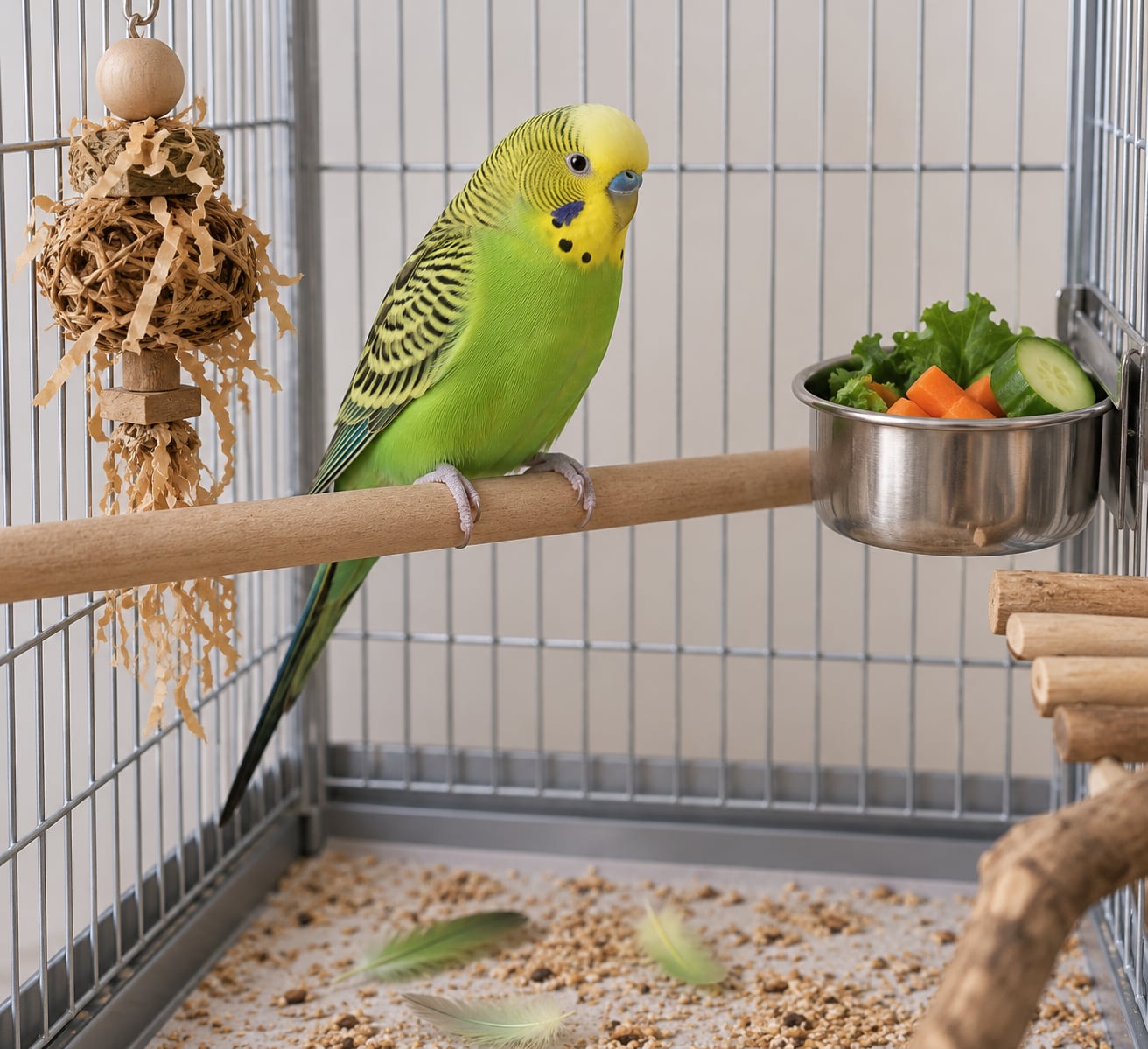
3. Move the diet off seed. A formulated pellet should be the base, with fresh vegetables offered daily and seed as a small portion rather than the whole bowl. Wash greens properly and avoid avocado, chocolate, caffeine, alcohol and anything salted, since these are toxic to birds.
4. Give it a job every day. Foraging toys, shreddable paper, safe wood, cardboard and bells keep those hands and that beak busy. Scatter food instead of serving it in a bowl for part of the day.
5. Protect sleep. Ten to twelve hours of uninterrupted darkness in a quiet room does more than any product on a shelf.
6. Build out-of-cage time into the schedule. Daily free flight or supervised time matters, and a consistent window is easier on the bird than occasional long sessions.
7. Consider a companion carefully. A bonded bird helps many lonely parakeets. It does not help everyone, and owners report that once plucking has become a habit, a new friend may not stop it. Quarantine any new bird for thirty days and have a vet check it first.
8. Treat collars and sprays as what they are. A soft collar can stop a bird from reaching a sore area, but it also blocks normal preening of the head and neck and frustrates a lot of birds, so use it short term and only with your vet’s advice. Bitter apple and aloe sprays are widely sold and mostly disappointing; they coat the feathers without touching the reason for the behavior. Supplements do not fix a plucking bird on their own. If a product seems too good, ask your vet about it.
Judge progress in days and weeks, not hours. Two or three quiet days in a row is a good sign. A bad week after a change means you learned something, not that you failed.
How Can You Tell Stress Plucking From a Health Problem?
Stress plucking and health problems look similar at first, which is why the vet visit is not optional when you are unsure. Behavioral plucking usually follows a change, appears where feathers are reachable and comes with a bird that still eats, perches, bathes and vocalizes normally.
Health problems tend to add other signs: weight loss, a bird sitting on the cage floor, fluffed up and quiet, less interest in food, watery or discolored droppings, discharge from eyes or nose, breathing changes, red or crusty skin, swollen feet, or a change in how the bird lands. Plucking to the point of bleeding and open sores is self-injury and needs same-day attention.
Whatever you do, keep creams, ointments, oils and human skin products off the skin or feathers. Birds preen anything on the coat, and many products that are fine for human skin are dangerous if swallowed. If you want to put something on your bird, ask an avian vet first.
When Should You Take Your Parakeet to the Vet?
Book an appointment with an avian vet, not a general practice, whenever any of these apply.
- Plucking continues after two to three weeks of changes on your side
- Feathers are being lost quickly or bare skin is spreading
- Any bleeding, open sores, swelling or wounds
- Plucking near the vent, under the wings or on the head
- Repeated vomiting or diarrhea, or any change in droppings
- Breathing difficulty, tail bobbing or sitting on the cage floor
- Fluffed up, unresponsive, or a bird that has stopped eating
- Any sign of weight loss or a bird that looks weak when lifted
The vet will weigh the bird, examine feather and skin condition, look at feather follicles, ask about diet and routine, and discuss tests for parasites, infection, organ function and pain. Reproductive changes show up here too.
Regrowth is slower than most owners expect. Small feathers usually come back within weeks, while contour feathers and tail feathers can take several months. Pin feathers, the new feathers still in their sheaths, often show as little dark spikes and can be sore, so handle that area gently. If the follicles were damaged or the skin scarred, some feathers may never return to full length.
Frequently Asked Questions
Is my parakeet plucking its feathers or just molting?
Molting spreads feather loss evenly over the whole body and comes with plenty of down in the cage and new pin feathers poking through. Plucking is targeted: bare patches on areas the bird can reach with its beak, ragged feather tips, red follicles, bleeding or open skin. Over-preening sits in between, with frayed feathers and no bald spots. Film the bird for five minutes and check the bottom of the cage before you decide which one you are looking at.
Should I put a collar or anti-plucking garment on my parakeet?
A soft collar can help if your bird is picking at a sore or healing area, but only for a short period and only with avian vet advice. Collar-wearing birds cannot preen their head and neck, which can make the problem worse, and many chew, trap or work themselves free. Birds already plucking from habit usually keep plucking around the collar. Treat a collar as a short bridge while you work on the cause, not as a fix.
What foods can support feather health in a parakeet?
A formulated pellet should make up the base of the diet, with fresh vegetables offered daily and seed kept to a small portion. Foods such as millet, leafy greens, broccoli, carrot, sweet potato and small amounts of fruit are common choices, and bathing water with a little plain aloe added is sometimes offered. Seed-only diets are linked with poor feathering and itchy skin. Always wash produce, and never offer avocado, chocolate, caffeine, alcohol or anything salted.
Can a female parakeet pluck feathers because of hormonal changes?
Yes. A female producing eggs may pluck the chest, belly and the feathers around her vent, and a male may pick a patch on his own head where he cannot reach the skin directly. Long daylight hours can push a bird into reproductive readiness, so a consistent schedule of ten to twelve hours of darkness helps. Nest boxes and other breeding triggers tend to make it worse. Your vet can confirm whether hormones are involved before you change anything.
How long does it take for a parakeet to stop plucking its feathers?
Expect weeks, not days. Once the trigger is gone, many birds settle within two to four weeks, and regrowth follows after that, with small feathers returning in weeks and tail and wing feathers taking several months. Birds whose plucking became a habit can take several months to break it, and setbacks during a stressful week are normal. If you see no improvement after a month of steady effort, go back to your avian vet.
What to Do First
Start with four things this week. Film the bird and note when the plucking happens and which areas are bare. Look hard at the cage position, the light cycle and how many hours the bird spends alone. Add daily foraging and shredding toys, keep the diet pellet-based, and hold a steady ten to twelve hours of darkness. Change one thing at a time and never punish the behavior.
Call an avian vet right away if there is bleeding, open skin, swelling, plucking near the vent, weight loss, breathing trouble or a change in droppings. Book a routine appointment if nothing changes after a few weeks. Feathers usually grow back once the trigger is gone, and the longer you wait on the habit side of it, the longer that habit sticks around.