Short answer: most dogs do their best work in 5 to 15 minute blocks. Puppies from 8 weeks to about 6 months usually manage 5 to 10 minutes at a stretch, older puppies and adult dogs learning basics hold on for 10 to 15 minutes, and focused work like nosework or scent tasks can run 20 to 30 minutes. The number matters far less than ending while your dog still wants more.
The forum threads that rank for this question all circle the same idea. A herding-dog owner on the BC Boards put it plainly: 15 to 20 minutes is a long time for any dog, so she trains 5 to 10 minute blocks and comes back later in the day. That advice has held up for years because it matches how dogs actually learn.
Attention runs out well before the body gets tired. A dog can be physically fresh and mentally done after eight minutes of repetitive cue work, and pushing past that point is how you end up with a dog who slumps on the floor when you reach for the clicker. So the guide below covers how long a session should last, what changes the number, how to structure one, and how to tell when to stop.
One note before we start: everything here is general training guidance. If your dog shows pain, lameness, a sudden change in behaviour, or any sign of illness, stop training and talk to your veterinarian rather than working through it.
Table of Contents
- How Long Should a Training Session With a Dog Last?
- What Factors Determine the Ideal Training Length?
- Age
- Attention span
- Breed and training drive
- Training goal
- Environment
- Reward type
- Recommended Session Length by Dog Age and Training Goal
- How to Structure Short, Effective Training Sessions
- How to Know When to End a Session
- Short Dog Training Sessions vs. Long Training Blocks
- At-home sessions of 5 to 15 minutes
- Group classes of 45 to 60 minutes
- Private sessions of 60 to 90 minutes
- Long specialist blocks of 20 to 45 minutes
- Frequently Asked Questions
- How long should a puppy training session be?
- How often should I train my dog each day?
- Is a one hour group dog training class too long?
- Why does my dog stop listening partway through a session?
- Should I use a timer when training my dog?
- How long should a senior dog’s training session be?
- Conclusion
How Long Should a Training Session With a Dog Last?
Here is how to find your own dog’s number instead of borrowing someone else’s. Run the same two familiar cues for five minutes and note the moment responses start arriving late. Repeat that identical five minutes twice more over the next two days. The point where quality slipped is your dog’s real attention span, and in most homes it lands somewhere between five and fifteen minutes without anyone having to guess.
Those ranges are starting points, not quotas. A puppy under six months rarely gets past five clean minutes without errors creeping in. An adult working on basics holds ten to fifteen comfortably. A dog on nosework or scent work can manage half an hour because the task rewards itself, and a high-drive herding dog may genuinely want more work than you have time for.
What Factors Determine the Ideal Training Length?
Five things move the number up or down, and they interact. Change one and you may need to change the session length too.
Age
Age sets the ceiling rather than the target. A young puppy’s attention span is genuinely short, and no amount of food motivation stretches it much. Adolescent dogs, roughly 6 months to 2 years, often dip again because everything else in the world suddenly matters more, so expect sessions to shrink during that stretch even though the dog is bigger and stronger.
Attention span
This is the real limit. You can estimate it by watching how long a dog keeps offering you behaviour after a reward: the moment the responses start arriving late, slower, or out of order, the focus window has closed.
Breed and training drive
High-drive working and herding breeds, border collies, German shepherds, herders, often tolerate longer blocks and genuinely need the outlet. The flip side is that these dogs can over-arouse, and an over-aroused dog cannot learn, however long you train. Low-energy senior or small companion breeds usually do better with several very short sessions.
Training goal
House training, name response and sit are quick, low-effort jobs that need only a few minutes. Recall, loose-lead walking in a busy place, and behaviour work around other dogs require more repetitions and more recovery time between them.
Environment
A quiet living room with no distractions is a very different session from the same five minutes in a park. Distraction work drains a dog faster than calm cue work does, so sessions in public usually need to be shorter, not longer.
Reward type
Training with your dog’s own kibble keeps the session low-key and prevents the treat-based overeating so many owners report. Higher-value rewards such as cheese or freeze-dried treats buy you longer, but they cost you in digestion and in the dog’s willingness to eat ordinary food later.
Stress matters too. A dog showing a stiff body, a closed mouth, pinned ears, or a tail tucked between the legs is not learning, whatever the clock says.
Recommended Session Length by Dog Age and Training Goal
The table below merges age bands with skill level, because the two together tell you more than either alone. Sessions per day is the column most owners get wrong.
| Dog age or training level | Session length | Sessions per day | What fits in one block |
|---|---|---|---|
| Puppy, 8 weeks to 6 months | 5-10 minutes | 3-5 | Sit, name, paw, marker word, crate settling |
| Adolescent, 6 months to 2 years | 5-10 minutes | 3-4 | Basics plus loose-lead walking, recall at a short distance |
| Adult, basics | 10-15 minutes | 1-2 | Sit, down, stay, come, name, place |
| Adult, intermediate | 15-20 minutes | 1-2 | Recall with distractions, duration, leash changes |
| Adult, advanced or specialist work | 20-30 minutes | 1 | Nosework, scent games, handling for vet visits, service-dog tasks |
| Senior dog | 5-10 minutes | 2-3 | Comfortable skills, low-impact cues, gentle mobility habits |
| Group class | 45-60 minutes for the class | 1 weekly | Short active bursts for your dog, with observing and settling in between |
| Private one-on-one with a professional | 60-90 minutes | Occasional | Assessment and coaching for the handler as much as the dog |
A couple of rows deserve a note. A high-drive dog doing structured scent or tracking work can hold 30 to 45 minutes and finish that block calmer than it started, which is unusual and worth enjoying. Senior dogs are capped by comfort, not attention, so shorten the block and flatten the surface rather than pushing through stiffness.
House training works differently from other goals. There the session is a trip outside on a schedule, not a block of cue work, and frequency matters more than minutes.
Play this table by observation rather than by calendar. If a dog is doing brilliantly at 10 minutes, try 12 next week. If a dog is wilting at 6, that is the real number today.
How to Structure Short, Effective Training Sessions
The same six steps turn a floppy 15 minutes into training that actually changes behaviour.
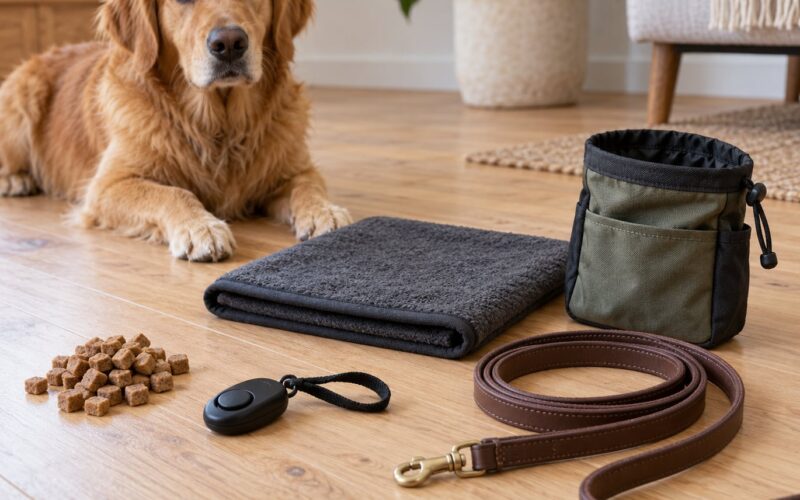
- Warm up with something your dog already knows. Two minutes of a reliable known cue settles the dog in and confirms that rewards are coming.
- Set one goal, maybe two. A session that tries to install four new behaviours teaches the dog that nothing is worth concentrating on.
- Work in a low-distraction space first. Kitchen, hallway, or the end of a quiet leash walk.
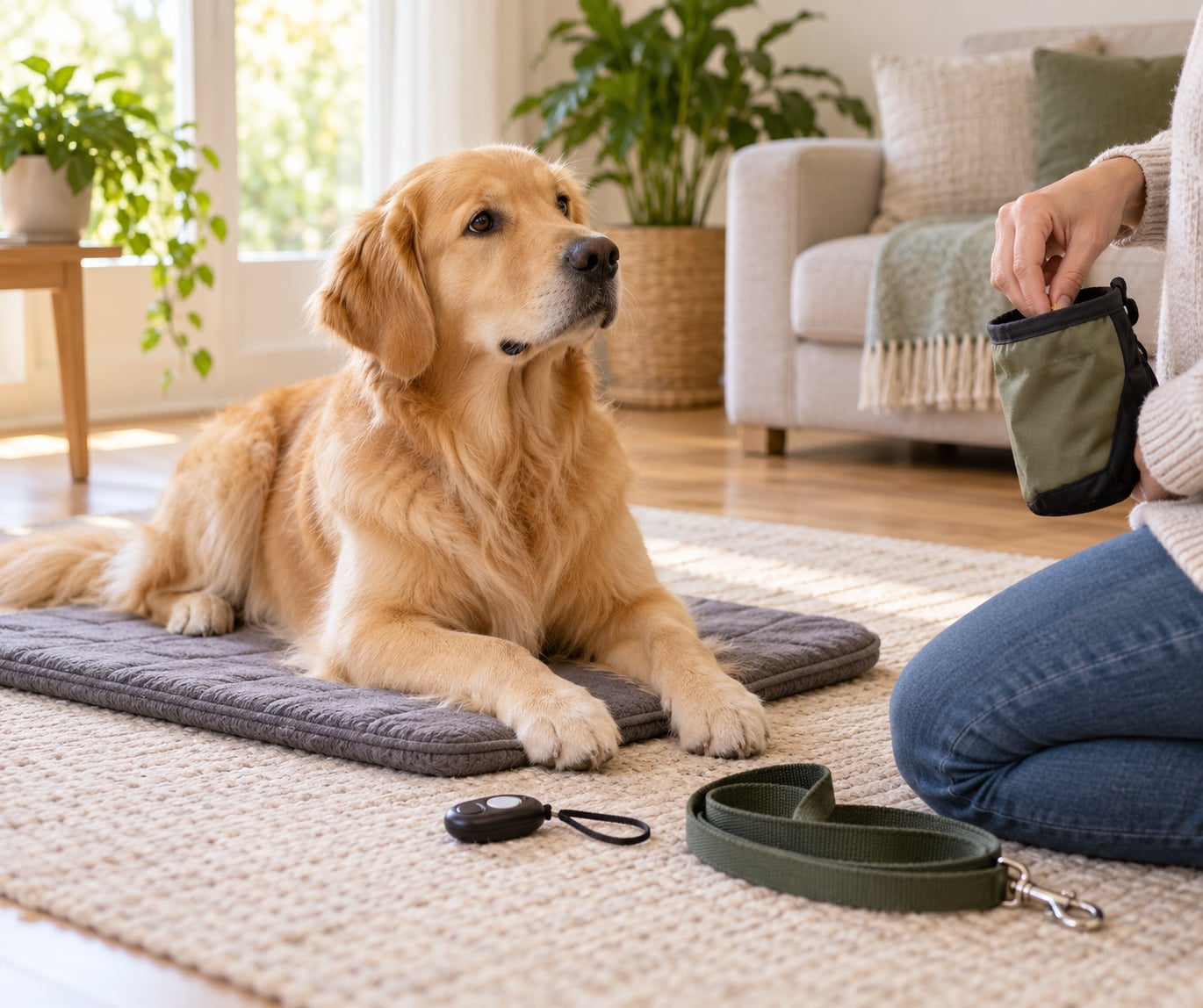
- Reward within one second. Use a marker word or clicker so the timing is yours, not the dog’s.
- Interleave easy wins with hard repetitions. Three easy reps, one challenging rep, repeat. This keeps the difficulty inside the dog’s ability and stops errors from piling up.
- End on a success and a bigger reward. Whatever the skill, finish with a rep your dog gets right easily, then give something worth working for, such as a chew stuffed and frozen.
That last step is the one people skip. Ending on a rep the dog gets right easily is what makes the next session start with a dog who wants to work, rather than one who has learned that the session only ends when something goes wrong.
Worked example for sit: two minutes of name and paw as a warm-up, then fifteen single repetitions of sit with a treat delivered within one second of the bottom position, and a final easy sit before the jackpot. That is a complete session, about five minutes.
For recall, work at a short distance first, three to five metres, in a quiet room. Reward generously, then add distance. Only when recall is reliable at ten metres do you add distraction, and then only mild distraction.
Loose-lead walking is best built in very short chunks attached to real life. Three minutes of walking properly on lead, then a sniff, then three more minutes, beats a dedicated fifteen-minute walking drill that both of you resent.
Mealtimes are free training time you are already committed to. Two minutes before dinner, ask for a sit or a paw for each portion. Dogs learn fast that a short burst of attention produces their dinner.
How to Know When to End a Session
Owners mostly misread this in one of two directions: they quit while the dog was still engaged, or they push until the dog disengages on its own. Both lose. Here are the signs that the focus window is closing, in rough order of appearance.
- Latency grows. Responses arrive later than they did two minutes ago.
- The dog looks away or scans. Glancing at the door, the window, or the floor mid-cue.
- Repeated errors increase. A behaviour that was reliable starts being missed half the time.
- Sniffing the ground constantly. Especially if the dog was previously uninterested in the floor.
- Flat ears, closed mouth, lowered tail. Body language of mild stress or fatigue.
- Whale eye. That wide, white-rimmed glance you have seen in dog training videos.
Mental fatigue and physical tiredness look different. Mental fatigue shows up as distraction, drifting attention and slower responses while the body is still loose and willing to move. Physical fatigue shows up as heavy panting, a dropped tail, reluctance to stand, or a dog that flops. With mental fatigue, a two-minute break and a change of activity can rescue the session. With physical fatigue, stop and let the dog rest.
Then there is the dog who refuses the lure entirely. That is not tiredness. Work through four things in order: is the reward valuable enough, is the dog too aroused to focus, is the environment too distracting, and is there pain somewhere that you have not noticed. Owners of ten-month-old German shepherds often describe a dog who seems uninterested in training when what is really happening is arousal so high the dog cannot think.
The rule to aim for is simple: quit while your dog still wants more. End a good session on a fast success and the next one starts with a dog looking for you.
Warning signs are different from fatigue signs. Limping, wincing when touched, a dog that stops eating entirely, or a sudden drop in interest that lasts days should end training and start a veterinary conversation.
Short Dog Training Sessions vs. Long Training Blocks
Splitting a 45-minute effort into four short blocks spread across the day delivers more learning than one long block, for a simple reason: attention is a resource that depletes, and each block starts partly fresh.
At-home sessions of 5 to 15 minutes
These are owner-led, flexible and interruptible. They work on whatever the dog has in front of them, and they fit into a normal day. This is where most behaviour change happens.
Group classes of 45 to 60 minutes
Classes look long on paper, but a well-run class is not one continuous ask of your dog. It alternates short practice bursts, waiting, observing, and settling, and much of the hour is the handler listening. A puppy attending a class at 12 weeks is mostly sniffing and recovering, and that is fine. This is the question that comes up most often in dog training forums, and the answer is that class length is not a violation of the five-to-ten-minute rule. Your dog’s active time inside it is what counts, and in a decent class it is short.
Private sessions of 60 to 90 minutes
A trainer working one dog one-on-one is not training continuously either. The clock covers assessment, demonstrations, discussion, coaching the owner, and a few minutes of actual repetitions. Newer trainers often quote an initial session of 90 minutes to two hours and follow-ups near an hour, with the owner present throughout, because the limit is the handler’s ability to absorb it rather than the dog’s attention span.
Long specialist blocks of 20 to 45 minutes
Nosework, scent discrimination, tracking, and service-dog task work are the honest exceptions. These tasks are self-rewarding for most dogs and often settle them rather than firing them up, so a 30-minute block is legitimate. The test is the dog’s behaviour at the end: relaxed and content means the length worked.
Breaks are the simplest way to make a longer session work. A two-minute break where the dog wanders, sniffs, or drinks resets attention without ending the session. That is quite different from ten minutes of the dog staring at a treat cupboard.
Progress safely by adding one variable at a time. First lengthen the session by a couple of minutes, and only once that is comfortable add distance, and only once that is solid add distraction. Changing all three at once is how owners convince themselves the dog cannot learn, when in fact the task simply got too hard.
Frequently Asked Questions
How long should a puppy training session be?
Keep sessions between 5 and 10 minutes for puppies from 8 weeks to about 6 months, and run three to five of them a day. A puppy’s attention span is genuinely short, and stretching the block past that point usually produces errors, frustration and a dog who learns to disengage. Sessions spread through the day outperform one longer block, and short bursts around mealtimes count.
How often should I train my dog each day?
Two to four short sessions spread through the day is the usual recommendation, and every day is better than every other day. Dogs consolidate learning between repetitions, so three five-minute blocks on Tuesday teach more than one fifteen-minute block. Very young puppies can manage four or five brief sessions, while adult dogs doing focused specialist work usually do best with one longer session plus a couple of maintenance repetitions.
Is a one hour group dog training class too long?
No. Class length and your dog’s active training time are different things. A 60-minute class usually alternates short practice bursts with waiting, observing and settling, so most dogs are working for only a few minutes at a time. The real limit in a class is recovery and stress rather than the clock, which is why a good instructor keeps breaks short and frequent.
Why does my dog stop listening partway through a session?
Slow responses, looking away, constant sniffing and more errors than earlier in the block are the usual signs that attention has run out. Reward value, arousal level, distractions and pain are the four things to check if the dog refuses even the lure. Take two minutes out, move somewhere quieter, or shorten the block and rebuild from a successful repetition.
Should I use a timer when training my dog?
A timer is useful mainly as a ceiling, not a target. Set a maximum and end before it rings, while the dog is still engaged and winning. Timing by clock alone encourages you to push past the point of usefulness, and a ten-minute session that ends with the dog still wanting more beats a twenty-minute session that ends with the dog walking away.
How long should a senior dog’s training session be?
Most senior dogs do best with 5 to 10 minute sessions, two or three times a day, on non-slip surfaces. Their limit is usually physical comfort rather than attention, so shorten the block, avoid repeated sit-to-stand repetitions, and keep cues you already have rather than adding new ones. Any sign of pain or stiffness means stopping and speaking with your veterinarian.
Conclusion
Start with five minutes. Pick one thing your dog already does slightly well, reward it fast, repeat it twenty times in a quiet room, and finish before either of you is tired. Then watch the response on the next try and on the day after, because that is the only measurement that matters when you are deciding how long a training session with a dog should last. Extend the block a couple of minutes at a time, add distance before you add distraction, and let the dog quit a session feeling like it won. For pain, illness or sudden behaviour change, talk to your veterinarian first.