The safest way to transport a dog safely in a car is to secure them in the back seat with a crash-tested harness clipped into the seatbelt system, or a well-ventilated crate strapped firmly in place. Unrestrained dogs become projectiles in a crash, distract the driver, and can be badly hurt by a deploying airbag. Ten minutes of setup protects your dog and everyone else in the vehicle.
Most trips are short, and that is exactly where owners get lazy. The 20-minute drive to the vet feels different from a four-hour highway run, but the failure modes are the same: a collar-only restraint, an open window for fresh air, a crate that slides on the first corner.
Below is the setup most owners end up with, plus the mistakes that cause the most trouble on long drives. Prices are not listed here because gear changes constantly; check current options before you buy.
Table of Contents
- What You Need
- A restraint that was actually crash-tested
- Non-slip bedding and tie-downs
- Identification
- Water, ventilation, and a paper plan
- Step-by-Step
- 1. Fit the harness two fingers deep
- 2. Position the crate in the back seat
- 3. Feed four to six hours before departure
- 4. Load calmly, on a lead, then fasten before moving
- 5. Stop every two hours
- 6. Watch the temperature, not the clock
- 7. Arrive with the same routine
- Common Mistakes
- Letting the dog ride loose in the back seat
- Riding with the head out of the window
- Leaving the dog unattended in a parked car
- Using a collar, loose lead or window clip as a restraint
- Feeding immediately before leaving
- Forgetting temperature checks and breaks on long drives
- Frequently Asked Questions
- Can my dog ride in the front seat of a car safely?
- What is the safest way to transport a dog in a car?
- Should I use a crate, harness, or seat belt for my dog?
- How often should I stop when driving with a dog?
- Can I leave my dog in the car while I run errands?
- Conclusion
What You Need
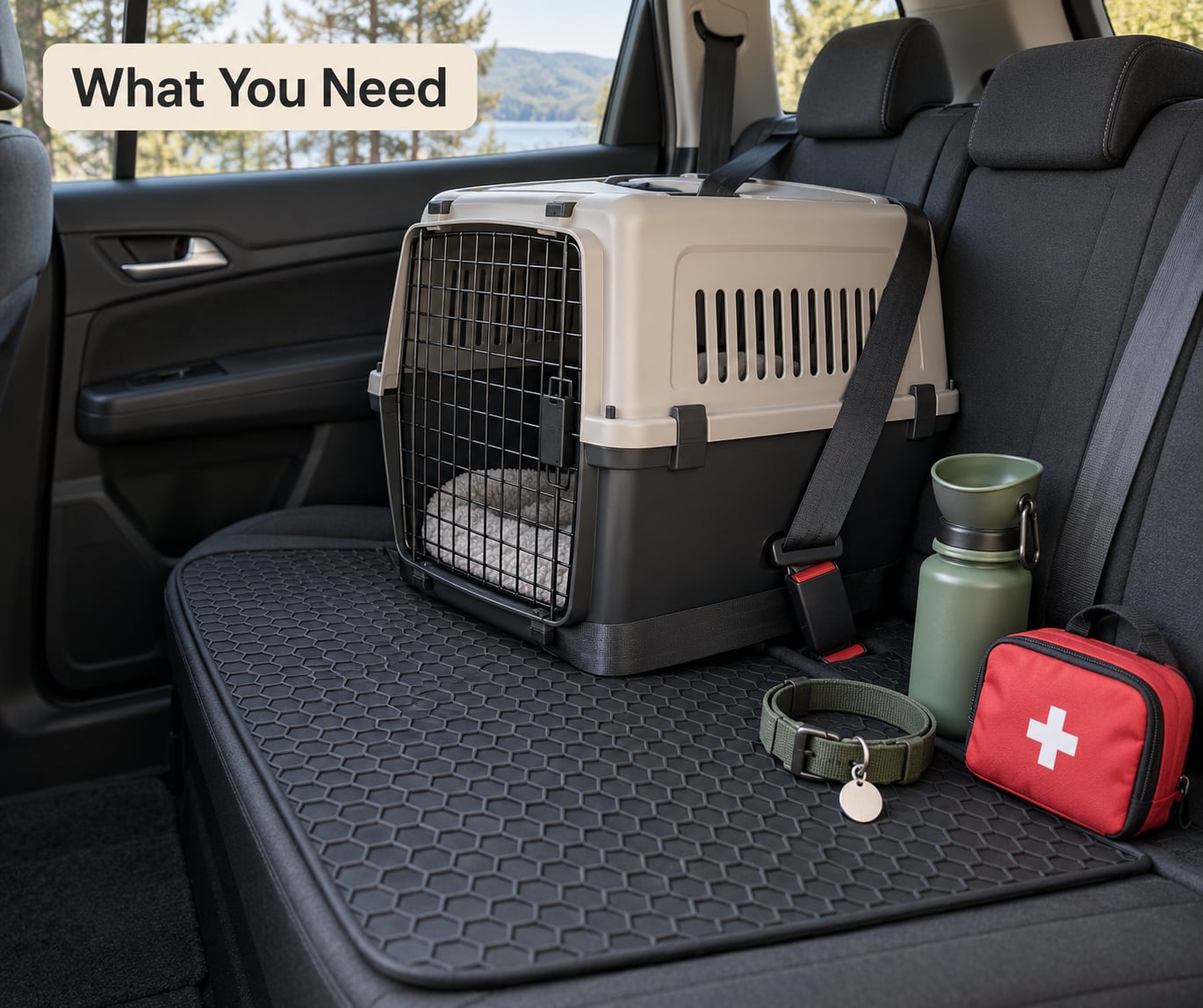
You need four things before the dog gets in: a restraint rated for crashes, something to stop sliding, identification, and water. Everything else is optional.
A restraint that was actually crash-tested
Center for Pet Safety is the independent nonprofit that runs the widely used crash tests for pet gear. A harness or crate labelled crash-tested should have been through their protocol, which simulates a roughly 30 mph collision. Brands like Ruffland, Gunner and Impact show up often in owner accounts of rollover survival, and Sleepypod and Kurgo harnesses are frequently cited because third-party test data is published for them.
Check the size range printed on the label, not the marketing name. A harness rated for dogs up to 40 pounds will not restrain a 90-pound dog.
Non-slip bedding and tie-downs
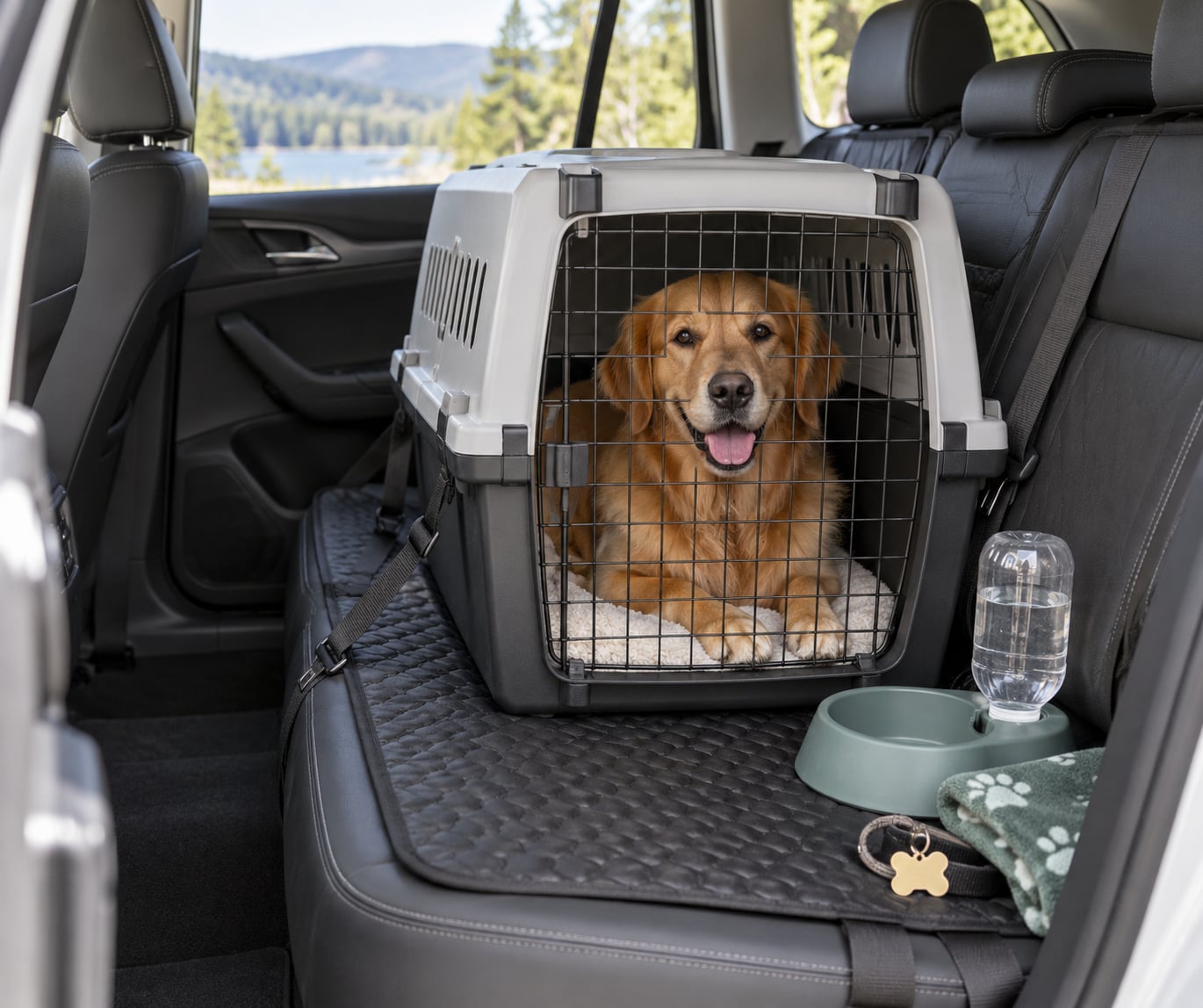
A rubber or rubber-backed mat on the seat or cargo floor stops a crate from sliding forward under braking. If your vehicle has tie-down anchors, ratchet straps through the crate’s own strap points are the strongest fix. If it has none, push the crate against the back of the seat and wedge it with a rolled blanket so it cannot travel forward.
Identification
A collar with a phone number on the tag, a microchip with the registration database current, and a spare tag in the glove box. Dogs escape from open doors and windows at rest stops more often than people expect, and a chip only helps if someone can trace it back to you.
Water, ventilation, and a paper plan
Bring water in a spill-proof bowl and know which rest stops have water on your route. Leave a window cracked a fraction for airflow, and never rely on that alone. Keep a printed emergency card in the car with your vet’s number, a nearby emergency clinic, and your home address for anyone who needs to reach you.
| Restraint option | Best for | Strength | Watch out for |
|---|---|---|---|
| Crash-tested harness | Medium and large dogs, short and long trips | Dogs stay visible and comfortable; easy to load | Cheap versions tear in a real crash |
| Secured travel crate | Small dogs, anxious dogs, multi-stop trips | Contains the dog completely in a crash | Fit and strap-down problems |
| Pet carrier | Dogs under roughly 15 pounds | Light, easy to carry to the car door | Too small for larger dogs; flimsy models crush |
| Booster seat | Small dogs that like to look out | Raised view, clamps to the seatbelt | Never a substitute for a harness restraint |
| Collar and leash in the car | Nothing. Temporary loading only | None in a collision | Choking, escape, total failure |
Step-by-Step
1. Fit the harness two fingers deep
Slide the harness over the head rather than buckling it around the neck, tighten the chest strap until you can fit two fingers underneath, and check that it cannot rotate over the shoulders. Then clip the tether to the seatbelt, not to the headrest or the door latch, so the force during a crash pulls into the chest rather than the neck.
2. Position the crate in the back seat
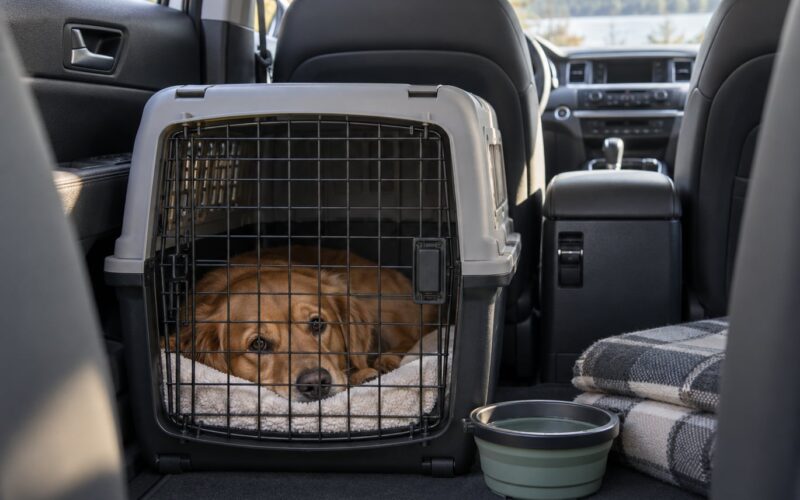
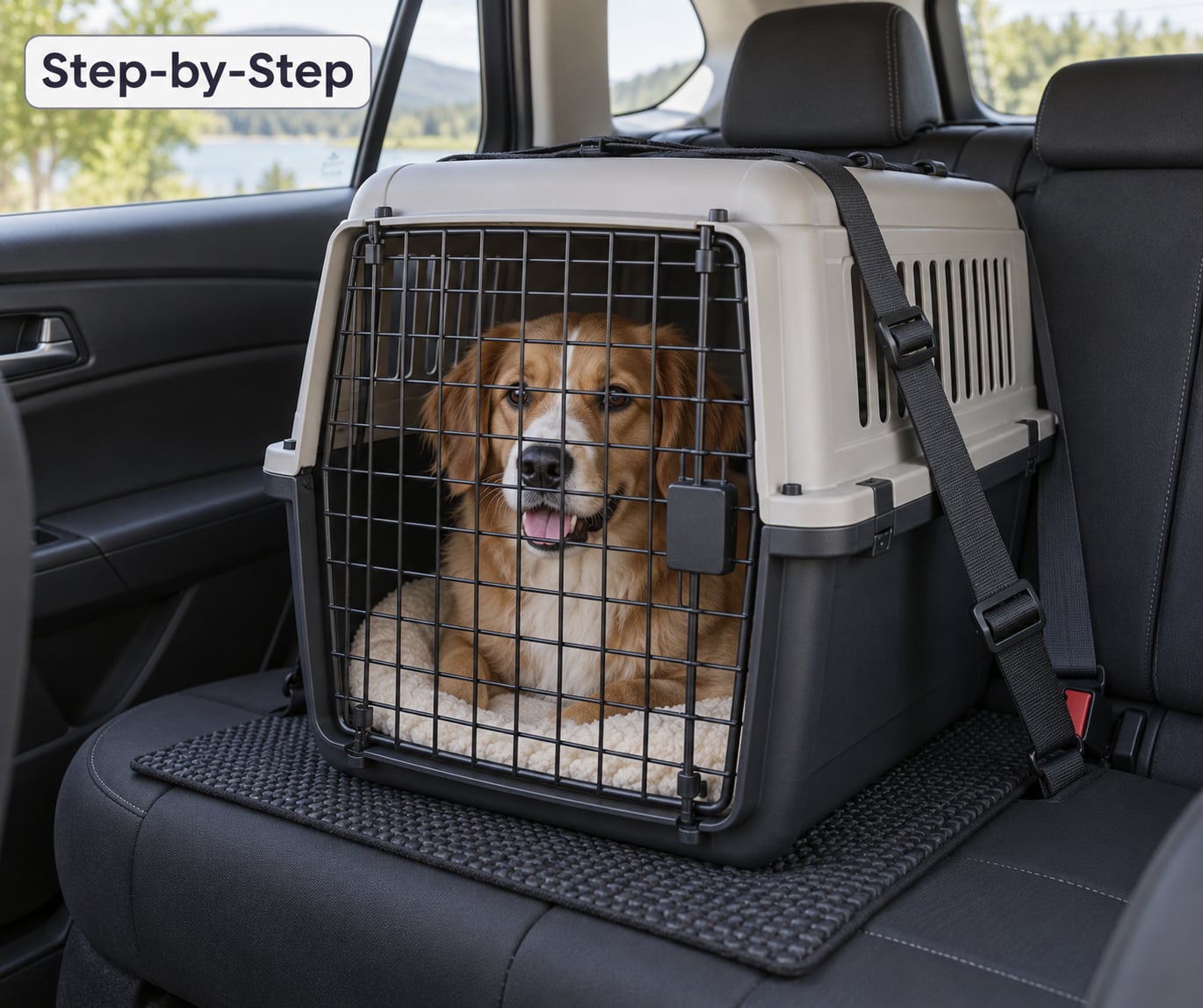
Push the crate flat against the rear seat back, run a strap through the handle or the crate’s anchor points, and buckle it to the seatbelt where possible. The bag-style carriers sold for small dogs are meant to be belted in place, not to sit loose on the seat.
3. Feed four to six hours before departure
A dog that has just eaten usually vomits somewhere in the first half hour of the ride, and a sick dog in a crate makes a long trip miserable. A light meal earlier is kinder than a heavy one right before you leave.
4. Load calmly, on a lead, then fasten before moving
Attach the lead to the harness, not the collar, get the dog settled, then clip the harness tether or crate strap before the engine starts. Doing it in that order means the dog is never unrestrained in a moving vehicle.
5. Stop every two hours
Two hours is the interval animal welfare organizations such as the ASPCA and the Animal Humane Society suggest for toilet and water breaks. Step out, relieve yourself, offer a few sips, and check that the dog is not panting hard or shaking.
6. Watch the temperature, not the clock
Keep the cabin cool with air conditioning and check the dog rather than assuming. Panting, drooling, bright red gums, weakness or a wobbly walk mean overheating, and those signs can appear fast.
7. Arrive with the same routine
Unload before opening the front door, take the dog out on a lead for a bathroom break, and check the crate and harness for damage before putting gear away. A quick look at fraying straps catches problems early.
Common Mistakes
Letting the dog ride loose in the back seat
This is the most common failure and the easiest one to fix. In a collision at 25 mph, a 50-pound dog generates roughly 2,000 pounds of force, which is why unrestrained dogs fly forward and why the driver loses the road. Fix: harness or crate, every single trip, no exceptions.
Riding with the head out of the window
Fresh air at speed dries the eyes and can cause eye injuries and ear damage, and debris thrown by passing trucks travels fast enough to hurt. A dog with its head out also tends to bark at other drivers. Fix: windows mostly up, a small crack for airflow, dog secured in the cabin.
Leaving the dog unattended in a parked car
Even on a mild day a closed car heats up quickly enough to cause harm, and a cracked window does not stop it. Fix: take the dog with you, use a sitter, or park where you do not have to leave the vehicle at all.
Using a collar, loose lead or window clip as a restraint
A nylon collar can break the neck in a crash, a leash clipped to a collar can choke, and a partial door-window guard lets a dog get its head out but not its body in. Fix: a body harness with a seatbelt tether, or a crate.
Feeding immediately before leaving
Motion sickness is far more likely after a full meal. Fix: feed four to six hours ahead, or skip breakfast for early mornings, and carry a container in case the ride turns unpleasant.
Forgetting temperature checks and breaks on long drives
A driver concentrating on the road will not notice a dog overheating in the back. Fix: set a break for every two hours and make it part of the route, not a leftover option when you arrive tired.
Two extra habits pay off more than any accessory. Walk the dog for five minutes before loading so the ride starts calmer, and for anxious dogs work up to longer durations gradually with short, happy trips to a favorite place. Owners on r/dogs describe exactly this progression for puppies, and it beats sedating a dog for every journey. For genuine travel anxiety, ask your veterinarian about situational medication prescribed for the trip rather than anything left over from another pet.
Rules also differ where you live. A few states have distracted driving or open restraint statutes, and California Vehicle Code 23117 specifically addresses dogs riding in a truck bed. Check your state rules before a road trip rather than assuming.
Frequently Asked Questions
Can my dog ride in the front seat of a car safely?
The front seat is the riskier place for a dog. A passenger-side airbag deploys with enough force to seriously injure a dog, and a small dog on your lap or in your arms cannot be positioned away from it. The front seat also encourages a dog to look at traffic, which means barking and distraction right where the driver needs attention. If a dog must ride up front, push the passenger seat back as far as it goes and keep it secured like any other seat. The back seat is the safer default for nearly every dog.
What is the safest way to transport a dog in a car?
Use a crash-tested harness clipped into the seatbelt system, or a well-ventilated travel crate strapped securely in the back seat. Those two options contain your dog and its body in a collision, which is what keeps the dog and the passengers safe. Look for gear tested by the Center for Pet Safety, check the size range matches your dog’s weight, and fit any tether to the chest rather than the collar. A collar on a lead is not restraint in a crash.
Should I use a crate, harness, or seat belt for my dog?
A crate gives the strongest protection because it holds the dog completely inside a rigid box, so choose it for small dogs, anxious dogs, and highway trips. A crash-tested harness suits medium and large dogs who need room, go in and out often, and travel around town. A pet carrier is the strapped version of a crate for small dogs. A booster seat is a raised perch that still needs a harness attached. Whatever you pick, buy the size that fits your dog now, not the size you hope they will reach.
How often should I stop when driving with a dog?
Plan a break every two hours for longer drives. Most dogs are fine for short stretches at that interval, and the break gives them a toilet stop, water, and a few minutes of standing room. Break up long journeys into two legs of around four hours with a rest in between if your dog is a puppy, a senior, or prone to car sickness. On every stop, look at the dog rather than just the clock: panting, drooling, or unsteady movement means cool down immediately.
Can I leave my dog in the car while I run errands?
No, not safely, and a cracked window does not fix it. A parked car heats up quickly in direct sun, and dogs cannot regulate heat the way we do, so heat stroke can develop well before you return. Even in mild weather the risk is real. Take the dog with you, ask someone you trust to sit with the dog at home, or find a service that watches pets while you are out. If a car does overheat, move the dog somewhere cool and call a veterinarian straight away.
Conclusion
Start with one thing: choose and fit the correct restraint before you turn the key. A crash-tested harness attached to the seatbelt, or a crate strapped in the back seat, takes minutes and removes the biggest risk on the road.
After that, keep the car cool, stop every two hours, check the dog rather than the clock, and never leave a dog unattended in a parked vehicle. Do those things and car travel stops being the part of the day you worry about.