You can teach a dog hand signals with a treat, a quiet room and about five minutes at a time. Lure the behaviour into place, reward it, pair it with one word, then slowly empty your hand until the gesture alone does the job. Most dogs get there in two to four weeks per signal, and deaf dogs or older dogs pick it up fastest of all.
I have taught hand signals to dogs that ignored every spoken word, and the routine was the same each time: same hand, same gesture, same moment of reward. That repetition is the whole method. Everything else is detail.
Table of Contents
- What You Need
- How to Teach a Dog Hand Signals Step by Step
- 1. Choose One Clear Hand Signal
- 2. Get Your Dog’s Attention
- 3. Reward the Natural Behavior
- 4. Repeat the Signal in Short Sessions
- 5. Add a Verbal Cue
- 6. Increase Distraction Gradually
- 7. Practice Until the Signal Is Reliable
- Quick Reference: Common Dog Hand Signals
- Common Mistakes
- Frequently Asked Questions
- How long does it take for a dog to learn hand signals?
- Which hand signals are easiest for a dog to learn?
- Can I teach hand signals to a puppy?
- Should I use a verbal command with a hand signal?
- How often should I practice dog hand signals?
- What should I do if my dog does not understand the signal?
What You Need
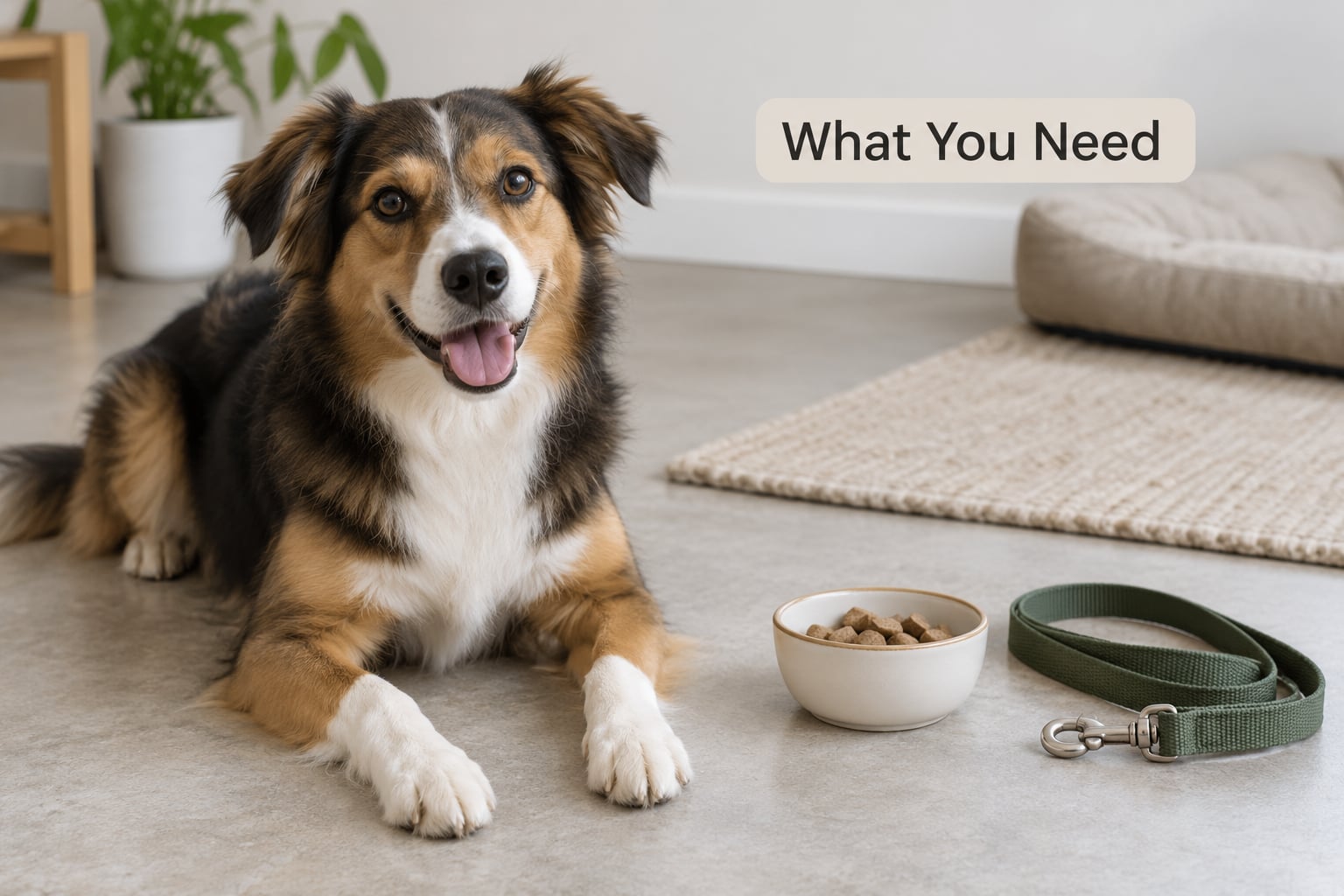
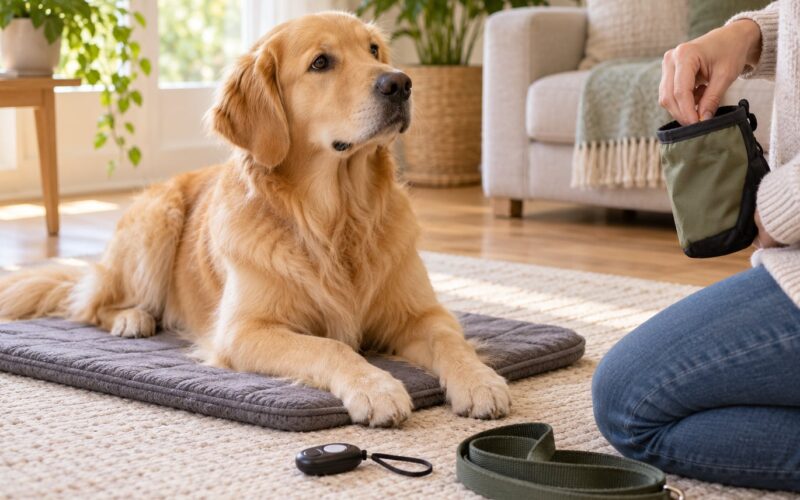
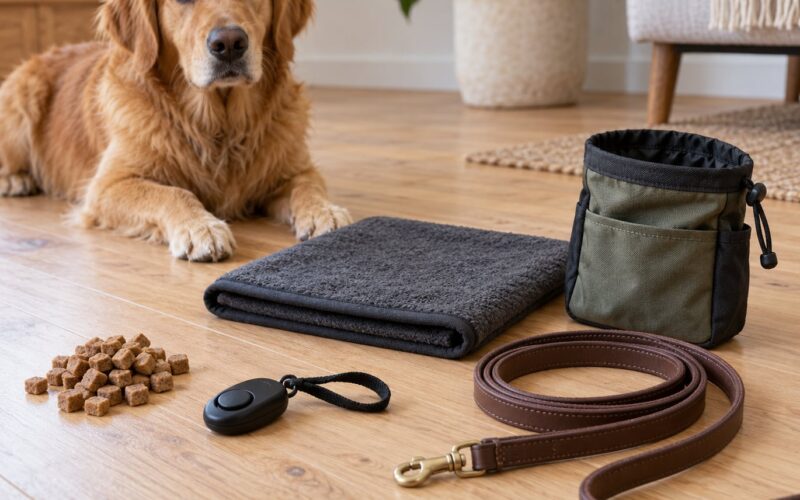
You need fewer things than most people expect. A pouch of small, soft treats, a floor with a bit of grip, and about five uninterrupted minutes.
Pick a spot where the dog can see your whole hand clearly, because a signal given from behind your back or at a weird angle teaches the wrong thing. The living room floor usually beats the back garden for the first week, since outside there is a thousand distractions competing with your hand.
A marker word helps more than people expect. Saying “yes” at the exact second the dog does the right thing teaches you to be precise with timing. A clicker does the same job without a word, which is handy if your dog already has a meaning for “yes”.
Before you start, make sure the dog knows how to look at you on cue. That single habit is the foundation for everything in this guide, and if it is shaky, spend a few sessions on it first.
How to Teach a Dog Hand Signals Step by Step
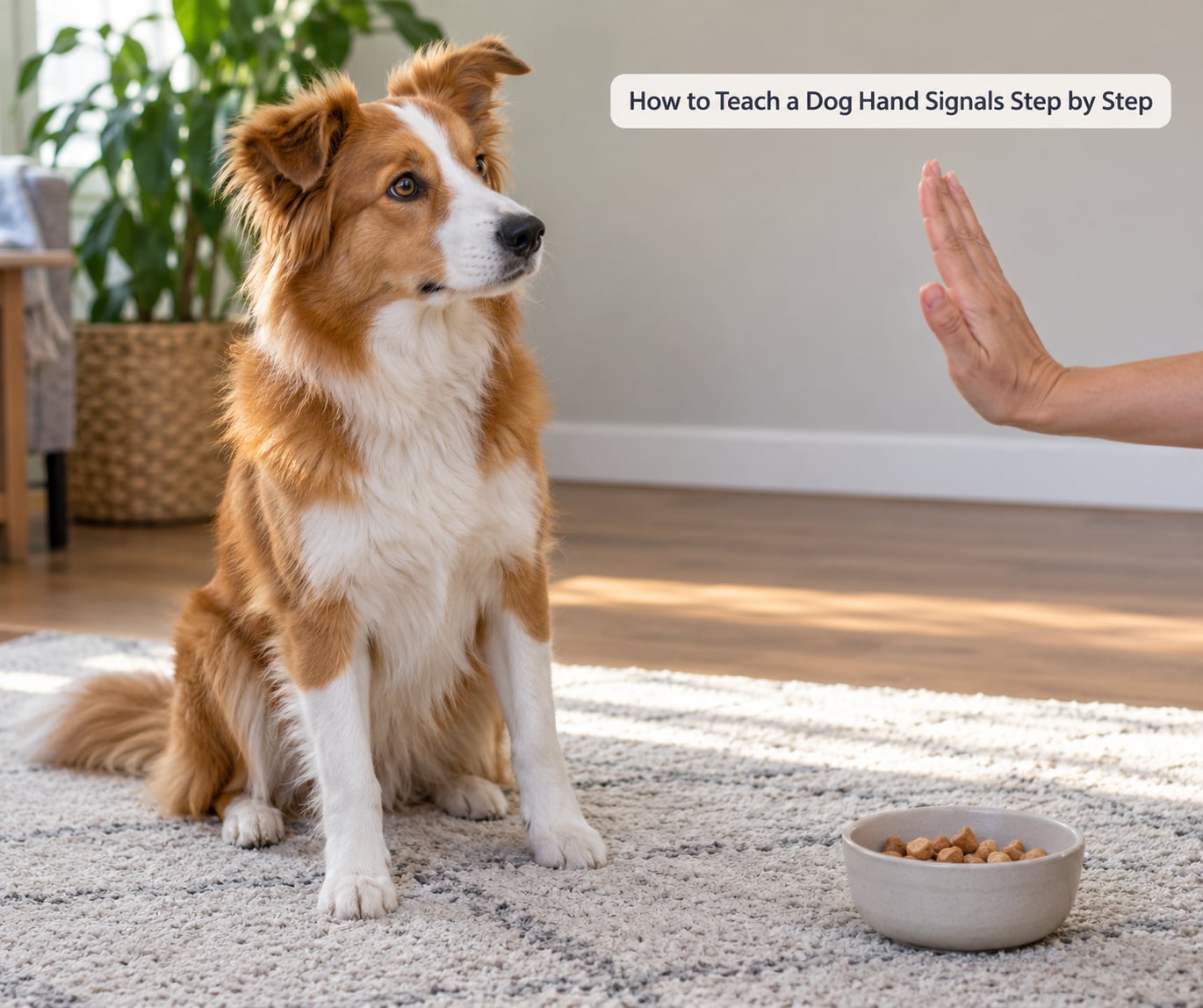
The process has three phases that repeat for every signal: lure the behaviour, pair the gesture with a word, then fade the lure until the gesture stands alone. Work one signal at a time and finish while the dog is still getting it right.
1. Choose One Clear Hand Signal
Choose a gesture that looks different from every other gesture you use. The trouble starts when your “sit” and “stay” hands look almost identical, so your dog has to guess which one you meant.
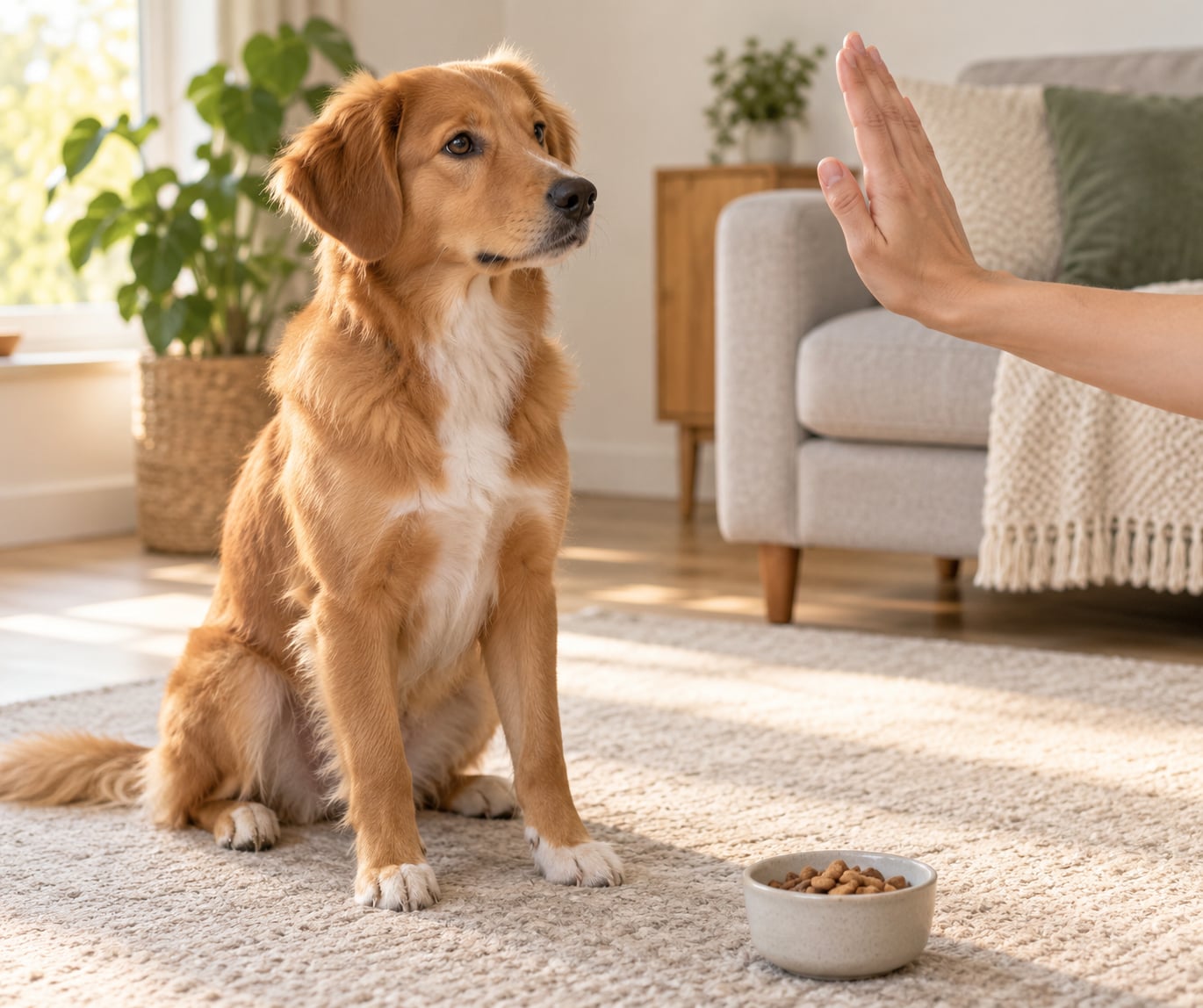
Make the shape big and the movement distinct. An open palm held high and forward can be your watch-me signal, while a flat hand raised like a stop sign can be stay. Give the two signals obviously different silhouettes and you avoid the confusion that trips up beginners.
Decide which hand you will use and never switch. Using the right hand one day and the left the next means you are teaching two signals instead of one.
2. Get Your Dog’s Attention
A signal only works when the dog is looking at it. Use your existing attention cue and wait until the dog’s eyes are on you before your hand moves.
If the dog is sniffing the ground or chewing something, pause the session rather than showing a blurred gesture. Training a signal the dog did not see is worse than not training it at all, because you are rewarding an accident.
3. Reward the Natural Behavior
Lure first. For sit, hold a treat just above and slightly behind the dog’s nose, and most dogs will lift into a sit to get it. Reward that sit within a second, then say your word for sit.
The reward has to land fast. Dogs connect the gesture to the treat in a fraction of a second, and if you wait five seconds while thinking about what to do next, you are rewarding whatever the dog happens to be doing at that moment.
Handy shortcut: one widely cited study of gesture versus voice put dogs through the same three-way test. Accuracy ran at around 99 percent with hand signals, 82 percent with spoken commands, and roughly 70 percent when the two cues disagreed. That is the whole case for training them, in three numbers.
4. Repeat the Signal in Short Sessions
Do five to eight repetitions, then stop. The number matters less than the ending: finish the session while the dog is still succeeding, so the last thing it remembers is getting it right.
Sessions of two or three minutes, spread across the day, beat one long block. Puppies and high-energy dogs need under a minute; an adult dog in a calm mood will manage five.
5. Add a Verbal Cue
Once the dog is sitting from your lure reliably, keep the lure and add one spoken word. Say “sit” at the same instant the dog settles, and reward immediately.
Keep the word short and unchanging, such as come, stay, down or wait. Say it once, in the same tone, every time. If you vary the wording, your dog has to learn four words for one behaviour instead of one.
Once the word and the gesture both predict the reward, you have two cues for the same thing. That is the ideal state, and it is where deaf dogs end up, since they simply never hear the word at all.
6. Increase Distraction Gradually
Now make the signal harder on purpose, one variable at a time. Go from the living room floor to the kitchen, then to a garden, then to a dog park. Add distance before you add chaos.
If the dog starts missing the signal, the setup has become too hard. Drop straight back to the last level where it worked and build up again. Progressing one step and then backing off is faster than drilling at a level that keeps failing.
Test it at full distance too, since a signal trained only up close often falls apart across a room. Hold the gesture still and use your release word or a small hand wave so the dog learns that staying in place is what earns the treat.
7. Practice Until the Signal Is Reliable
Test the signal the way a stranger would. Have someone else ask the dog to sit, or try it in a room the dog has never trained in, and see whether it still works.
For most dogs, reliable means the signal works on four out of five tries in a new room, from across the room, while you hold a treat. Until then, reward generously and keep the shape identical every single repetition.
Keep the signal alive with one or two short repetitions a day once it is solid. A signal that stops being used for a month goes quiet, and dogs lose cues faster than people expect.
Quick Reference: Common Dog Hand Signals
There is no official standard, which is why the same command gets different gestures in different homes. These are the ones that work well because each has a distinct shape and a distinct motion.
| Command | Hand position | Motion | Word to pair |
|---|---|---|---|
| Watch me | Open palm, raised | Still, held high | “Watch me” |
| Sit | Flat palm above nose | Move up and slightly back | “Sit” |
| Stay | Open palm facing forward | Held still, like a stop sign | “Stay” |
| Come | Fingers beckoning | Curling in toward you | “Come” |
| Down | Flat palm toward the floor | Sweeping down | “Down” |
| Drop it | Fingers pointing down | Opening and closing | “Drop” |
| Heel | Flat palm at your hip | Tap your thigh once | “Heel” |
Trainers and dog owners generally note the same pattern: dogs pick up hand signals faster than words, and one-handed variants work best because the other hand is busy holding a lead, treats or a clicker.
Common Mistakes
Moving the hand too quickly. A fast sweeping motion becomes a lure rather than a signal. Move slowly and finish the gesture before you reward, so the dog sees a clear shape it can recognise later.
Rewarding late. If the treat arrives after the dog has already looked away, it rewards the looking away. Mark the exact behaviour with a click or “yes” first, then feed.
Practising too long. Fifteen minutes of hand signals in one go ends with a bored, distracted dog making sloppy guesses. Five minutes twice a day is more useful.
Teaching several signals at once. Sit and stay taught in the same session blur together. Finish one signal at home level before introducing the next.
Expecting instant reliability. A brand new cue will be unreliable for a few days, and that is normal rather than a sign your dog is slow. Keep the picture simple: lure, pair, reward, repeat, and give it two to four weeks.
Signals that look the same. This is the most common source of the confusion people report in training forums. If sit and stay share a shape, the dog is not being disobedient, it is guessing. Redesign one of the two hands.
Mixing signals with the verbal cue. Saying the word while showing a different gesture teaches a contradiction, and accuracy drops sharply in exactly that situation. Pick one cue for training and hold back the other.
If your dog is losing hearing as it ages, mention it to your vet before you start, because hearing changes can point at other things worth checking. Dogs that are deaf from birth, or that have no usable hearing, are usually the easiest dogs to teach this way, since the gesture is the only cue in play.
Frequently Asked Questions
How long does it take for a dog to learn hand signals?
Allow two to four weeks per signal for most dogs. You will get the first few repetitions within a session or two, but reliability in a new room at distance usually takes several weeks of short daily practice. Older dogs and puppies vary widely, so judge progress by consistency rather than the calendar.
Which hand signals are easiest for a dog to learn?
The easiest are the ones with a big, distinct shape: an open palm held high for watch me, a flat palm sweeping down for down, and fingers beckoning for come. Signals that require fine finger movements, or that resemble your other gestures, take longer because the dog cannot tell them apart at a glance.
Can I teach hand signals to a puppy?
Yes, and puppies are often quicker at it than adult dogs. Keep sessions under a minute, use tiny soft treats, and stop while the puppy is still eager. Pair the gesture with the word straight away so you are not retraining later, and choose one signal at a time.
Should I use a verbal command with a hand signal?
Pair them at the start, then keep only the signal for the actual training. Research cited by trainers found dogs scored far better on hand signals than on spoken commands, and dropped noticeably when the two disagreed. So teach them together first, then let the hand do the talking.
How often should I practice dog hand signals?
Two or three short sessions a day works better than one long one. Five minutes in the morning and a few minutes after a walk is plenty for a new signal. Once a signal is reliable, one or two repetitions a day keeps it sharp without adding new distractions too quickly.
What should I do if my dog does not understand the signal?
Go back a step rather than pushing forward. Lure the behaviour again for a few sessions, then rebuild from there. If two of your signals look alike, redesign one of them, since confusion between similar gestures is the usual cause. If your dog shows no interest in treats at all, check with your vet first.
Pick one signal today, not seven. Sit is the best first choice because it is quick to lure and hard to get wrong. Five minutes, same hand, same shape, and stop while your dog is still getting it right.