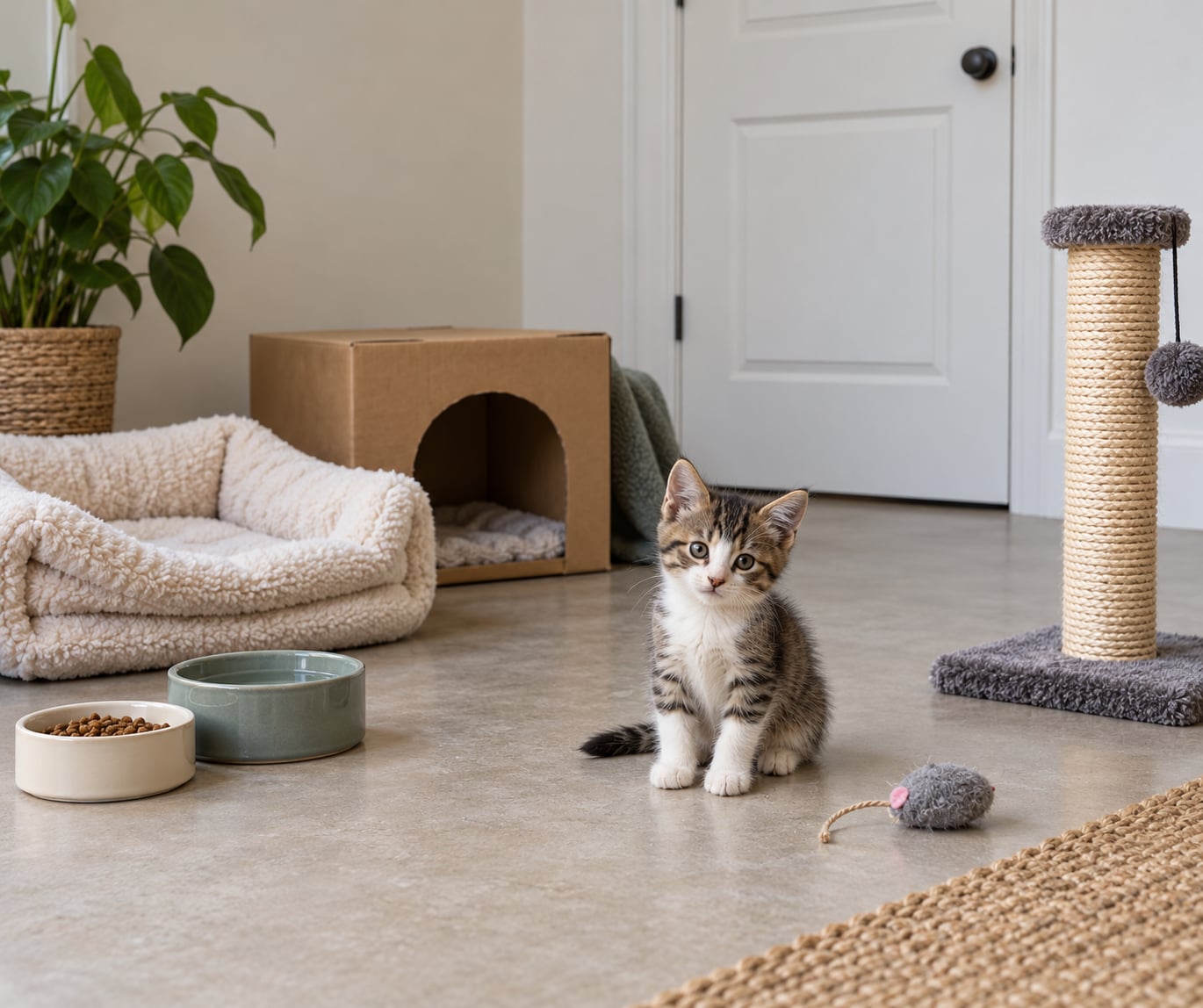
To introduce a kitten to a resident cat, keep them in separate rooms, swap scents through cloths and bedding, feed both cats on either side of a closed door, allow visual contact through a barrier, and then run short supervised meetings until both cats stay calm.
That process takes days to weeks, and the pace belongs to the slower cat, which is almost always the resident one. Owners on r/CatAdvice say over and over that rushing the steps is what creates a household where one cat hides under the bed for a month.
A fair goal is tolerance, not friendship. Many cats share a house happily for years without ever choosing each other as a friend, and that counts as a successful introduction.
Table of Contents
- What You Need
- Step-by-Step
- 1. Give the Cats Separate Spaces
- 2. Help Both Cats Explore Each Other’s Scent
- 3. How to Introduce a Kitten to a Resident Cat for the First Time
- 4. Increase Short, Supervised Meetings
- 5. Allow Shared Spaces With a Physical Barrier
- 6. Transition to Unsupervised Access Gradually
- Common Mistakes
- Frequently Asked Questions
- How long does it take to introduce a kitten to an adult cat?
- Can I let the kitten and resident cat meet through a closed door?
- Why is my resident cat hissing at the new kitten?
- Should I feed the cats together during the introduction?
- When is a kitten and adult cat meeting too intense?
- Should I separate the cats if they start to bite or chase each other?
- Conclusion
What You Need

Set everything up before the kitten arrives, on the same day you bring the carrier through the door. Scrambling for supplies while a stressed kitten wanders a stranger’s home is how introductions get skipped.
- A secure room for the kitten with a door that closes. A spare bedroom is ideal, and a bathroom works when nothing else is available.
- Separate resources for each cat: two feeding stations, two water bowls, two bedding areas and a litter box per cat plus one extra.
- Scent items such as soft washcloths, worn socks or a small blanket from each cat.
- A sturdy carrier you can leave in a room instead of shoving a nervous kitten out of it.
- Hiding places, including covered beds and cardboard boxes the kitten can duck into.
- Scratching posts and vertical space, ideally one of each in both the kitten’s room and the main living area.
- Interactive toys such as wand toys, plus treats for rewarding calm behavior.
- A physical barrier such as a baby gate, a screen door or a stack of stable furniture to block a doorway.
Two items are optional. Owners with small apartments often use a playpen instead of a closed-door room, which gives the kitten room to play while keeping the cats apart, and a pheromone diffuser in each space can take the edge off a nervous week.
Before pickup day, check whether the kitten has a full vaccination course from a veterinarian, usually starting around eight weeks of age. Bringing in a kitten with an incomplete series puts your resident cat at real risk, and the isolation steps below are easier to run when health is settled.
Step-by-Step
1. Give the Cats Separate Spaces
Put the kitten in the safe room and keep the resident cat in the rest of the home. Close exterior windows, remove hazards such as loose cords or toxic plants, and make sure the resident cat cannot slip into the kitten’s room.
Hold this stage until both cats are eating, using the litter box and interacting with you normally. A resident cat who hides for a day or two is behaving within normal range; a cat who refuses food or eliminates outside the box is telling you to talk to a veterinarian.
2. Help Both Cats Explore Each Other’s Scent
After a few calm days, rub a clean cloth on one cat’s cheek and body and place it near, not directly beside, the other cat’s food or resting spot. Reward a resident cat who sniffs it and keeps eating. Switch directions every day or so.
Cats identify each other by smell long before they care about sight, and scent swapping is the first step most cat owners describe as working. Scent-only weeks are not wasted time when one cat is genuinely frightened of the other.
Move the item if the resident cat growls, swats, freezes in a hard stare or blocks access to that resource. Never hold a cat up to another for a nose-to-nose sniff through a door.
3. How to Introduce a Kitten to a Resident Cat for the First Time
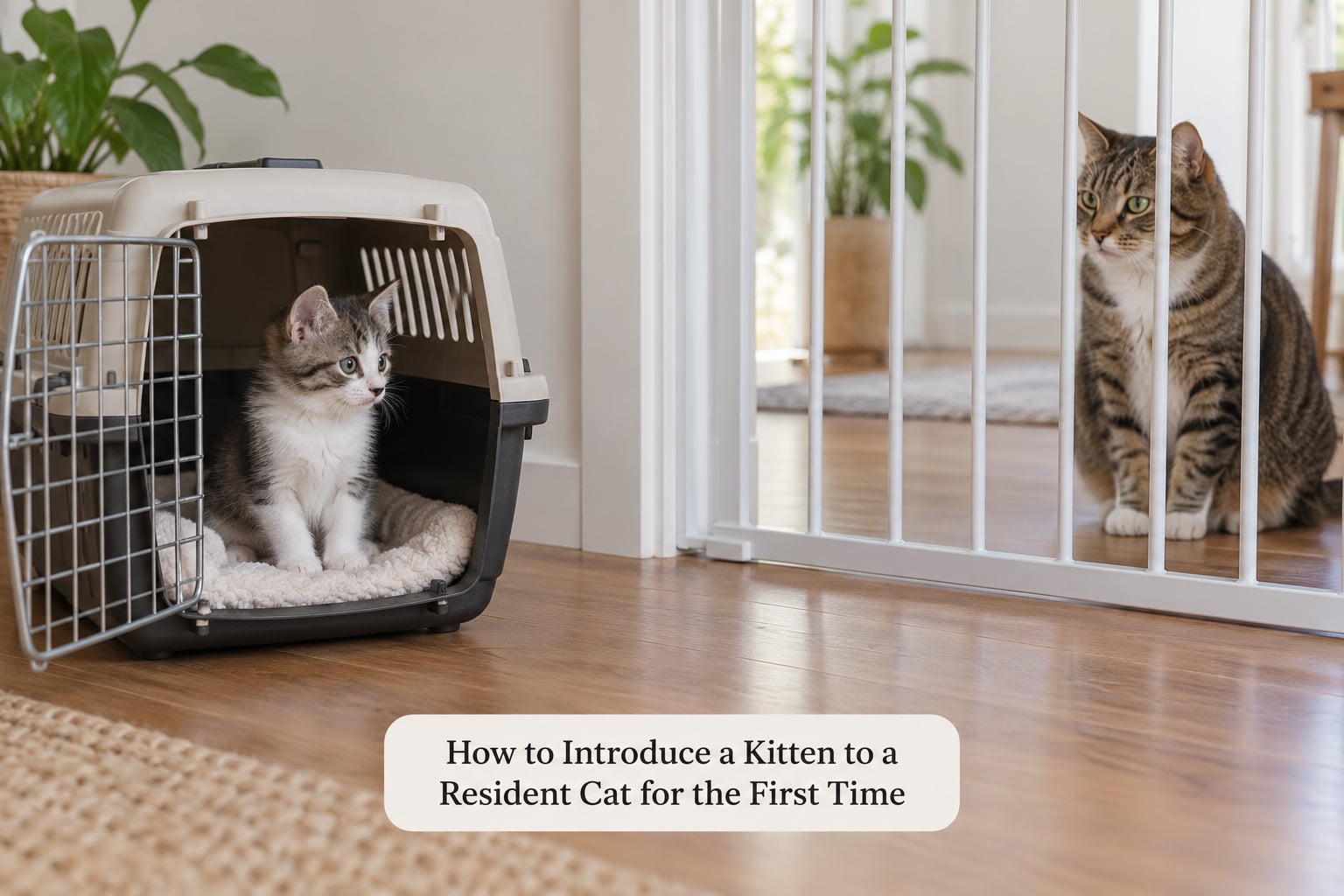
Start with the carrier closed and let both cats notice each other through a cracked door, a screen or a gate. The kitten stays inside the carrier, which gives it a small, defensible space and gives you an easy way to end the meeting.
Keep voices calm, scatter treats away from the barrier so attention is diffused, and end the session while both cats are still relatively fine. Longer is not better here.
Write down what you see: posture, appetite, vocalization, litter box use and whether either cat investigates or retreats. Keep those notes, because they tell you when to advance and when to step back.
4. Increase Short, Supervised Meetings
Once both cats can see each other without sustained fear or aggression, open the carrier and allow slightly longer sessions. Have a hiding place, an elevated perch and a clear escape route in the room, and keep food out of the shared space so nothing is worth fighting over.
Play with the kitten on a wand toy. Distracted kittens chase toys instead of the resident cat, and owners with energetic kittens say this single habit buys them weeks of calmer interactions.
Progress by the cats’ behavior rather than a calendar. A confident eight-week-old kitten will happily push far past what a senior cat can tolerate, and age, health and temperament set the schedule.
5. Allow Shared Spaces With a Physical Barrier
Fit a baby gate or a stable barrier across a doorway so each cat can eat, sleep, use a litter box and retreat while seeing the other. Feed both cats on opposite sides of it and reward peaceful behavior with treats and calm attention.
Some people stack a second barrier so the cats cannot press against each other, which helps with swatting through the bars. Keep sessions short and increase access only when the tension drops over several days.
6. Transition to Unsupervised Access Gradually
When both cats consistently eat, use their litter boxes and move around without chasing, hissing, swatting or blocking, close the barrier for short stretches while you are home. Stay in the same room for the first few sessions.
Do not leave them alone at the start. If conflict resumes, go back to the previous stage for a few days rather than pushing forward, and call a veterinarian or a certified feline behavior professional if the aggression keeps returning or the resident cat stops eating.
Common Mistakes
Most introductions that go badly share one cause: a stage was skipped because the kitten seemed fine. Here are the fixes.
- Starting with face-to-face contact. Cats meeting with no escape route feel trapped. Fix: start with scent and a barrier.
- Forcing a scent encounter. Dragging a cloth to a hissing cat teaches distrust. Fix: move the item and try again tomorrow.
- Following a fixed timetable. A two-week schedule applied to a terrified cat does nothing. Fix: advance when the cats look ready.
- Sharing food or litter boxes too early. Resource conflict is the most common source of real fighting. Fix: keep separate resources, one box per cat plus one extra.
- Punishing hissing. Hissing is communication, not defiance. Fix: move the cats apart and reward the next calm moment.
- Leaving them alone too early. No supervision means unsupervised chase and ambush. Fix: short sessions, extended over days.
Three habits carry most of the work. Keep separate resources in place for the whole transition, reward calm behavior with treats and attention, and end every session while things are still going well. Owners who follow the slower cat’s pace report fewer surprises and a shorter overall timeline.
Call a veterinarian if the resident cat stops eating for more than a day, has trouble urinating, or if either cat is limping or injured. A qualified behavior professional is worth the money when aggression persists after a few careful weeks.
Frequently Asked Questions
How long does it take to introduce a kitten to an adult cat?
Most introductions take between one and six weeks, depending on the cats’ ages and temperaments. A calm adult cat and a confident kitten often settle within two weeks, while a shy or senior resident cat can take three months. The widely quoted 3-3-3 rule suggests three days to be comfortable, three weeks for a visible hello and three months for full acceptance. Treat that as a memory aid, not a deadline; move to the next stage when both cats are calm.
Can I let the kitten and resident cat meet through a closed door?
Yes. Feeding both cats on opposite sides of a closed door is one of the most recommended first steps, because they connect the new cat with food rather than threat. Some sit and watch the door crack; some ignore it entirely. Both reactions are fine. Keep bowls far enough from the gap that neither cat feels cornered, and move on to visual contact when the resident cat eats normally in the presence of the other side of the door.
Why is my resident cat hissing at the new kitten?
A hiss means the resident cat feels threatened or overwhelmed, which is expected early on. Cats often hiss to create distance rather than to attack. Do not punish it and do not pick the cat up to comfort it, which puts her face near the kitten. Instead, increase distance, add more separate resources and vertical space, and return to the stage where the resident cat was last comfortable.
Should I feed the cats together during the introduction?
Not face to face at first. Shared bowls create competition and teach both cats that food and the other cat are linked. Feed separately, then feed on opposite sides of a closed door or a baby gate once scent stages are going well. Once the cats eat, play and rest without tension for a week or two, a shared feeding spot in separate bowls can become a good shared routine.
When is a kitten and adult cat meeting too intense?
Stop the session when you see puffed fur and a stiff posture, flattened or sideways ears, a lashing tail, repeated stalking, cornering, biting, or either cat refusing to eat afterward. One or two of these in the first minute is a normal warning. If they escalate instead of settling, or if the resident cat hides for hours after every meeting, you moved a stage too fast. Go back one step and shorten each session.
Should I separate the cats if they start to bite or chase each other?
Yes, separate them right away and calmly. Do not reach between them or use your hands. Put the kitten back in the safe room, check the resident cat for puncture wounds, and book a veterinary visit if there is blood, limping or a change in eating or litter box habits. Biting and ambush chasing that recur after several careful weeks usually need help from a certified feline behavior professional.
Conclusion
Start with two separate rooms, swap scents, and hold every meeting at a cracked door until both cats stay calm. Advance a stage only when the resident cat’s behavior says it is ready, not when a week has passed.
There is no universal timetable for learning how to introduce a kitten to a resident cat, and patience beats forcing a meeting every single time. If your resident cat refuses to eat, urinates outside the box or keeps escalating over days, that is the signal to call a veterinarian rather than a signal to try harder.