Most kittens learn to use a litter box in three to four weeks, and the method that works is boringly consistent: same box, same litter, same quiet corner, same treat right after they finish. Learning how to litter train a kitten step by step is about routine and fast cleanup, not clever tricks.
You can start as soon as your kitten is around 3 to 4 weeks old, which is when they begin eliminating on their own. If your kitten is older, an adopted stray, or already peeing in the corner of a rug, the same process still works. It just takes longer because an established habit has to be replaced.
Expect accidents for the first week. That is normal, and it is the reason this guide leans so hard on enzyme cleaner and on never scolding.
Table of Contents
- What You Need Before You Start
- How to Litter Train a Kitten Step by Step: 7 Steps
- Step 1: Choose the right litter box
- Step 2: Add the right litter
- Step 3: Introduce the litter box
- Step 4: Guide your kitten to the box after meals and naps
- Step 5: Praise and reward successful use
- Step 6: Clean accidents without punishment
- Step 7: Keep the routine consistent
- The 3-3-3 rule for adjustment
- Common Mistakes That Slow Training Down
- How to litter train a kitten step by step when accidents keep happening
- When to check with a veterinarian instead of training harder
- Frequently Asked Questions
- What is the fastest way to litter train a kitten?
- How long does it take to fully litter train a kitten?
- What is the 3-3-3 rule for kittens?
- What type of litter is best for kittens?
- Can I leave my 4 month old kitten alone for 8 hours?
- How do you litter train an abandoned kitten with no mother?
- Conclusion
What You Need Before You Start
You do not need much, and most owners already have the box and the scoop. Gather these six things first.
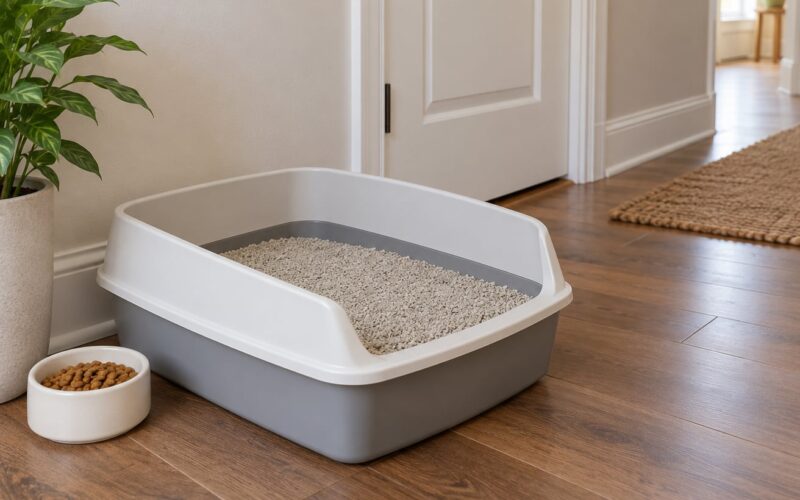
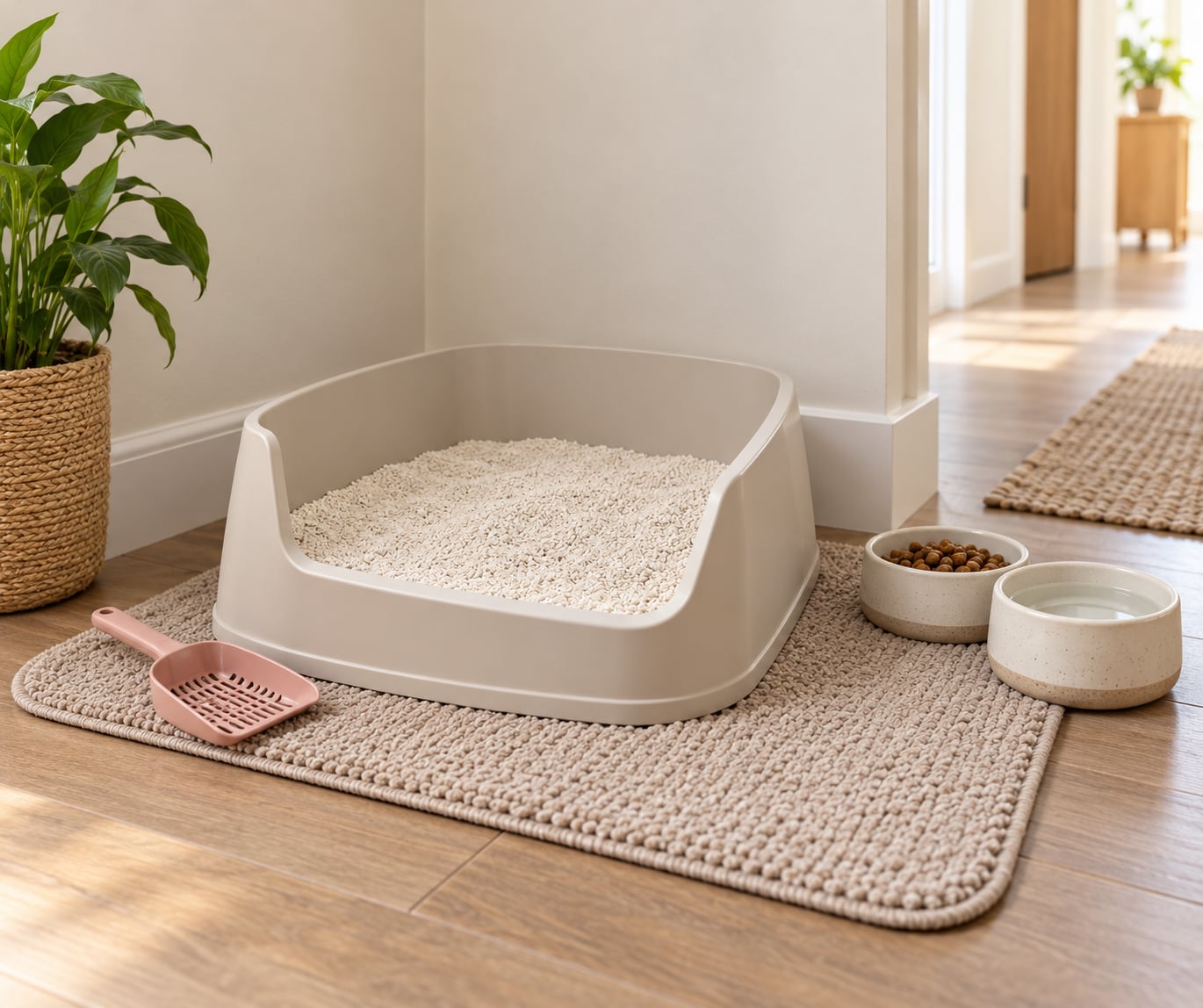
- A low-sided litter box. A shallow tray about 13 by 9 inches works for very young kittens, and anything higher means a kitten climbing rather than stepping in. As the kitten grows, aim for a box roughly 1.5 times their body length.
- Unscented, fine-grain litter. Plain clumping or non-clumping clay, or paper pellets. Skip anything heavily scented.
- A scooper and a small trash bag so cleanup takes seconds rather than minutes.
- A rubber or washable mat under the box to catch kicked-out litter. A mat that traps litter saves you the worst part of sweeping.
- An enzyme-based cleaner. Ordinary household sprays leave the ammonia scent behind, and that scent is an invitation to go in the same spot again.
- Soft kitten treats plus a food and water bowl. If you can spare one small room or a playpen, add that too.
Skip litter deodorizers and heavily perfumed litters. Kittens are new to the world and a strong smell can make the box unpleasant rather than appealing.
How to Litter Train a Kitten Step by Step: 7 Steps
Step 1: Choose the right litter box
Pick a box with low sides and no lid for now. Covered boxes trap odor and reduce visibility, and a kitten that cannot see into the tray tends to avoid it.
Size matters more than style. A common rule is one and a half times the length of the cat, measured nose to base of tail, with enough room to turn around. A tiny tray that feels cramped sends kittens looking for somewhere else.
Step 2: Add the right litter
Fill the tray with about an inch or two of fine, unscented litter while the kitten is young, building to 2 to 3 inches as they grow. Kittens play in litter and some swallow it, so use non-clumping litter until they are around 8 to 10 weeks old. Clumping litter is fine after that point.
If your kitten is grazing on the litter, remove it right away and reoffer it once they have settled. Grazing is usually curiosity, but it is a reason to avoid clumping pellets for a while.
Step 3: Introduce the litter box
Put the box in a quiet, low-traffic spot on the same floor the kitten uses. A bathroom or a small playpen works well for the first few days. Do not place the box next to the food bowls, and do not hide it in a spot so dark that the kitten hesitates at the door.
Let the kitten explore the room on their own first. Sit nearby, quietly. Once they wander over, gently place one or two paws in the litter and let them feel it. Some kittens need this dig training, where you move their front paws through the litter a few times. That scratching motion is the behavior you want them to repeat in the tray.
If you have already had an accident indoors, an old towel that carries that scent can go in the tray. It teaches association faster than anything else, and forum owners credit it with speeding up the first week.
Step 4: Guide your kitten to the box after meals and naps
Pick the kitten up and set them in the box after waking, after eating, after drinking, and after a play session. With a very young kitten that means every hour or two during waking hours.
Watch what happens next without interrupting. If the kitten squats in the tray, stay quiet and still. Interrupting a kitten mid-elimination is the fastest way to teach them to finish elsewhere.
Step 5: Praise and reward successful use
Say something calm and kind while they are in the tray, then give a treat immediately after they step out. Timing is the whole trick: a treat that arrives thirty seconds late teaches your kitten that the box has nothing to do with treats.
Keep the praise low-key. A loud, excited reaction mid-elimination can break the concentration you spent all morning building.
Step 6: Clean accidents without punishment
Pick up messes with enzyme cleaner and give it the label time to work, then blot the area dry. Ammonia-based sprays only re-mark the spot for your kitten, and a smell you cannot smell may still be fully visible to them.
Never scold, never rub a kitten’s nose in it, and never physically carry them over to the mess. That teaches them the box is where trouble happens. Just clean up, and go back to the schedule.
One safety note for households: pregnant or immunocompromised people should avoid scooping litter or wear gloves, because of toxoplasmosis risk. Lilies are also lethal to cats, so keep any bouquet or potted lily far out of reach.
Step 7: Keep the routine consistent
Scoop at least once or twice a day, top the litter back up, and swap the whole tray out about once a week. A box that smells like a stockpile of used litter is a box the kitten will learn to avoid.
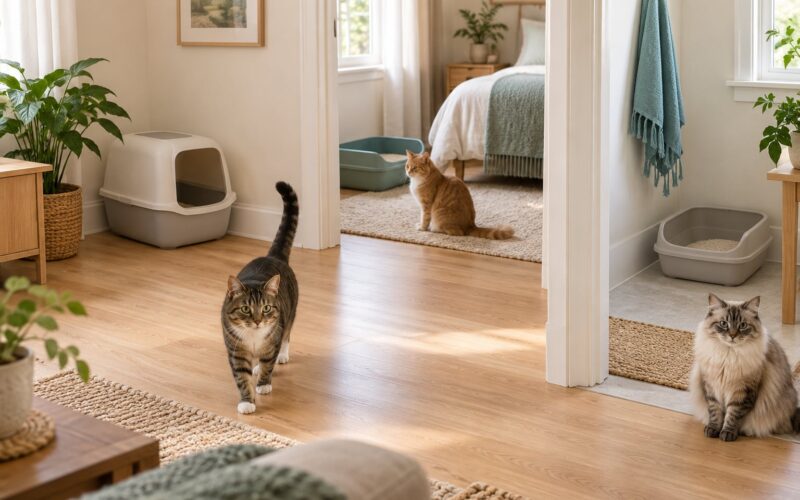
Most kittens are reliable within two weeks, with full consistency closer to four. In a multi-cat home, follow the n+1 rule and provide one box per cat plus one extra, spread out on different floors. A low night light near the box helps kittens find it after dark.
The 3-3-3 rule for adjustment
The 3-3-3 rule describes how long a new cat needs to decompress: about three days to settle into a space, three weeks to build a routine, and up to three months to feel fully bonded and confident. Litter training usually lands somewhere in the middle phase. Knowing that stops you from panicking during week two.
Common Mistakes That Slow Training Down
Almost every stalled litter training run comes down to one of these. Each has a simple fix.
- Using a dirty or covered box. A clean box twice a day fixes more problems than any training technique. Remove the lid until accidents stop.
- Scolding the kitten. This creates fear of the box and makes avoidance worse. Replace punishment with enzyme cleaner and routine.
- Expecting results overnight. Four weeks is a realistic full-training window, not a sign of failure.
- Using scented litter or a deep layer. Scent repels, and a 4-inch depth looks like a hazard to a kitten that just learned to walk steadily.
- Placing the box too far away. If the tray is on the basement floor and the kitten lives upstairs, you have built a bathroom the kitten never sees. Put a second box wherever they are.
- Cleaning with plain spray or vinegar alone. Vinegar helps on hard surfaces, but none of these replace an enzyme cleaner on carpet or fabric.
- Switching litter types mid-training. If you need to move from non-clumping to clumping, mix the new litter in with the old over about a week instead of changing everything overnight.
How to litter train a kitten step by step when accidents keep happening
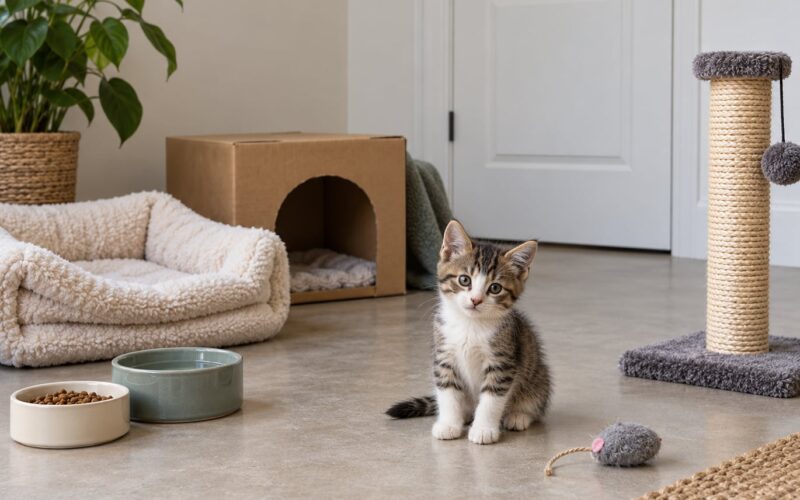
Go back to confinement. Keep the kitten in the room with the box for a few days, food, water, and a bed, and return to hourly trips after waking and eating. Clean every accident with enzyme cleaner the moment you find it, because once a spot smells like a toilet, the litter box stops being the obvious choice.
Try one change at a time. Swap the litter for a different texture, put a second box somewhere else, or cover the spot with a double layer of foil-backed tape so the texture feels wrong. Changing five things at once tells you nothing about which one worked.
When to check with a veterinarian instead of training harder
Some avoidance is not a training problem at all. Frequent small amounts of urine, straining in the tray, crying while urinating, blood in the urine, or a sudden drop in appetite all point to a urinary problem that needs treatment. Diarrhea, weight loss, and parasites are worth ruling out too, especially in a rescue kitten.
Two things are normal and not a vet visit: a few accidents during the first week, and kittens that play in litter instead of using it. Constant litter eating or sudden litter avoidance in a cat that was trained fine last week is a different story.
Frequently Asked Questions
What is the fastest way to litter train a kitten?
Confinement works fastest. Put the kitten in a small room, such as a bathroom or playpen, with a low-sided box, food, water, and a bed. Take them to the tray after every meal, drink, nap, and play session, scoop it clean daily, and give a treat the moment they finish. Most kittens are reliable in two weeks and fully consistent by four.
How long does it take to fully litter train a kitten?
Most kittens get the idea within a few days to two weeks. Full reliability usually arrives at around four weeks, and that is the figure most people quote. An older adopted cat or a stray with no mother to teach it can take longer. Accidents during the first week are normal and do not mean the training failed.
What is the 3-3-3 rule for kittens?
It is a framework for adjustment after a move or adoption: about three days to decompress in a new space, three weeks to establish a routine, and up to three months to feel secure and bonded. Litter training usually sits inside the middle phase, so expecting solid habits around the three-week mark is realistic.
What type of litter is best for kittens?
Use fine-grain, unscented litter. Until about 8 to 10 weeks old, choose non-clumping so that an accidental swallow stays harmless, with an inch or two of depth. Skip strong scents, which can turn a kitten off the box entirely. After that age, you can move to clumping litter, mixing it in gradually over about a week.
Can I leave my 4 month old kitten alone for 8 hours?
Four months is old enough to hold urine for most of a workday, but 8 hours alone is a long first stretch. Better to box the room with a litter tray, food, water, and something to climb, or ask someone to check in. Long absences also slow litter training, since accidents happen when nobody is there to reset the routine.
How do you litter train an abandoned kitten with no mother?
Orphaned kittens need the same box routine plus extra help. After each bottle feeding, warm a damp cloth and gently rub the kitten’s bottom to trigger elimination, then place them in the tray so litter becomes the second step. Stay patient, keep the box in a small warm room, and expect more accidents than a mother-taught kitten would have.
Conclusion
Start with the one thing that does most of the work: put a clean, low-sided box in a quiet room the kitten already uses, fill it with unscented non-clumping litter, and take them there after every meal and nap. Reward every single success, clean every accident with enzyme cleaner, and never scold. Four weeks is a realistic finish line, and the habit usually sticks for life.
If accidents continue after a month, or you see straining, blood, or a loss of appetite, book a vet visit rather than training harder. Some avoidance is a health problem, not a behavior problem.