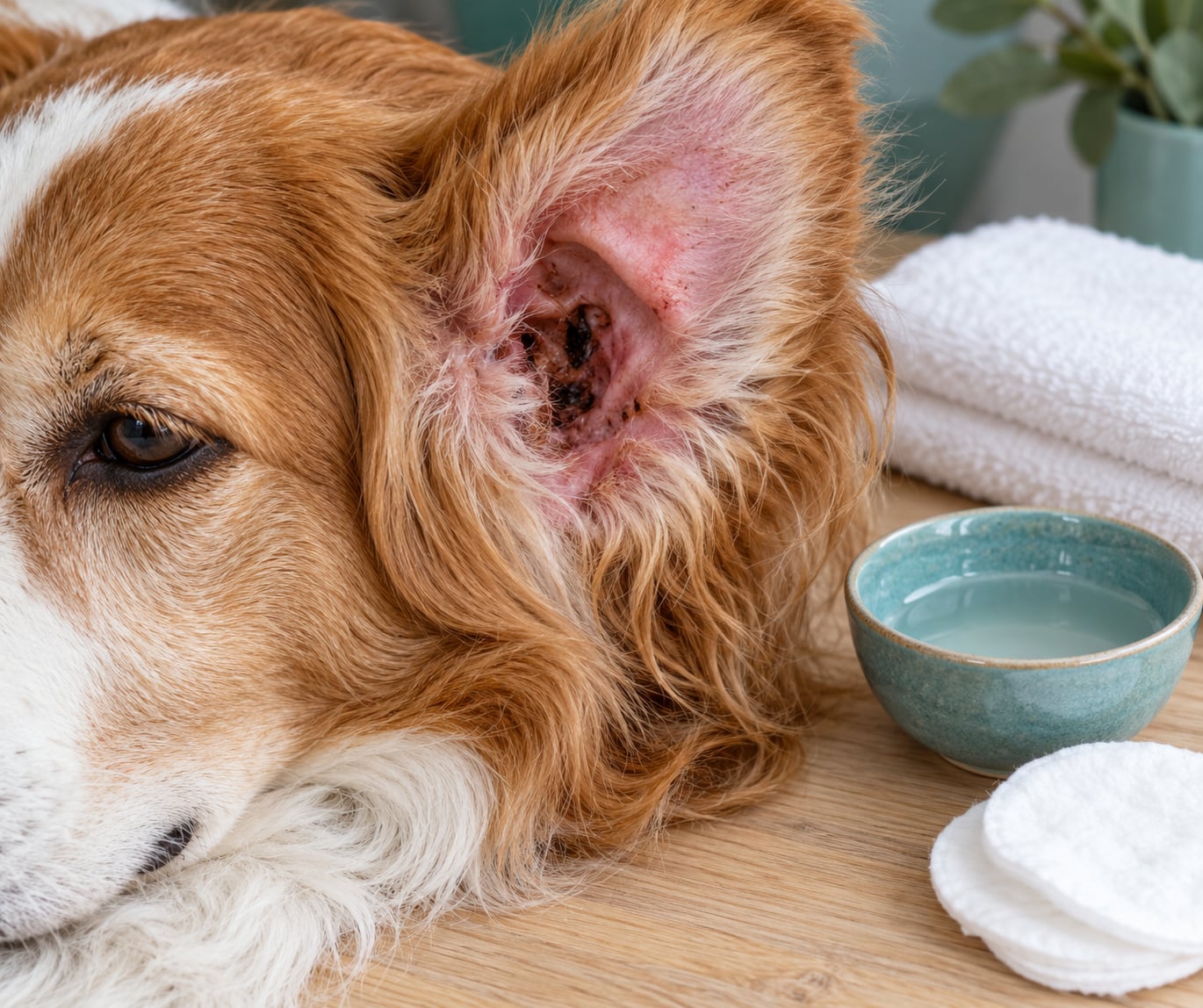
Signs of ear infection in dogs and what to do comes down to a short list: odor, discharge, redness, swelling, and a dog that scratches, paws at, shakes, or tilts its head. Watch from the outside, write down what you see, and call your veterinarian instead of treating it yourself. Most ear problems need an exam and a prescription drop.
This guide is general information, not a diagnosis or a treatment plan. Anything involving your dog’s health belongs with a veterinarian who can examine the ear canal and look at the eardrum, which no home check can do.
Table of Contents
- What You Need: Signs of Ear Infection in Dogs and What to Do
- Step-by-Step: What to Do About an Ear Problem
- 1. Recognize the common signs of ear infection in dogs and what to do next
- Common signs, seen in outer ear problems
- Warning signs that need same-day or urgent care
- 2. Look for possible causes and check how quickly symptoms are developing
- 3. Contact a veterinarian and describe what you observed
- 4. Know which symptoms need urgent veterinary care
- 5. Keep the ear protected while arranging professional care
- 6. Follow the veterinarian’s diagnosis, treatment, and prevention plan
- Common Mistakes and How to Fix Them
- Frequently Asked Questions
- Conclusion
What You Need: Signs of Ear Infection in Dogs and What to Do
Before you look inside, gather a few things. You want good light, clean hands, a quiet moment with your dog, and your vet’s number written down.
- A light source. A phone flashlight held above the ear works well for lifting the flap and looking at the canal opening.
- Clean, dry hands and a towel to lay your dog on, so you can steady them without losing your grip mid-check.
- A note on your dog’s normal ear before anything is wrong: what the ear looks like, how it smells, how much hair is in it. Owners often notice the smell first, not the head shaking.
- Your veterinarian’s number and the nearest emergency animal hospital, saved before you need it.
- A dog ear-cleaning solution your own vet already recommended, if one is on hand. Not a new bottle bought this afternoon.
What you do not need, and must not use, is anything that goes into the canal: cotton swabs, fingers, tweezers, hairpins, cotton balls pushed deep, or leftover human ear drops and medication. The ear canal is L-shaped and ends at the eardrum, and a dog in pain will react faster than you can pull back.
Step-by-Step: What to Do About an Ear Problem
1. Recognize the common signs of ear infection in dogs and what to do next
The most common signs show up in the ear itself or in the way your dog carries their head. Look for these, and match each to something you can actually see rather than something you assume.
- Odor: a smell that was not there before, often described as sweet or corn-chip-like with yeast, or foul and sour with bacteria.
- Discharge: brown, yellow, cream, or bloody material in the canal or on the inside of the ear flap, where owners usually first spot crusting.
- Redness and swelling: the canal and inner flap look red and puffy, and the flap itself can swell into a soft pillow shape.
- Itching: scratching with a back paw, pawing at the ear, rubbing the head on carpet or furniture.
- Head shaking: short, repeated shakes, sometimes so forceful that the dog slips or bumps into things.
- Pain on contact: flinching, yelping, crying, or pulling away when you touch the ear or the jaw.
- Crusts, scabs, or hair loss around the ear opening where scratching has broken the skin.
- Head tilt: holding the head to one side, which owners worry about most and which can signal deeper involvement.
- Hearing changes: not turning at the usual sounds, or seeming deaf on that side.
- Lower energy, fever, or not eating alongside the ear signs in a dog that is usually bright.
Here is the split most owners find useful: which signs can wait for a routine appointment, and which ones should not wait at all.
Common signs, seen in outer ear problems
- Odor, plus brown or yellow discharge and redness in the canal.
- Scratching, pawing, head shaking, or a mild head tilt.
- Crusts and scabs, with mild hair loss near the ear flap.
- Slightly reduced energy, or licking at the ear.
- Redness that started in the last day or two.
Warning signs that need same-day or urgent care
- Severe pain, where the dog cries or refuses to let you near the ear.
- A head tilt with loss of balance or walking in circles.
- Inability to open the mouth, or facial swelling.
- Repeated vomiting, collapse, or difficulty breathing.
- Not eating, or a bloody discharge with obvious pain.
These signs tell you the ear is irritated. They do not prove an infection is the cause, and only an examination with a scope and a sample of the discharge can say what is actually growing there.
2. Look for possible causes and check how quickly symptoms are developing
Many things produce the same signs. Moisture from swimming or bathing lingers in a warm canal, especially in floppy-eared dogs, and lets bacteria and the yeast called Malassezia multiply. Excess wax, skin inflammation, and allergies are other common triggers.
Ear mites do the same to puppies and to dogs brought in from shelters or yards, leaving dark, coffee-ground crusts. A grass seed or another foreign object can lodge in the canal after a walk, and polyps or growths cause ongoing irritation in older dogs. Floppy-eared breeds such as Cocker Spaniels and Basset Hounds have less air flow, so they hit this more often.
Note the speed. Symptoms that appeared in hours are different from ones building over months. Ask yourself whether this is new, worsening, or returning after a previous episode, and whether it follows swimming, grooming, a new food, or a medication change. Mention anything your dog might have put in that ear.
3. Contact a veterinarian and describe what you observed
Call as soon as you see discharge, odor, pain, redness, or scratching that does not settle. The description you give shapes what happens next, so have your notes ready rather than describing it from memory.
Report the dog’s age, when the signs started, the color of the ear, the smell, what the discharge looks like, how much the dog is scratching or shaking, any recent water exposure, and any other change in health, appetite, or energy. Say what you already tried and whether it helped or made things worse.
Describe, do not diagnose. Telling the clinic that the ear smells sour and hurts when touched gets you a useful answer. Telling them you are sure it is yeast and asking for the same drops as last time does not.
4. Know which symptoms need urgent veterinary care
Some signs mean the problem has moved past the outer canal, and those dogs need to be seen the same day. Severe pain with crying or a dog that will not let you touch the ear, an inability to open the mouth, and facial swelling all point to something serious.
A head tilt with loss of balance or walking in circles, unusual eye movements, or facial drooping suggests the middle or inner ear is involved. Repeated vomiting, collapse, difficulty breathing, refusal to eat, and any bloody discharge with marked pain are emergency signs.
A suspected foreign object counts too, especially after a walk in long grass. Those signs are frightening to see, and owners often assume the worst. Most dogs with severe balance problems from an ear problem do recover, and the earlier they are seen, the simpler the treatment stays.
5. Keep the ear protected while arranging professional care
Between noticing the signs and getting in, a few things are safe. Keep the ear dry, and stop using any product that stings or that your dog reacts to. Try to discourage vigorous scratching, since a dog shaking hard enough can burst a blood vessel in the flap and leave a swollen, blood-filled lump that needs its own treatment.
Wiping the visible outer ear with a damp cloth is fine. Going deeper is not. If your own veterinarian has already given you a cleaning routine for this dog and the ear is not painful, follow that routine and nothing beyond it.
Keep out of the ear: human medication, leftover drops from a previous episode, alcohol, hydrogen peroxide, homemade oil or vinegar mixtures, essential oils, and store-bought ear mite products used on a dog whose cause you do not know. Those last ones can make a yeast problem worse. Any prescribed care follows your vet’s instructions, not a schedule you found online.
6. Follow the veterinarian’s diagnosis, treatment, and prevention plan
An ear exam usually includes looking down the canal with a scope, checking the eardrum, and taking a sample of the discharge to look at under a microscope, which is how the vet tells yeast from bacteria. That single step decides whether the dog needs an antifungal, an antibiotic, or both, plus something for pain and swelling.
Cleaning often comes first on purpose. Debris and thick discharge block topical drops from reaching the tissue, so cleaning before medication is not optional when your vet asks for it. If the canal is too swollen or painful to clean at home, they will do it in the clinic.
Finish the full course even after the ear looks better. Stopping early is the most common owner-reported reason infections return within weeks. Keep the recheck appointment, since the ear can look clean while the canal is still inflamed.
If infections keep coming back, the fix is usually upstream. Recurring ear trouble is often traced to food or environmental allergies, and controlling that is what finally stops the cycle. Prevention is simple: dry the ears after swimming, keep hair around the ear trimmed, and clean regularly with whatever your vet recommends for that individual dog.
Common Mistakes and How to Fix Them
Almost every problem I hear about comes from one of these, and all of them are easy to avoid.
- Cleaning too deeply. Cotton swabs push debris further in and can rupture the eardrum. Clean only what you can see at the opening.
- Reaching in with fingers or tools to see what is going on. A squirming dog plus metal in an ear canal is a bad combination.
- Using leftover or human ear drops. The wrong active ingredient can worsen the ear and delay the correct treatment by weeks.
- Treating without confirming the cause. Yeast, bacteria, mites, and allergies need different routes, and the symptoms overlap.
- Ignoring mild recurring signs. A little itch that comes back every few weeks is worth one appointment, because it usually points at an allergy.
- Putting drops into a painful ear. If your dog cries, apply nothing and call the clinic.
- Waiting too long. Days of home care on a severe infection can turn an outer ear problem into a middle ear one.
Two habits prevent most repeat visits: dry the ears after every swim or bath, and stay on the cleaning schedule your vet set for your dog. Check the ear monthly in good light so you know what normal looks like, and note anything new the same week it starts rather than waiting to see if it settles.
Frequently Asked Questions
Does a smelly ear always mean a dog has an ear infection?
No. Odor is one of the most common early signs, but yeast, bacteria, moisture, and wax all produce a smell, and some dogs simply carry more wax than others. Owners often smell it before they see anything. Treat a new smell as a reason to check the ear and call your vet, not as a diagnosis.
When should I take my dog to the vet for ear symptoms?
Call promptly if you see discharge, odor, redness, pain, or scratching that does not settle. Book the same day for severe pain, inability to open the mouth, facial swelling, head tilt with loss of balance, repeated vomiting, or a suspected foreign object. Those signs can mean the infection has moved beyond the outer canal.
Is it safe to clean a dog’s ears at home?
It is safe when the ear is not painful and your own veterinarian has taught you a routine for your dog. Never clean to check for an unknown problem, since a painful ear can be injured easily. Never put cotton swabs, fingers, or tools into the canal, and stop immediately if your dog reacts.
What should I not put in my dog’s ear?
Leave out human medication, leftover drops from a previous infection, alcohol, hydrogen peroxide, homemade oil or vinegar mixtures, essential oils, and over-the-counter mite products used without a diagnosis. Some of these irritate inflamed tissue, and the wrong one can make a yeast infection considerably worse.
What should I do if my dog is scratching or shaking its head?
Note when it started, check the flap and canal opening in good light, and keep the ear dry. Call your veterinarian if you also see odor, discharge, redness, or pain. If the scratching is violent, try to limit it, because hard shaking can burst a blood vessel in the ear flap and cause a swelling that needs treatment.
Conclusion
The first thing to do is write down the signs of ear infection in dogs and what to do about them: note the smell, the discharge, the redness, and how the dog carries their head, then call your veterinarian. While you wait, keep the ear dry and keep deep cleaning, cotton swabs, human medication, and unapproved drops out of it. Severe pain, facial swelling, head tilt with loss of balance, repeated vomiting, or collapse are urgent signs that need professional care the same day.