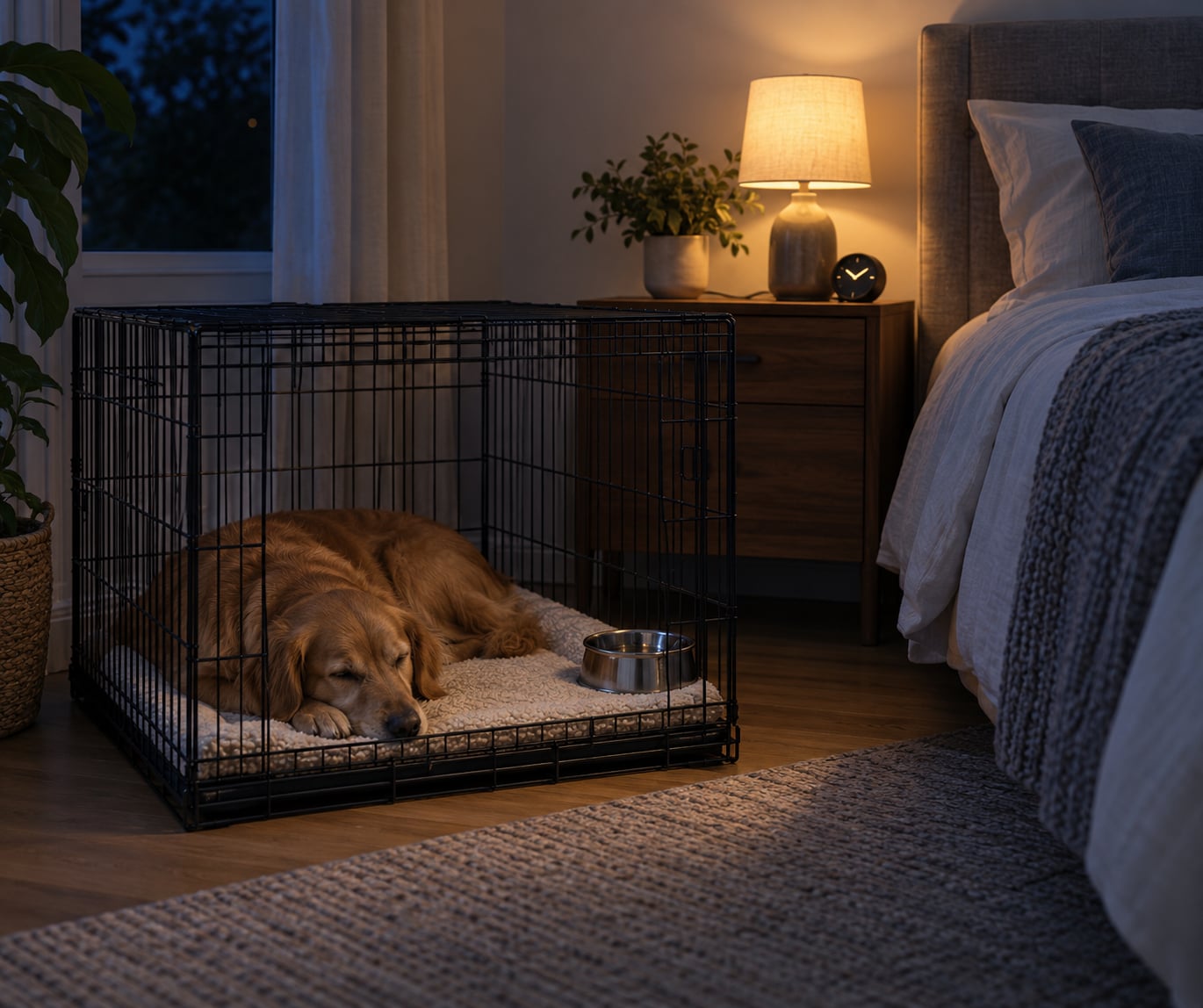
If you are searching for how to crate train a puppy at night without crying, the honest answer is that most puppies settle within 10 to 20 minutes on night one, and the rest need two to three weeks. The crying itself is not the problem. What fixes it is the crate sitting beside your bed, a proper bathroom break right before the door closes, and never letting a puppy out while it is still vocalising.
This guide walks through the whole process in order: what to gather, how to introduce the crate during the day, how to run a bedtime routine that repeats every night, and how to respond in the first thirty seconds after crying starts. Allow two weeks minimum. Progress in small steps, and keep the puppy’s age in mind, because an eight-week-old puppy has a very different bladder than a five-month-old one.
Table of Contents
- What You Need for Night Crate Training
- Step-by-Step: How to Crate Train a Puppy at Night
- Common Mistakes to Avoid
- Frequently Asked Questions
- How long should a puppy be allowed to cry in its crate at night?
- Should I let my puppy out every time it cries?
- How long can a puppy stay in a crate overnight?
- Is a crate safe for a puppy that cries loudly?
- Why is my puppy crying in the crate but not during the day?
- When should puppy crate crying be treated as a medical concern?
- Conclusion
What You Need for Night Crate Training
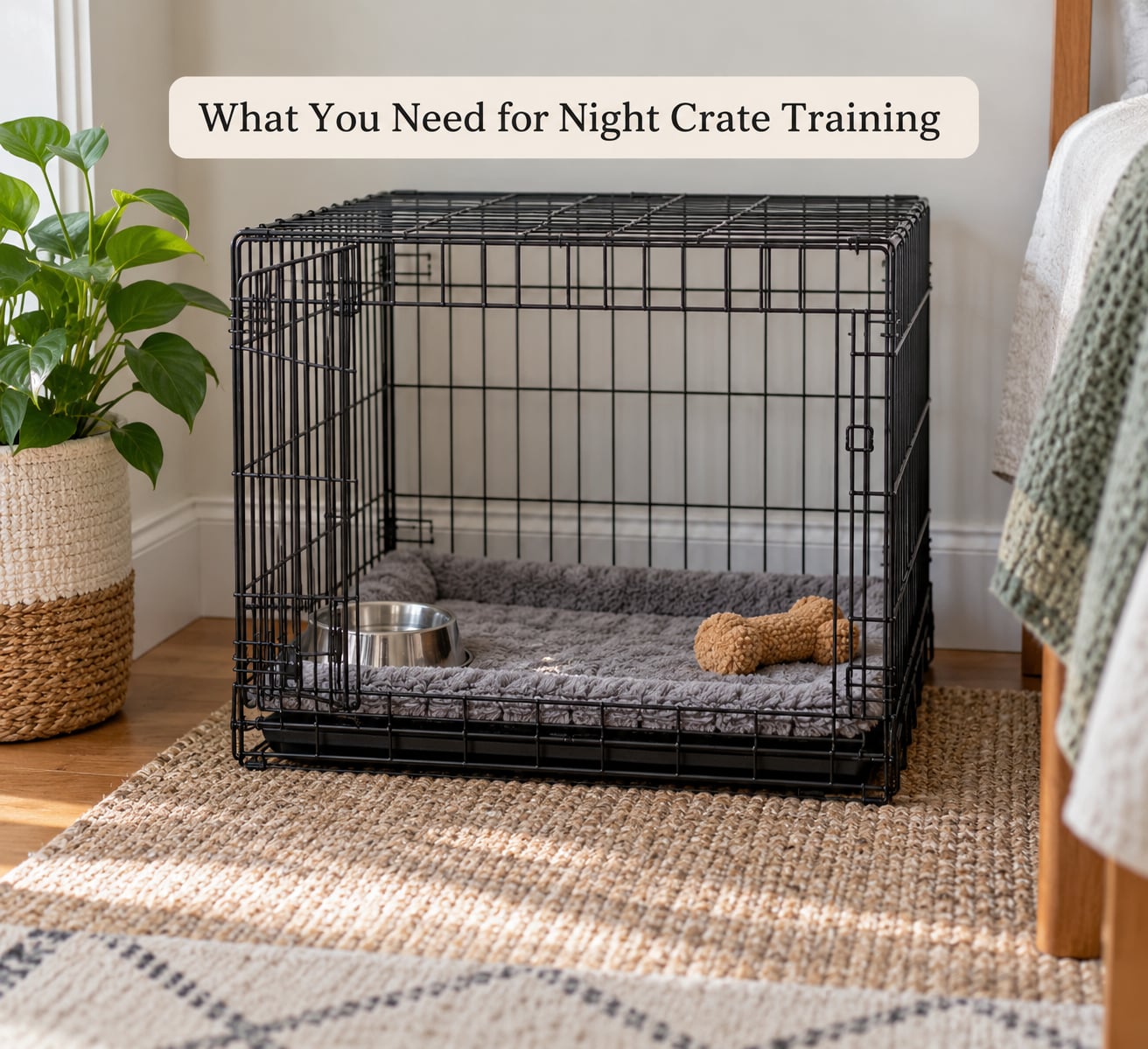
Most owners who struggle at night are missing one of these items. Gather everything before the first evening, so the routine never breaks down halfway through because a bowl is still in the dishwasher.
The crate itself
Buy for where the puppy will be now, not where it will be in a year, and use a divider panel so you can shrink the space as it grows. The rule is simple: the puppy can stand up, turn around and lie down stretched out, but there is not enough room for a corner used as a toilet.
Bedding and a cover
A washable mat or blanket gives the puppy something of its own to sleep on. A light blanket draped over the crate turns an open wire box into a den, which most puppies settle into faster. Leave a gap so air still moves.
Water, and a safe chew
A heavy or tip-proof water bowl prevents overnight tipping. For the chew, pick something you can supervise or that is genuinely too large to swallow whole. A frozen KONG-style toy stuffed with wet food gives the puppy ten to fifteen quiet minutes of work while settling.
A treat pouch and your fingers
Treats delivered through the bars, one at a time, hold a puppy in a down-stay long enough to fall asleep. Owners on puppy forums describe this as the single most useful night-time tool, along with being able to reach through the bars to touch the puppy without opening the door.
An outdoor toilet spot and cleaning supplies
Decide where outside breaks will happen tonight and keep a bag, scoop and enzymatic cleaner nearby. If you use pads, have one waiting in the crate corner from night one so the location is consistent.
A note of your puppy’s rhythm
Write down when your puppy last ate, when it last went out, how long naps last and roughly when it wakes overnight. That record is what tells you whether tonight’s 2 a.m. break is routine or an accident waiting to happen.
Optional extras that help
White noise or calm classical music, a familiar-smelling T-shirt of yours, a heartbeat-style plush toy, and a dog-appeasing pheromone diffuser sprayed on the bedding fifteen minutes beforehand. None of these replace training, and owners who use all four still see the same three-week timeline.
Step-by-Step: How to Crate Train a Puppy at Night
1. Choose the right crate for the puppy
Stand the puppy inside the crate before you buy anything. Head to the ceiling should have clearance, there should be room to turn in a circle without touching the walls, and the puppy should be able to lie down fully stretched.
The single most common sizing mistake is buying adult size. A too-large crate means a puppy can separate from the sleeping area to relieve itself, and a soiled bed turns into barking within days. Use the divider, and move it up as your puppy grows.
How you know it worked: the puppy walks in without hesitation during crate games and can sleep through a full night without needing an extra break.
2. Set up a safe, comfortable sleeping area
For the first two weeks, put the crate beside your bed, close enough that you can put your fingers through the bars. Later you can move it to its permanent spot, and moving it later than you want is far better than moving it too early.
Check the room for hazards: wires, small gaps a paw or collar could catch, blind cords, cleaning products within reach, and anything hot. Keep the room cool, since puppies overheat easily, and leave a light on or a night light in the hallway so a shadow passing the door does not startle them.
How you know it worked: the puppy settles without scanning the door, and the crate smells like bedding and you rather than like confinement.
3. Make crate entry easy and rewarding
Do not push the puppy in and shut the door. Toss treats into the far corner, let the puppy go in and out as much as it likes, and reward calm approaches. Once the puppy settles in for a few seconds, close the door, hold one treat through the bars, then reopen. Repeat. Owners call these crate games, and they work because the puppy gets to leave whenever it wants.
How you know it worked: the puppy chooses to go in when you ask, and stays lying down after the door shuts.
4. Build up daytime time in the crate
Increase absences in short steps: a minute, two minutes, five, fifteen, half an hour. Sit beside the crate at first, then across the room, then just outside the door, then in the hallway. Return before the puppy’s breathing changes and before the whining starts, so the puppy never learns that barking brings you back.
A common mistake is jumping from five minutes to four hours over a weekend. An extinction burst, where the puppy suddenly gets louder for a while before settling, is normal at any step. Go back one level and rebuild.
How you know it worked: the puppy relaxes and sleeps in the crate while you are out of sight for at least an hour.
5. Introduce short overnight absences
After several successful daytime sessions, close the crate at night for a short stretch after the puppy has settled, and return quietly before any distress begins. Sit on the floor by the crate with your fingers through the bars, hand over one treat, and wait in silence until the breathing evens out. Then leave the room briefly. Walk back in before sound restarts.
Some owners keep a second setup, one crate for daytime and a night crate in the bedroom. Two crates means the puppy does not link your daytime absence with the crate, which helps a lot in small flats.
How you know it worked: the puppy breathes evenly or sleeps without sustained vocalisation for the length you had planned.
6. Create a calm bedtime routine
Run the same five steps every night, in the same order. Final outdoor bathroom break, water bowl refilled, ten minutes of sniff or a chew, one calm verbal cue such as “bed time” or “crate”, then placement. Then turn off the lights and stop engaging.
Consistency does more work than technique here. The routine is the cue that tells the puppy sleep is starting, and the potty break line is the fix behind most overnight accidents. Feed the evening meal at least an hour before, not immediately before, so the puppy is not digesting and awake on a full stomach.
How you know it worked: by night five, you can put the puppy in without a single cue and it settles.
7. Respond safely when the puppy cries
Here is the core rule. Do not let the puppy out of the crate while it is actively crying, because that teaches the one behaviour you are trying to remove. Instead, wait quietly until sound stops, then open for a bathroom break and return without a word.
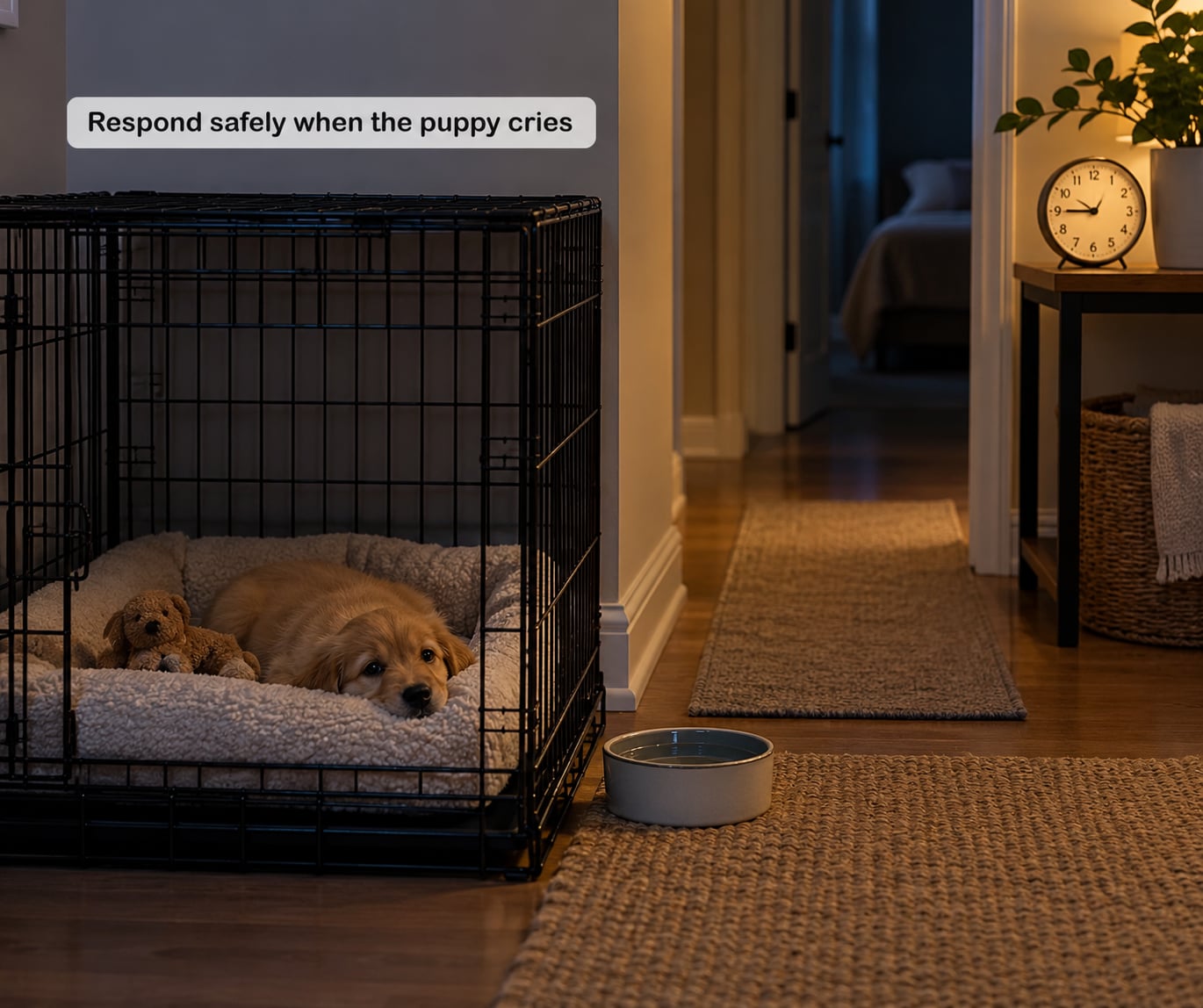
But do pause if you suspect genuine distress. Check the crate for a soiled pad, a chewed-up object, trapped claws or a collar snag. Consider whether the room is too hot, and whether the puppy is ill. Crate crying that comes with vomiting, limping, refusal to eat or a strange posture is a veterinary matter, not a training matter.
Never give a puppy human sleep medication or a sedative to get through the night. Those products are not formulated for growing animals and are genuinely dangerous at that weight. Ask your vet for guidance instead.
Watch the difference between settling and distress with a short side-by-side look:
| Signal | Normal settling | Real distress |
|---|---|---|
| Sound | Whimpering, then intermittent whining, then silence | Screaming or continuous barking with no pauses |
| Body language | Yawns, lip licking, turns around, lies down | Frantic scratching at the door, drooling, whale eye, frantic pacing |
| Duration | Under 20 minutes, easing off over time | Escalating hour after hour with no settling |
| Breathing | Slows and evens out | Rapid, shallow, or panting heavily |
| Response | Wait quietly for silence | Check the crate, then go in and soothe without opening |
Now the part nobody tells you: how long this takes, night by night.
| Night | What usually happens | What you do |
|---|---|---|
| 1 | Whining for 10 to 20 minutes, sometimes more | Sit beside the crate with fingers through the bars until quiet |
| 2 to 3 | Shorter episodes, often ending before midnight | Keep the routine identical; move to sleeping in the room |
| 4 to 7 | Mostly quiet with one or two early waking episodes | Let the puppy out only after silence; keep bedtime steady |
| 8 to 14 | Long stretches of sleep, occasional regression around odd nights | Drop back one step of distance during the day, then rebuild |
Common Mistakes to Avoid
Using the crate as punishment is the mistake that damages everything else. Shut the door on a puppy for being bad and the crate becomes a place of fear, and a frightened puppy cannot settle. Only ever close the door after a calm entry.
Expecting a puppy that is perfectly calm during the day to sleep all night is unrealistic. Night stretches are longer than any daytime absence, and the dark and silence remove distraction. An eight-week-old puppy also usually needs a bathroom break roughly every two hours overnight, using the rule that bladder hold in hours is about age in months plus one.
Feeding a big meal right before bed keeps the puppy awake and increases the chance of an accident. Move dinner at least an hour earlier.
Opening the door the instant crying stops teaches a puppy nothing except that noise works. Wait for a few seconds of quiet, then open, and never speak on the way out. A knock on the crate wall or a firm quiet “no” spoken once, then nothing, works better than a conversation.
Adding attention mid-crying makes it worse. Owners who went back to check on every whimper noticed the behaviour escalate, which is the pattern most often described as the puppy teaching you to come running.
Moving the crate to another room too soon causes relapses. Keep it beside the bed for roughly two full weeks of quiet nights before you relocate it.
Also notice your own pre-departure cues. If your puppy already starts pacing when you grab your keys or put on your shoes, put those actions somewhere else in the routine, or move the puppy to the crate before you get dressed. Dogs learn the cue faster than the routine.
Finally, sleep is part of the plan. You will function better after short naps than after a night of no sleep, so let someone else take a shift, sleep when the puppy sleeps, and keep sessions short and boring. If crying has you crying, that is a normal response to a hard first fortnight, and talking to a trainer or your vet about it is not a failure.
Frequently Asked Questions
How long should a puppy be allowed to cry in its crate at night?
Let a puppy settle on its own for as long as the crying stays mild and easing off, usually 10 to 20 minutes on the first nights. Escalating screaming that continues for hours without any settling is not something to push through. Pause the schedule, spend a few days back on short daytime repetitions, and check the crate for a soiled pad, heat or an injury.
Should I let my puppy out every time it cries?
No. Every release while the puppy is still vocalising teaches it that crying works. Wait for silence first, then let the puppy out for a bathroom break and return without fuss or eye contact. If you suspect real distress, go in and soothe without opening the door, so the puppy gets comfort without a reward for noise.
How long can a puppy stay in a crate overnight?
Keep a young puppy’s overnight confinement to what its age supports, roughly one hour per month of age and never more than six hours in total. Overnight, a puppy under 16 weeks will usually need bathroom breaks every two to four hours anyway. An adult dog that is crate trained through the day can manage eight hours, but start shorter and build up.
Is a crate safe for a puppy that cries loudly?
A crate is safe when it is the right size, free of hazards and not used as punishment. Screaming makes pups overheat and tire themselves out, so watch the room temperature, keep the crate beside your bed and cover three sides with a light blanket. Crying alone is not a safety risk, but exhaustion from screaming can be, so use the crying as a signal to review the setup.
Why is my puppy crying in the crate but not during the day?
Night stretches are longer than daytime absences, and the dark and quiet remove every distraction. A puppy that settles for an hour while you are out may simply be reacting to hours of alone time, or to an overnight bathroom need. Keep the same routine, work on longer daytime absences, and consider a night crate in the bedroom instead of a daytime location.
When should puppy crate crying be treated as a medical concern?
Call your veterinarian if the crying is sudden in a puppy that previously slept fine, or if it comes with vomiting, diarrhoea, limping, a hunched posture, blood in the urine, panting in a cool room or refusing food and water. Crying that wakes them from sleep suddenly is worth checking too, since pain often shows up as restlessness rather than obvious distress.
Conclusion
Start tonight with one change: put the crate beside the bed, run the five-step bedtime routine, and give the puppy a full bathroom break immediately before the door closes. Wait for silence before you ever open it again.
If your puppy is crying more than it settles, drop back one step. Go back to short daytime repetitions, keep the crate in the bedroom, and increase overnight time only after two quiet nights in a row. Owners who see progress usually describe it as gradual: a few fewer minutes of crying, then a few longer stretches of sleep, then a whole night.
And if the crying is sudden, severe, or comes with vomiting, limping, panting in a cool room or a refusal to eat, speak to your veterinarian before treating it as a training problem. That is how to crate train a puppy at night without crying, one calm night at a time.