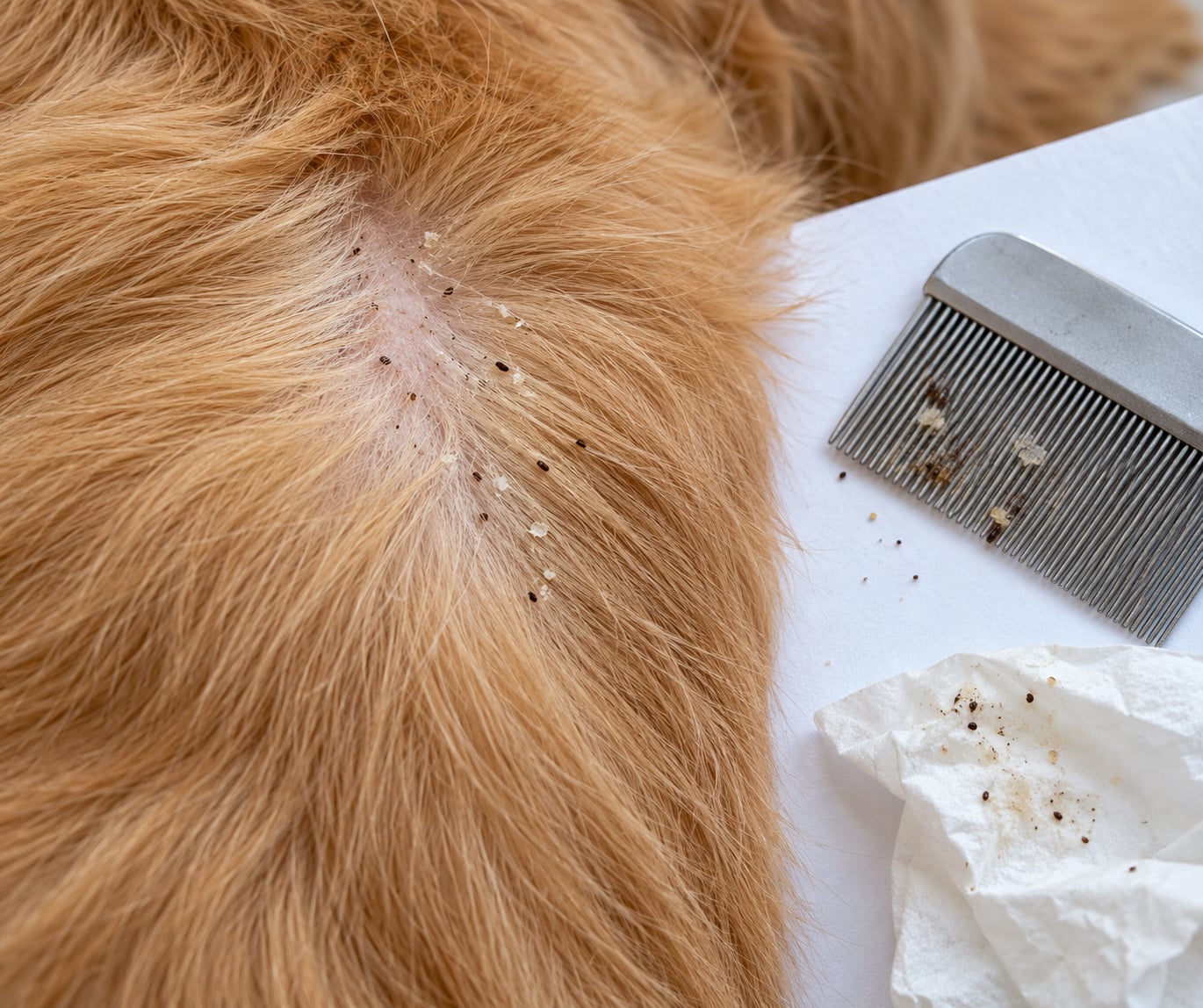
If you want to know how to tell if a dog has fleas or dry skin, wet the debris you find in the coat. Flea dirt is dried, digested blood, so it smears reddish-brown on a damp white tissue, while ordinary flakes of dry skin stay white or grey. That test takes under a minute and settles most cases before you spend money on the wrong remedy.
The whole check is beginner-friendly, but there is one catch: bathe or brush the dog first and you may wash the evidence away. Work on a clean, dry coat, and resist the urge to treat until you know what you are dealing with.
Table of Contents
What You Need
Gather these before you start, and keep the dog somewhere with light-coloured flooring or a white sheet underneath.
- Bright light. A lamp or phone flashlight angled across the coat makes moving specks cast a shadow and stand out.
- A fine-toothed flea comb. Regular metal combs skip straight over the base of the hair, where fleas and their dirt sit.
- White tissue or plain paper. You need a pale background to judge the colour of what you collect.
- Clean water. A dampened corner of the tissue is what separates dried blood from skin flake.
- A note of the dog’s grooming history. When the dog was last bathed, brushed or treated tells you whether what you see is even a fair sample.
Nothing else is needed for the check itself. Do not apply any medication, oil or household product during this stage; irritated skin reacts badly to treatments aimed at the wrong problem.
Step-by-Step: How to Tell If a Dog Has Fleas or Dry Skin
Work through the five checks in order. The first two narrow the cause down by location and appearance, the third is the decisive test, and the last two catch the cases that look like one thing but are not.
1. Compare the Location and Appearance of the Skin
Flea problems tend to concentrate. Look at the base of the tail, the groin, the belly, the inner thighs and the neck, where the skin is warm and thin and the dog can reach easily to scratch.
Dry skin behaves differently: it shows up spread fairly evenly over the back, flanks and shoulders rather than in tight clusters. Flea irritation often adds small raised red bumps, scabs or patches of thinning hair on the lower back and rump, and the coat there can look dull and rough from constant chewing.
None of that proves anything on its own. Redness, flakes, hair loss and itching all show up in a dozen unrelated conditions, so treat this step as sorting the possibilities rather than naming the cause.
2. Check the Coat for Fleas and Signs of Flea Dirt
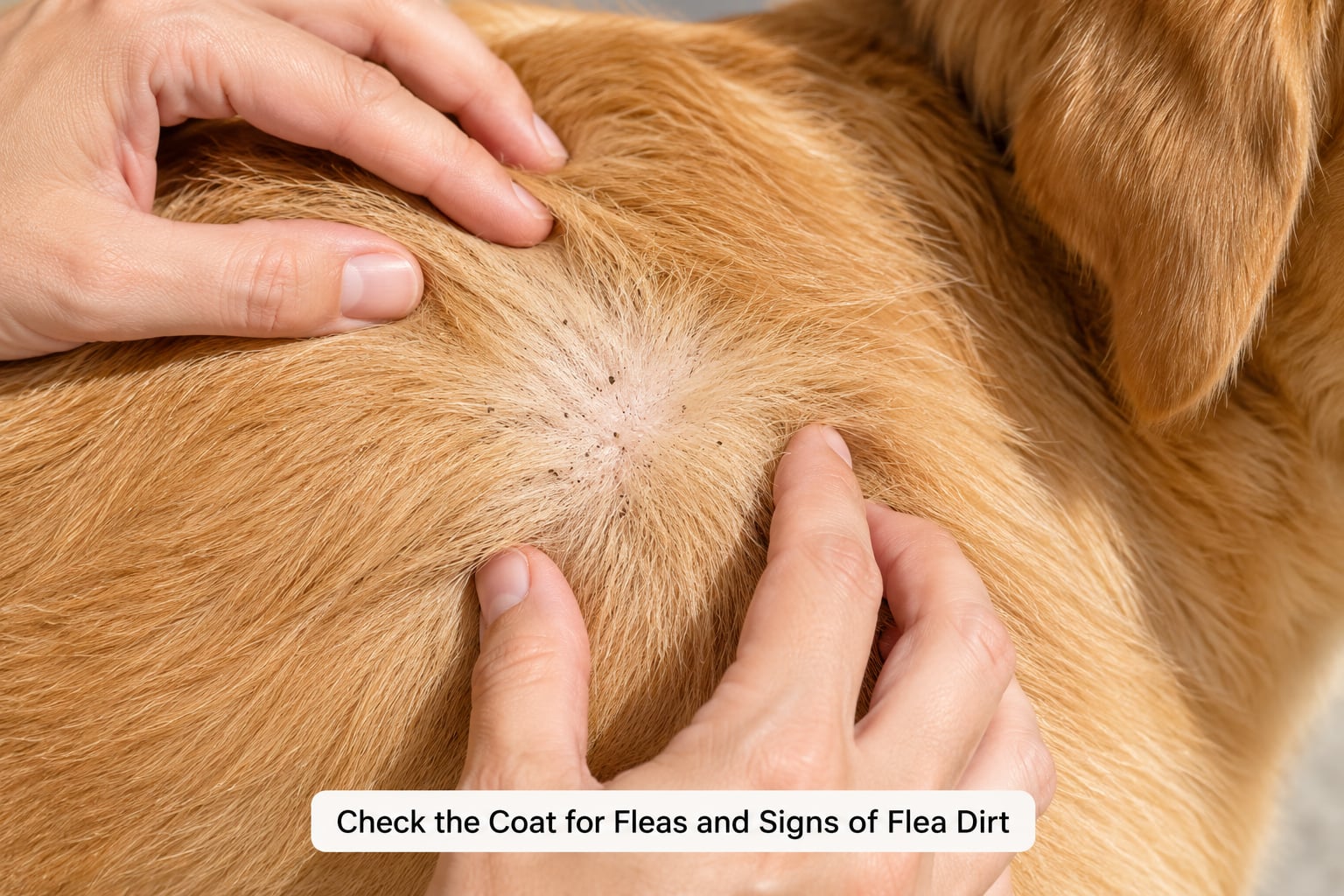
Part the fur with your fingers and look at the skin itself, not just the surface. A flea is a small oval insect, dark brown to black, roughly the size of a sesame seed or a pencil lead, and it moves quickly sideways through the hair. That side-to-side scurry is what separates a live flea from a speck of dirt.
Flea dirt is the black pepper-like grit that falls out where the dog rests and sits. The other thing to look for is the flea itself, which is much rarer than its droppings. Owners on r/DogAdvice point each other to the same habit of parting the hair down to the skin rather than just looking at the top coat.
Finding one suspected insect or a handful of dark specks is a reason to check properly, not a diagnosis. Fleas are good at hiding, and even a vet looking at a dog in a bright exam room often cannot catch one on the spot.
3. Use a Flea Comb and White Paper Test
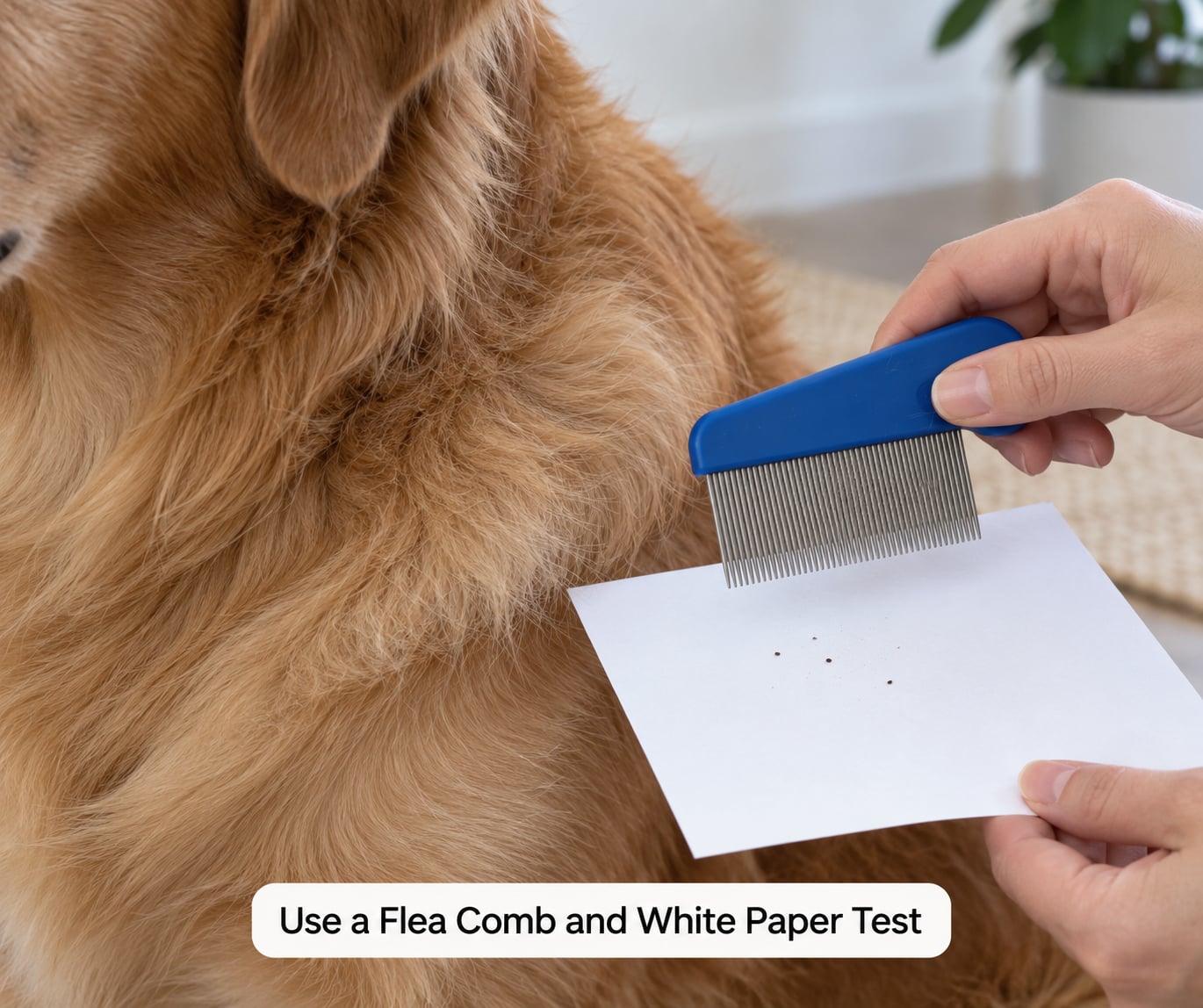
This is the check that gives you an answer instead of a guess, and it takes about a minute.
- Place the white paper or tissue on a flat surface under the area you are combing.
- Start at the tail base, then the neck, shoulders, belly and groin, since these are the areas that catch the most debris.
- Comb with light, short strokes down to the skin, a few centimetres at a time, and watch what lands on the paper.
- Dampen the collected debris with a little water and let it sit for a few seconds.
- Read the result: a reddish-brown or rusty smear means dried blood, which points to fleas. White, grey or translucent flakes that stay their colour are skin and sebaceous debris.
The logic is simple. Flea dirt is dried digested blood, so water rehydrates it and it oxidises into a rusty stain. Keratin flakes from dry skin just soften and stay pale.
Members of r/Dogowners describe the dampened tissue test as the moment the guessing stopped, and poodle owners on dogforum.com add a useful confirmation trick: if the specks build back up within a week or two of the dog getting wet, something is still producing them.
A reddish smear is strong evidence, not laboratory confirmation. If you are not sure what you are looking at, a photo to your vet takes seconds and saves weeks of the wrong treatment.
4. Look for Patterns Linked With Dry Skin
Dry skin has a signature that is about consistency rather than location. The flakes are fine, white or grey, and they come loose on their own, in the coat, on your dark trousers and on the dog bed. The coat often feels dull, rough or brittle to the touch rather than soft.
Track how the itching changes. Low indoor humidity in winter, a run of hot central heating, frequent baths, swimming in cold water, or a harsh shampoo stripping the coat of its natural oils can all leave a dog flaking for weeks. The pattern is gradual and follows the season, the weather or the grooming routine, and there are usually no dark specks anywhere.
Some dry skin is a symptom rather than a skin problem, so it is worth a vet visit rather than repeated product changes. Flea allergy dermatitis, mites, yeast overgrowth, bacterial infection and food sensitivity all show up as flaking too.
5. Check for Other Problems and Decide When to Call a Veterinarian
Itching with no visible fleas is one of the most common posts on pet forums, and one of the most misread. A dog can carry fleas without you ever seeing one, and it can scratch for reasons that have nothing to do with parasites at all.
Book an appointment rather than guessing if you notice sores or open wounds, swelling, discharge or a strong smell, hair loss that keeps spreading, marked pain when the skin is touched, lethargy, a reduced appetite, or rapid worsening over days. Puppies and small dogs deserve extra caution: a heavy flea burden can cause anaemia, and pale or white gums are a sign to go in right away.
Also see a vet before using any parasite product if the skin is already broken or inflamed. Products that are wrong for the problem can make irritated skin worse, and choosing a treatment is a conversation for a professional who can examine the dog.
Common Mistakes
Assuming every flake is dry skin. Fine white flakes usually point one way, but flakes that come with black specks, raised bumps or sudden intense scratching do not. Check the colour and the location before you relax.
Dismissing dark specks as ordinary dirt. Soot from a fireplace, soil from digging and flea dirt all look similar dry. The wet paper test is what separates them, and skipping it is how owners end up treating dry skin for months while fleas keep working.
Bathing first and checking afterwards. Water removes loose flea dirt along with the flakes you needed to compare. A clean coat after a bath proves nothing either way.
Judging by how much the dog scratches. Itch intensity varies hugely between individuals, and some dogs with fleas barely scratch at all. Physical evidence beats behaviour.
Using human medication or home remedies. Flea remedies meant for people can be dangerous for dogs, and human creams, essential oils and kitchen ingredients can burn or poison a dog that licks the area. Never apply a product that was not made for dogs, and never apply one before you know what you are treating.
Treating without considering the other causes. If no fleas are present, parasite control will not touch allergies, mites, yeast or a damaged skin barrier, and it may irritate a dog that only had dry skin.
For prevention, the basics hold up: year-round parasite control on a schedule your vet recommends, gentle grooming, water always available, a humidifier in dry winter months, and products approved for dogs rather than borrowed from the bathroom cabinet.
Frequently Asked Questions
Can a dog have fleas without scratching a lot?
Yes. Some dogs show little scratching at all, especially if they were exposed as puppies and are tolerant, or if only a few fleas are present. Others scratch constantly from a single bite, because the reaction is to flea saliva rather than to how many fleas are feeding. Physical evidence is more reliable than behaviour: comb the tail base, neck and belly onto white paper, dampen the debris and look for a reddish-brown smear.
Are black specks on a dog always flea dirt?
No, though flea dirt is the most common cause and the easiest to test for. Ordinary soil, soot, dried mud and dried blood from a minor scratch can all look similar. Dampen the specks with water: flea dirt, which is dried digested blood, smears rusty reddish-brown, while dirt and other grit do not change colour. Flea eggs are also easy to confuse with dirt, but they are smooth oval off-white grains, noticeably larger and paler than the black specks.
Does dry skin on dogs look like dandruff?
It usually looks exactly like it. Fine white or grey flakes of dead skin, often drifting onto furniture, clothing and bedding, together with a coat that feels dull, rough or brittle. The difference from fleas is where the flakes appear and what else comes with them: dry skin is spread fairly evenly across the back and shoulders, while flea dirt is clustered at the tail base, groin, belly and neck and turns reddish-brown when dampened.
Should I use my own flea treatment on my dog?
No. Products containing permethrin, which is common in human flea remedies, can be fatal to cats and dangerous to dogs, and no product should go on a dog that has not been examined first. Flea treatments are also a diagnosis in themselves: applying one to a dog with only dry skin wastes money and can irritate already fragile skin. Ask your vet which product suits your dog’s age, weight and skin, then treat every pet in the home at the same time.
When should I take my dog to the vet for itchy skin?
Go in if you notice sores, open wounds, swelling, discharge, spreading hair loss, pain when the skin is touched, lethargy, a reduced appetite, or rapid worsening over a few days. Pale or white gums in a puppy or small dog need same-day attention, since a heavy flea burden can cause anaemia. Skin that stays irritated after a few weeks of gentle care also deserves an appointment, because causes such as mites, yeast, bacterial infection and allergies all need specific treatment.
What to Do First
Note the day the itching started and when the dog was last bathed, then part the coat at the tail base, groin and belly under bright light and comb what you find onto white paper. Dampen it. A reddish-brown smear sends you toward parasites; white flakes that stay pale send you toward dry skin and a look at humidity, bathing routine and shampoo.
Skip any human product along the way, and contact your vet if the condition persists, worsens, or is causing your dog real discomfort. Once you know how to tell if a dog has fleas or dry skin, the right support is a small change rather than a guess.