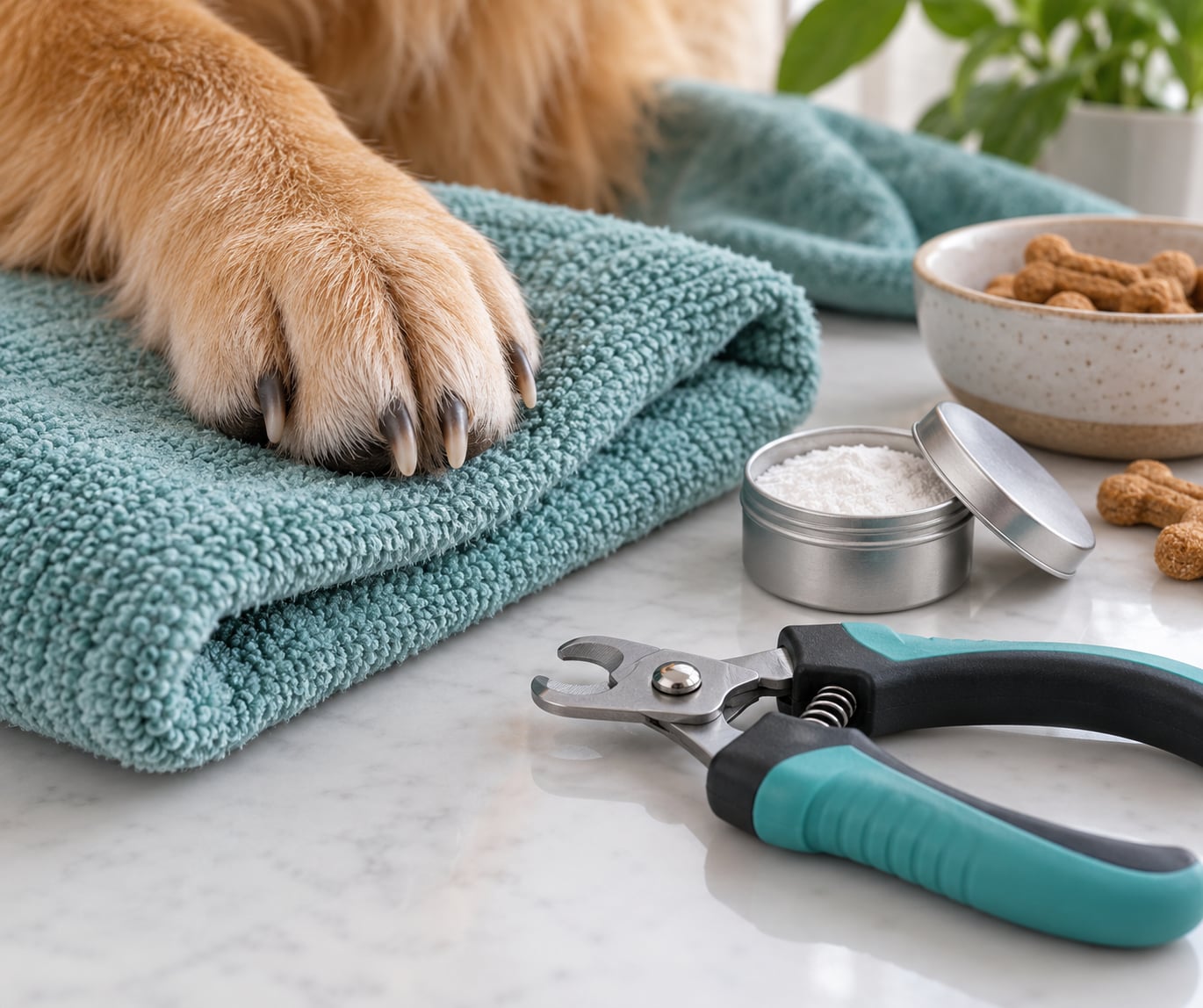
Learning how to clip dog nails without hurting them comes down to three things: sharp clippers, many tiny slices instead of one big one, and a clear idea of where the quick sits before the blade lands. On light nails you can see the pink quick through the translucent shell. On black nails you shave off slivers and watch the cut face until a small dark dot appears, then stop. Sessions should take five minutes, not twenty.
The good news is that most dogs who squirm at nail trims are not being difficult. They have simply never been taught that the clippers predict something good. That part is fixable in a week or two, and it turns the whole job from a wrestling match into a two-minute routine.
Below is the method I would hand a first-time owner: what to gather, how to hold the paw, how to read each nail, and what to do when something goes wrong. Updated for 2026.
Table of Contents
- What You Need
- Step-by-Step: How to Clip Dog Nails Without Hurting Them
- Common Mistakes When You Clip Dog Nails
- Tips for an Easier Clipping Routine
- Frequently Asked Questions
- How can I tell where the quick is in a black dog nail?
- What should I do if I cut my dog’s nail and it bleeds?
- How often should I clip my dog’s nails?
- How do I clip a puppy’s nails without scaring them?
- Are nail grinders safer than clippers for dogs?
- When should I stop trimming and ask a veterinarian for help?
- Conclusion
What You Need
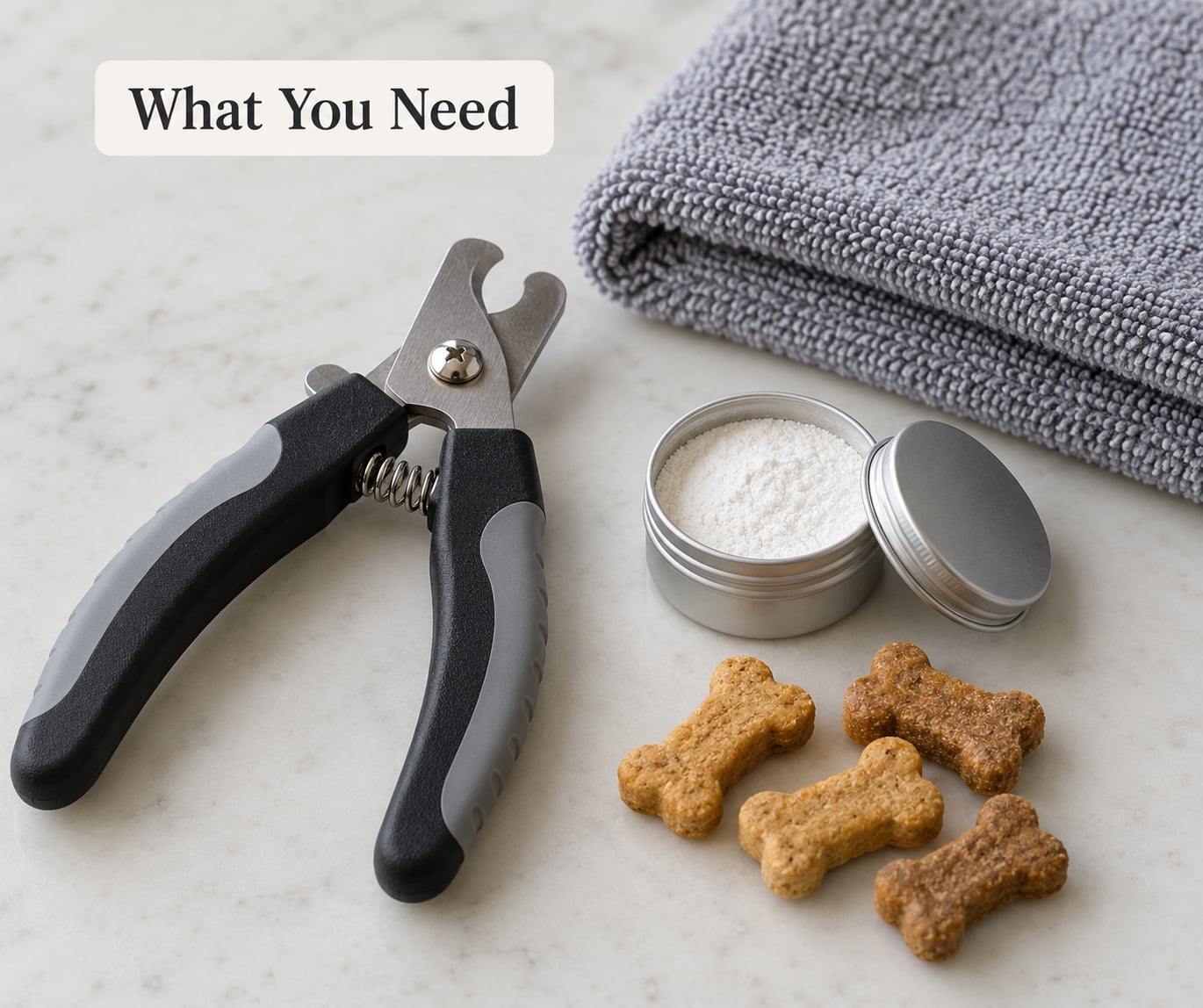
Gather everything before you bring the dog over. Reaching for scissors while holding a squirming paw is how most people end up with a cut they did not plan.
- Sharp clippers or a grinder sized to your dog. The blade should fit the nail so it cuts through in one squeeze without you having to crush it. Blades that are too small work slowly and bruise; blades that are too big slip sideways.
- Styptic powder or a styptic pencil. This is the single most-recommended purchase for anyone trimming at home. Owners on r/puppy101 and r/DogAdvice mention it unprompted in almost every thread about bleeding nails.
- High-value treats. Use something your dog would not normally get: freeze-dried liver, small bits of cheese, cooked chicken. Ordinary kibble is not enough for a dog who already hates the routine.
- A non-slip surface. A textured towel or a rubber grooming mat on a table or the floor. A dog who slides learns nothing except that nail trimming is scary.
- A second pair of hands, if you have one. Optional, but for a large, slippery or anxious dog it makes the difference between a trim and a disaster.
Which tool actually cuts cleanly
Scissor-style and plier-style clippers cut with two blades closing in parallel. That clean squeeze is why most trainers and veterinarians recommend them. Guillotine-style clippers drop a blade onto a slot, and a nail that is wider than the slot gets crushed and split by the closing edge instead of cut. If that is all you own, it will still work, but a dull guillotine blade is the main cause of nails that crack down the middle.
Electric grinders are worth considering for a dog who panics at the sudden snap of a blade, or for the last pass on a nail that catches. Friction heat is the catch, so keep the head moving and lift it away every second or two.
Step-by-Step: How to Clip Dog Nails Without Hurting Them
How to clip dog nails without hurting them: prepare your dog
Pick a quiet time of day when the dog is already settled, ideally after a walk or a meal rather than right before one. Sit the dog on a non-slip surface, or for a small dog, sit on the floor with the dog across your lap and its front paws over one of your forearms.
Before any blade comes out, spend two minutes on paws alone. Touch one paw, give a treat, let go. Then pick the paw up, give a treat, put it down. Repeat until the movement of the paw stops being interesting. This is desensitization, and it matters more than anything you do with the clippers later.
Then work on one nail per session. One calm nail counts as a successful trim, and owners on r/DogAdvice and r/grooming consistently describe it that way. Trying to finish all twenty nails in one sitting is how a dog learns that this thing is unbearable.
Find the quick before cutting
The nail is a hard keratin shell wrapped around a core of blood vessels and nerves. That core is the quick. Cut the shell and nothing hurts. Cut the quick and you get a sharp pain, a startling bleed, and a dog who will not let you near a paw again for months.
On light, clear or white nails, hold the paw up to a light source and you can see a pink or grey cone running most of the length of the nail, stopping a short distance short of the tip. The translucent hook beyond the quick is the part you cut. Where the quick ends, there is a small darker triangle; that is where you stop.
On black nails, forget looking for the quick. It is invisible. Instead you read the cross-section after every cut.
| Nail type | How you spot the quick | What a safe cut looks like | Where you stop |
|---|---|---|---|
| Light or clear nails | Pink or grey cone visible when held to a light | Translucent or white slice coming away | At the darker triangle where the pink ends |
| Black or dark nails | Invisible; read the cut face instead | Chalky, opaque, dry centre | When a small solid black or grey dot appears in the middle |
| Dewclaws and side nails | Same rules as any other nail, but often thinner | Same signals, smaller slices | Slightly earlier than the main nails, these curve more |
Some owners look for a pale circle in the middle of the nail and stop when it appears. Experienced trimmers on r/DogAdvice and r/grooming stop well before that circle ever shows, because by then the cut is already near the quick. That disagreement is worth knowing about: the circle is a late signal, not an early warning. On dark nails, take slivers far smaller than you think you need.
The black line you sometimes see running down the side of a dark nail is the quick showing through, and it is your best reference point. A crumbly grey flake that falls away, by contrast, is dry keratin shedding from the side of the shell. That is harmless.
Clip one small slice at a time
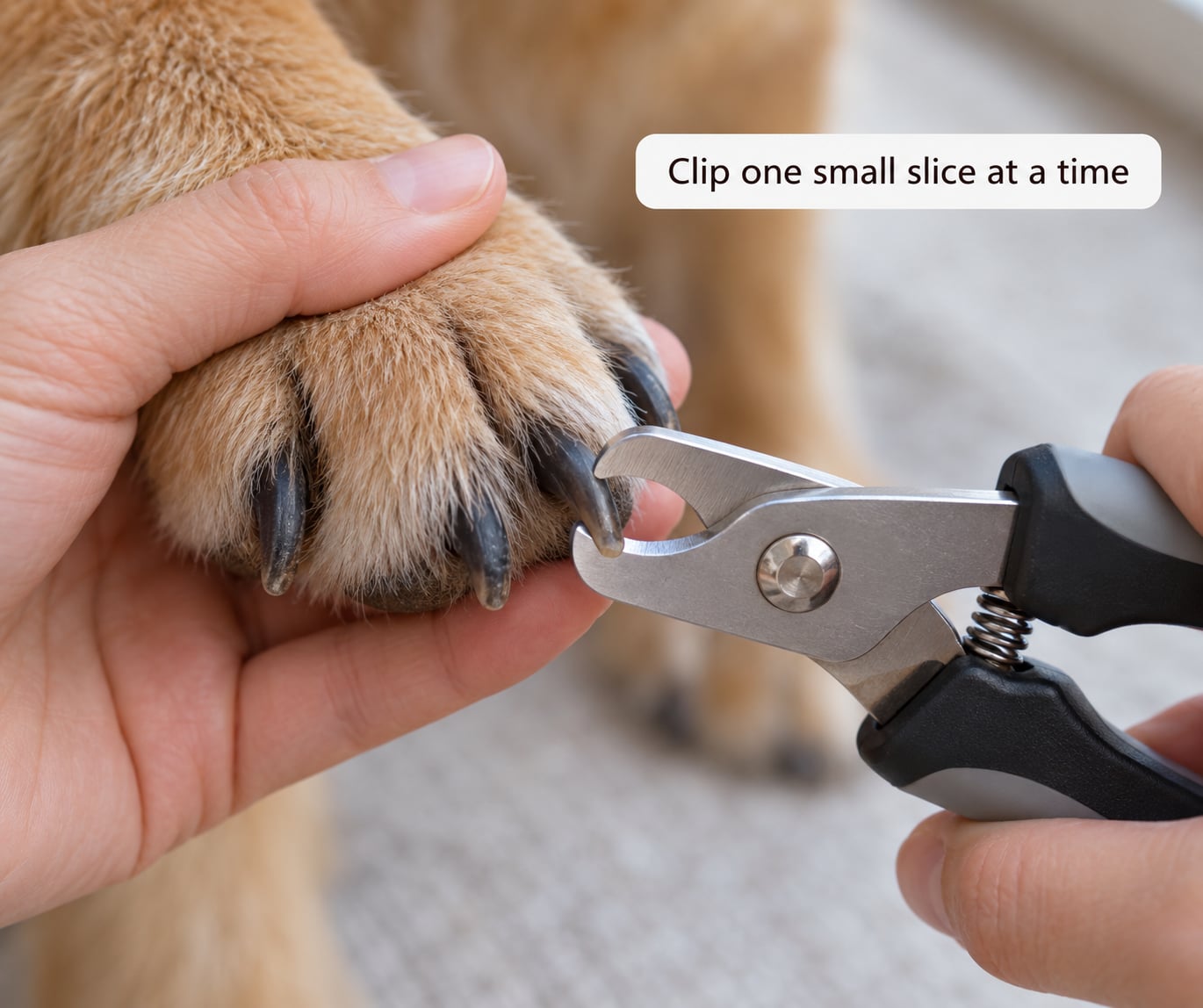
Hold the paw firmly but gently, with your thumb on top of the toe pressing very slightly back to extend the nail. Never twist the toe sideways and never squeeze the paw itself. Keep all your own fingers behind the blades so a flinch cannot send a blade toward your hand.
Place the blade a few millimetres from the tip, near where you want the final length, and close the clippers. One firm squeeze. If the nail resists and bends, stop and re-grab rather than forcing, because forcing is what cracks the shell.
Now look at the cut face before doing anything else.
- Opaque and chalky: you are in dead keratin. Take another thin slice.
- Translucent, slightly shiny: getting close. Take the smallest slice you can.
- A small solid black or grey dot in the centre: you have reached the quick. Stop immediately.
Aim for a length where the nail just clears the floor when the dog stands naturally, with a slight curve rather than a flat cut. Flat-cut nails leave sharp corners that splay outward. If a nail is already curled and overgrown, do not try to correct it in one go; bring a groomer in for the first trim.
Long double coats and curly coats hide the nail entirely. Push the fur back with your free hand or have a helper hold it, or you will cut at guesswork.
Finish and check every nail
Reward after each nail, not at the end. The timing teaches the connection: paw, blade, treat. Owners on r/puppy101 and r/DogAdvice describe the same pattern of delivering a lick of peanut butter before the clippers even appear, which works just as well.
Pause and stop the session if you see lip licking, paw jerking, a frozen body, repeated attempts to walk away, or a growl. Those are not defiance, they are information. Ending early and starting again tomorrow costs nothing; pushing through teaches the dog that their escape signals do not work.
A grinder needs the same discipline: one or two second contacts, the head kept moving so it never heats up, and a pause to lift it away. Touch the head to the nail to warm it first, then make contact, then lift. If it feels warm against your palm, cool it before going back in.
Finish with something pleasant. A walk, a chew, a game. Owners in r/goldenretrievers and other groups describe exactly this pattern: short trim, then favourite activity. It is a decent conditioning tool, not a consolation prize.
What to do if a nail bleeds
Nicking the quick is common, particularly on black nails, and it usually looks far worse than it is. Handle it calmly and your dog will usually forget it in minutes.
- Stop. Put the clippers down and out of sight before the dog reacts to the pain, because the movement of the blade is what most dogs remember.
- Apply styptic powder directly to the cut tip and hold firm pressure for a minute or two. A styptic pencil works the same way if that is what you have.
- If you have no styptic powder, press plain cornstarch or flour onto the tip with firm, unbreaking pressure for a couple of minutes. Owners use baking soda too, but cornstarch is the one that comes up most.
- Then wash and check. Rinse the paw with clean water, and expect the dog to be fine to go back to normal within a day.
Call your veterinarian if bleeding does not stop after about ten minutes of firm pressure and styptic powder, if the nail is torn or split at the base, if there is swelling, heat or discharge, or if the dog is persistently lame, licking the paw raw or refusing to put weight on it. A nail that curves and grows into the pad, or one that smells off, also needs a professional look.
Common Mistakes When You Clip Dog Nails
Trying to do all twenty nails at once
The fix is a session goal of one to three nails on a nervous dog. You will come back tomorrow. Two or three calm sessions a week beats one bad one every month.
Taking oversized slices
One big cut on an over-cautious nail is exactly how the quick gets opened. Cut smaller than feels useful, check, repeat. Slow beats bleeding almost every time.
Using dull clippers
A dull blade crushes and tears the shell instead of cutting it, which hurts far more than a clean squeeze. Replace the tool if it needs force, and oil the pivot now and then.
Gripping the paw too tightly
You are holding the toe between finger and thumb just enough to extend the nail. Wrapping the whole paw in your fist causes struggling, and a struggling dog is how a human finger gets cut.
Confusing the dewclaw with a side nail
The dewclaw sits higher up the inner leg and curls inward, with a small toe just next to it. Beginners frequently clip the wrong thing and leave the dewclaw long. Trace each claw with your fingertip and count them before you start.
Continuing through distress
Freezing, repeated pulling away, growling and nipping are all stop signals. Handle, calm, and finish another day. A dog who learns that signals work is the one who lets you trim next month.
Cutting while the dog is on a slippery surface
Every struggle on a slippery floor escalates. A rubber mat or folded textured towel removes most of the drama before you pick up a blade.
Assuming human clippers will do
Human nail clippers often crush a dog’s thicker, curved nail. Even for one session, borrow proper dog clippers or use a grinder.
Tips for an Easier Clipping Routine
Build the habit on off days
Paw handling does not have to mean clipping. Pick each foot up for two seconds, say yes, and put it down while you are on the phone or making coffee. Doing that on days when nothing happens teaches your dog that paws are boring and safe, which makes the trim days far easier.
Use a multi-day desensitization plan
For a fearful dog or a puppy, spread the work out.
- Days 1 to 3: clippers appear, a treat appears, clippers disappear. No contact with the nail at all.
- Days 4 to 6: add the sound of the blades opening and closing on your own hand, one squeeze per treat.
- Days 7 to 9: touch the closed blade to the paw, treat, release. Do this five times.
- Day 10 onward: one slice from one nail, then finish the session immediately with a good reward.
A lick mat smeared with peanut butter, used alongside this rather than instead of it, gives a dog something to do while a grinder runs.
Keep styptic powder in the same drawer as the clippers
Not a shelf, not a cupboard across the house. The two minutes you lose hunting for it in a panic is the difference between a dog who accepts a clumsy moment and one who panics.
Trim on a schedule, not when it looks bad
Every three to six weeks is a reasonable rhythm, shortened for dogs on hard pavement and lengthened for dogs who mostly live indoors on soft ground. Checking weekly keeps a nail from curling under, and short trims take minutes instead of an hour.
Never sedate a dog yourself with over-the-counter products
This comes up constantly, and the answer should be clear: do not give Benadryl, melatonin, or any other over-the-counter sedative without asking your veterinarian first. Some human products are not safe for dogs at that dose, and a sedated dog whose stress level spikes can be harder and more dangerous to handle, not easier.
Ask your vet what is appropriate instead. A prescribed calming medication, a second handler, or a groomer experienced with anxious dogs may all be reasonable, and a clinic that offers medicated trims can do the whole thing without you holding anything.
Let the professional take over when it makes sense
Book a groomer or a vet when nails are severely overgrown and curling, when the dog bites or panics consistently, or when your own grip, mobility, vision or back makes holding a large dog unsafe. That last reason is a perfectly valid one and worth naming out loud instead of pushing through it.
Frequently Asked Questions
How can I tell where the quick is in a black dog nail?
On black nails the quick is invisible, so you read the cut face after each tiny slice. A chalky, opaque, dry centre means you are still in dead keratin and can go a little further. A small solid black or grey dot in the middle of the cut face means you have reached the quick, so stop immediately. Also note the faint dark line running down the side of the nail, which shows where the quick lies underneath.
What should I do if I cut my dog’s nail and it bleeds?
Put the clippers down and out of sight, then press styptic powder onto the tip and hold firm pressure for a minute or two. Without styptic powder, cornstarch or flour pressed on hard for a couple of minutes works too. Most bleeding slows quickly and the dog is fine within a day. Contact your vet if it has not stopped after about ten minutes, or if there is swelling, discharge or persistent lameness.
How often should I clip my dog’s nails?
Most dogs need a trim every three to six weeks, though the gap varies widely. Dogs walking regularly on pavement or concrete wear nails down faster, while dogs living mostly indoors on soft ground may need less frequent trims. Check weekly and trim before the nail curls under the pad. Keeping nails short makes each session shorter and easier, which matters most for dogs that find trimming stressful.
How do I clip a puppy’s nails without scaring them?
Short sessions and rewards are everything. Days one to three, show the clippers and give a treat without touching the nail. Then add the sound of the blades opening and closing. Next, rest the closed blade on the paw for one second and treat. Once the puppy is calm with that, take one tiny slice and finish immediately with a reward. One nail a day is the standard advice from experienced owners.
Are nail grinders safer than clippers for dogs?
Neither is inherently safer; both work, and the grinder simply avoids the sudden snap that some dogs find frightening. Grinders let you take off a very small amount at a time and control the length precisely. The two risks are heat from friction and vibration, so keep the head moving, lift it away every second or two, and lift it fully if it becomes warm. Many owners use clippers first and the grinder as a finishing pass.
When should I stop trimming and ask a veterinarian for help?
Stop and contact a vet if bleeding continues after about ten minutes of firm pressure and styptic powder, or if the nail is split, torn or lifted at the base. Swelling, warmth, discharge or a strong smell need a same-day call. Also stop if the dog stays lame, licks the paw raw, or if the nails are overgrown and curling into the pads. Ask your vet about prescribed calming help rather than using over-the-counter sedatives.
Conclusion
The safest first move is not the clipper, it is the paw. Spend a few days teaching your dog that having a foot touched means treats, then take off slices small enough that each one surprises you a bit. Check the cut face, stop the instant you see the dark dot or reach the pink, and stop the whole session the moment your dog asks you to. Styptic powder in the drawer and a chat with your vet about any dog who panics will cover you for the rest.