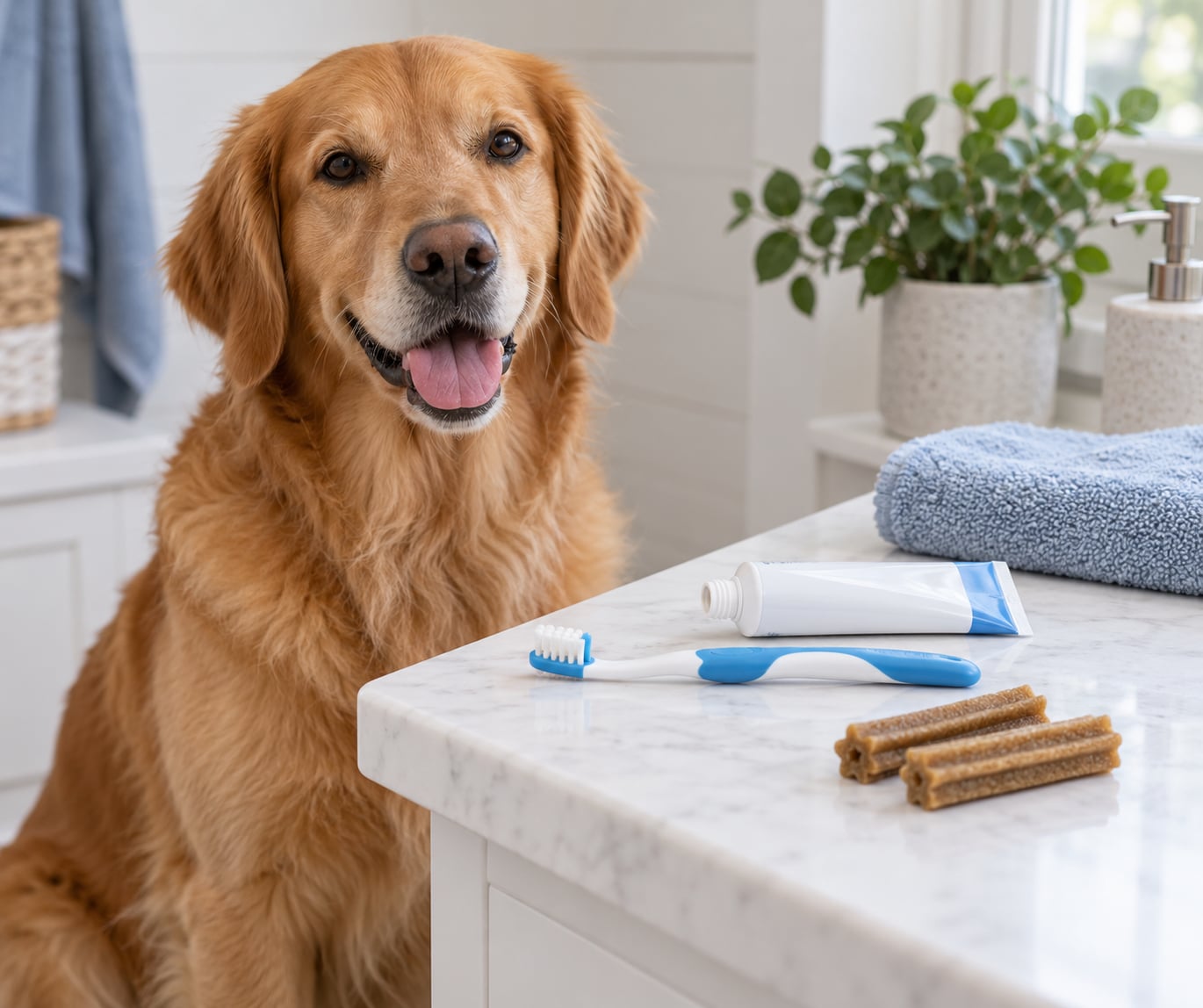
There are really two questions hiding in this one: how to brush a dog’s teeth, and how often to do it. Ideally you brush once a day, every other day is a workable minimum, and three sessions a week still does real work — most of the benefit comes from doing it often, not from doing it perfectly.
The catch is that the first two weeks decide whether brushing becomes a habit or a wrestling match. Get that part right and a session takes under a minute. A lot of owners spend months fighting with a toothbrush when a slower introduction would have worked in ten days.
Table of Contents
- What You Need
- How to Brush a Dog’s Teeth and How Often: Step by Step
- Common Mistakes
- Frequently Asked Questions
- How often should I brush my dog’s teeth?
- What can I do if my dog hates having its teeth brushed?
- Is it safe to use human toothpaste on a dog?
- Can dental chews replace brushing for my dog?
- Is it ever too late to start brushing an adult dog’s teeth?
- How do I know if my dog needs a professional dental cleaning?
- Conclusion
What You Need
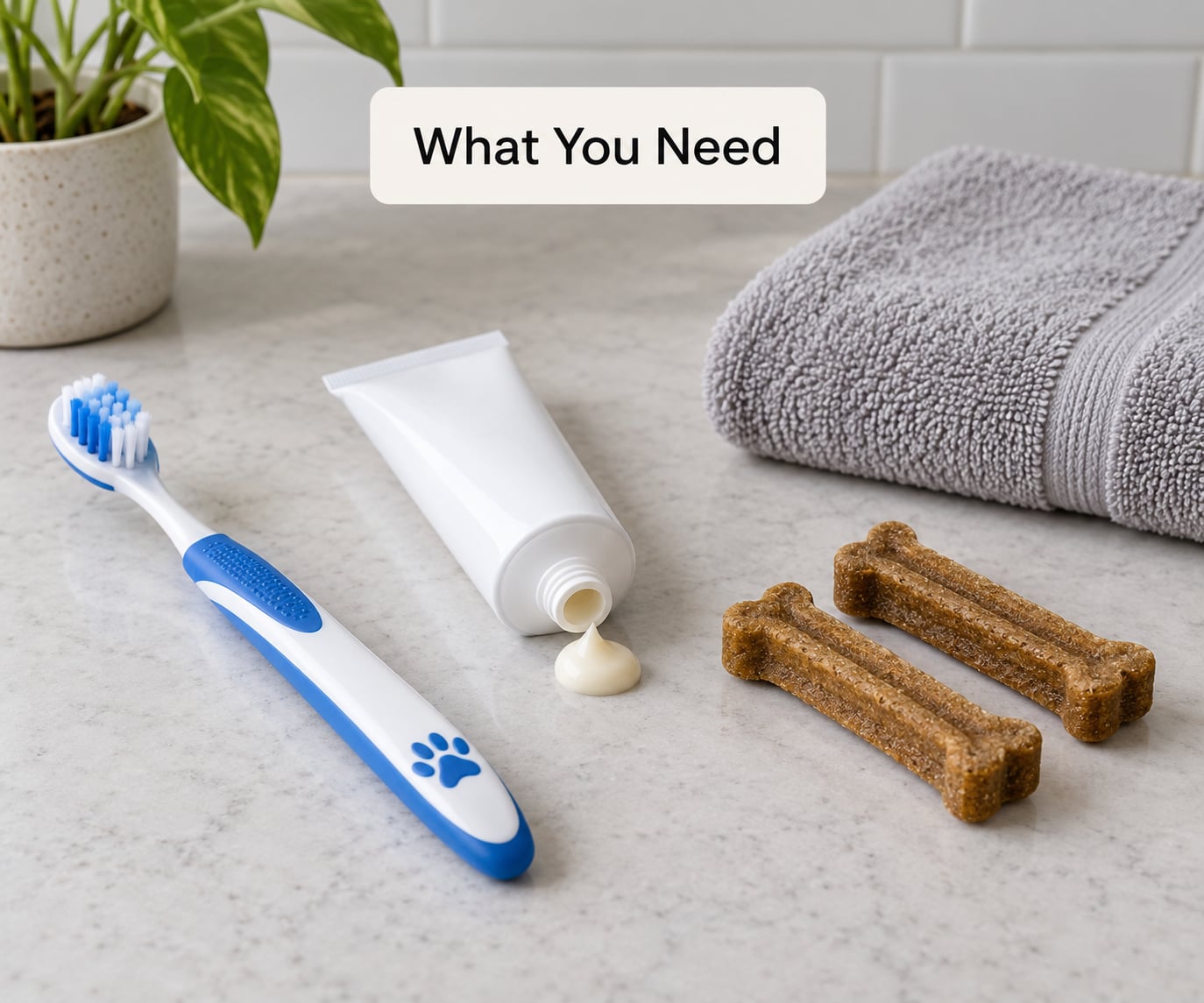
You do not need much. Most of the shopping list is about three things, and the rest is optional.
- A dog-specific toothbrush or finger brush. For most dogs a small head with soft bristles and a long angled handle reaches the back teeth far better than a human toothbrush, which is usually too wide. Finger brushes with a rubber nub and textured surface work well for small breeds and for the training stages.
- Veterinary dog toothpaste. Enzyme-based pastes in flavours like poultry or peanut butter are the reason some dogs accept brushing and others refuse. A pea-sized smear is plenty, more than that just makes a mess.
- Small, high-value treats. Something better than their everyday kibble, reserved only for dental sessions. Chews made for teeth are useful but they are a supplement, not the reward.
- A towel. Non-negotiable with squirming dogs, and it protects your hands as much as your floor.
- Optional: dental sticks, dental powder, or a water additive. These help between brushing sessions, and they matter a lot on the days your dog will not cooperate at all.
Size matters more than brand. A Chihuahua and a Labrador cannot share a brush head, and brushing with an oversized head is a fast way to lose your dog’s trust. Look for the smallest head that still covers a few teeth at a time.
Human toothpaste is the one thing you must never use. Many contain xylitol, which causes a dangerous and sudden drop in blood sugar in dogs, and all of them contain abrasives and fluoride that are not designed to be swallowed regularly. If your dog has already licked a human tube, call your veterinarian and say what the product was and roughly how much.
How to Brush a Dog’s Teeth and How Often: Step by Step
How Often Should You Brush a Dog’s Teeth?
Ideally, brush your dog’s teeth once a day; every other day is the minimum worth aiming for, and three times a week is a fair compromise. The reason frequency beats perfection is timing: plaque is a soft bacterial film that starts forming within hours of a meal, and it calcifies into tartar in roughly 48 to 72 hours. Once it hardens, no toothbrush will shift it, and only ultrasonic scaling under a veterinary dental cleaning will. Brushing at least every other day interrupts that window every single time.
| Frequency | What it controls | Verdict |
|---|---|---|
| Daily | Clears plaque before it mineralises; the only schedule supported consistently by research cited by veterinary dental groups | Best |
| Every other day | Stays inside the 48-72 hour window, so new tartar barely forms | Good minimum |
| Three times a week | Slows buildup noticeably; some tartar still appears over months | Acceptable |
| Weekly | Marginal control; useful as a bridge on days brushing is impossible | Better than nothing |
Most dogs show measurable signs of dental disease by age three, and periodontal disease is the most common diagnosis vets make in adult dogs. Brushing is the one home method with real evidence behind it, so if you can only manage two or three sessions a week, that is genuinely worth doing — just do not let a perfect week matter more than a steady month.
Step 1: Let Your Dog Explore the Toothbrush
Show the brush, hold it still, and let your dog come to it. Sniffing, licking and even chewing the bristles are all wins on this stage, and every one of them gets a treat. It usually takes two or three sessions of about five seconds before the brush stops being interesting enough to investigate.
Puppies can start this at around eight weeks, once they are settled and eating solid food. Their gums are sensitive and their teeth are still coming through, so keep sessions short and gentle, and expect a few sore days when adult teeth push through. Starting early is the single easiest route to a dog who treats toothbrushing as boring rather than terrifying.
If your dog is an adult who has never been brushed, nothing is lost. Toothbrushing helps at any age, even when the breath is already bad, because it still clears new plaque and slows further buildup. It will not remove tartar that has already formed — that needs a professional cleaning, and your vet should tell you so before you spend months hoping toothpaste will do it.
Step 2: Practice Touching the Mouth
Now touch the lips, lift them briefly, run a finger along the gum line, and touch the outer surface of a couple of teeth. Reward after each step, and separate the steps with a moment so your dog can register that something good just happened.
Signs of mild uncertainty are a turning head, a lip-lick or a brief freeze. Those mean slow down, not stop. Signs that a stage is too advanced are a growl, a snap, or a body that stiffens and tries to leave — at that point step back one stage and reward heavily for a few days before trying again. Forcing the mouth open on a dog that is not ready is how a nervous dog becomes a dog that bites the brush.
A toddler toothbrush or a finger wrapped in a clean damp cloth works well here. The goal is mouth contact, not cleaning, so put no paste on this stage unless your dog is enthusiastic about the taste.
Step 3: Brush the Outer Teeth Slowly
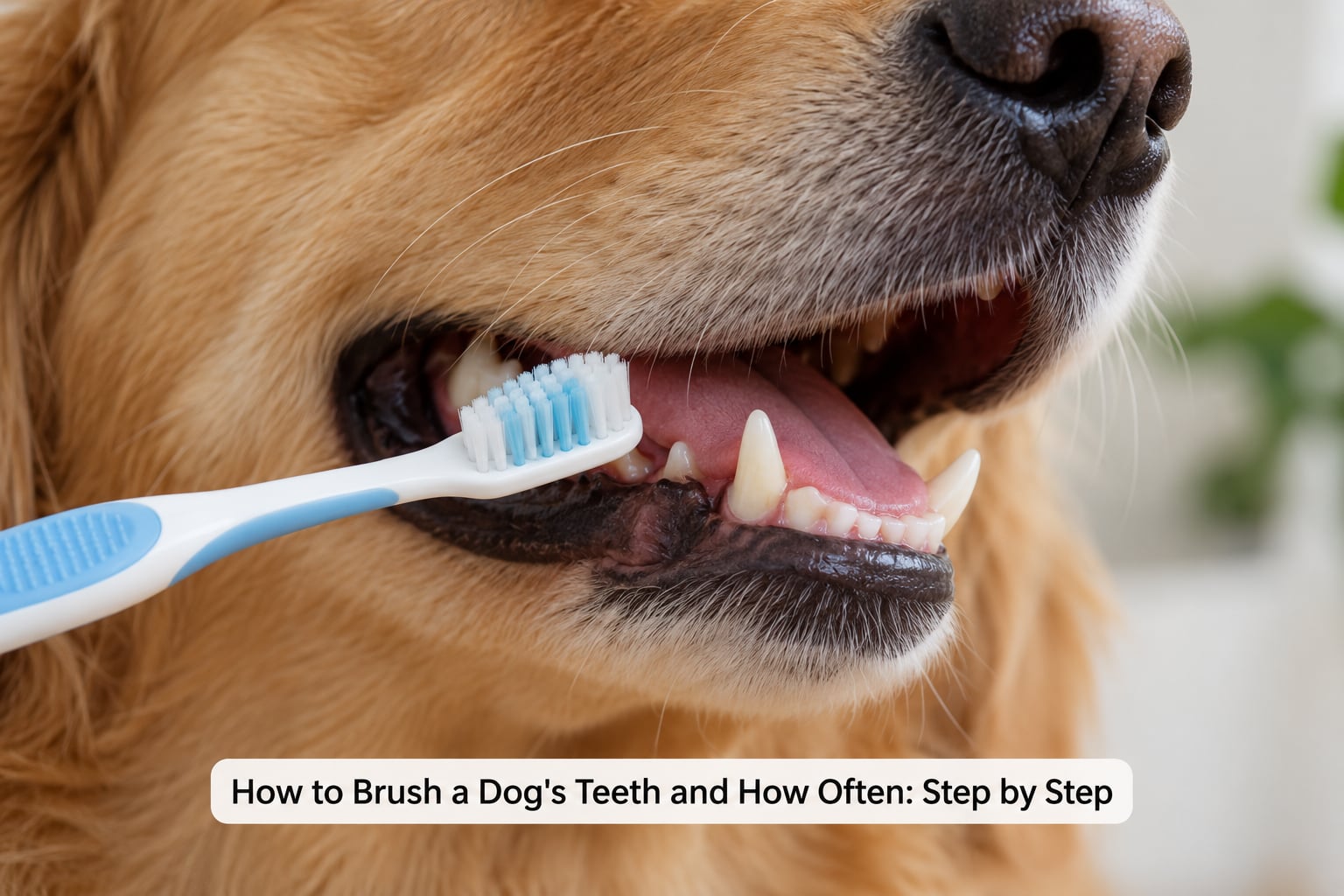
Put a pea-sized amount of paste on the bristles, lift the lip, and place the brush at roughly a 45-degree angle against the tooth so the bristles slide slightly under the gum line. That gap between tooth and gum is where plaque hides and where gingivitis starts, so it is the part worth angling into.
Work in small circles, a few teeth at a time, and never scrub. Start at the front where your dog can see you, then move along to the premolars and the big molars at the back, where the real plaque sits and where most owners stop too early. The outside surfaces — what vets call the buccal surfaces — hold most of the plaque, so they are where your time pays off.
You do not need to open the mouth or brush the tongue-side surfaces or the biting edges. Those surfaces are cleaned by chewing and by the tongue, and working them at home is the fastest way to lose a dog who was doing fine. Aim for about 30 seconds a side and stop there.
Step 4: Keep the Session Positive
Finish with a treat while the brush is still in the mouth, then stop. Ending early while your dog is still relaxed builds the habit faster than pushing on to a minute. From the dog’s point of view a forty-second session that ends well gets repeated tomorrow; a three-minute wrestling match is the reason brushing stops after the first week.
If your dog has a very small mouth or a short attention span, break the routine into pieces instead of shortening it. Thirty seconds on the right side one day, thirty seconds on the left the next, works well for Chihuahuas, Dachshunds and Corgis, where owners often describe the opposite problem: brushing worked fine as a puppy and got harder as the dog aged. Floppy-eared, crowded-mouth breeds such as Bulldogs and Pekingese need the same patience for the same reason, because there is less room and less tolerance.
Flavour matters more than owners expect. If your dog spits the paste out or turns away from the brush, try a different flavour before you change anything about your technique — the paste is often the whole problem. And when a session is genuinely impossible, a washcloth or a cloth-wrapped finger that your dog chews on gives you some mechanical scrubbing without a brush fight. Use dental chews or dental powder daily as the backup plan rather than the main plan.
Common Mistakes
- Using human toothpaste. Xylitol is toxic to dogs, and the fluoride and abrasives are not meant to be swallowed. Use a veterinary dog paste every time.
- Using a hard brush or an oversized head. Bristles that feel scratchy on your own finger are too hard for dog gums. Soft bristles and a small angled head make the whole routine kinder.
- Brushing too hard. Plaque comes off with gentle circles, not pressure. Force causes gum recession and teaches your dog that brushing hurts.
- Forcing the mouth open. Nobody can hold a full-size dog’s jaw comfortably and safely, and you do not need to. Lift the lips on the outside only.
- Skipping the back teeth. The big molars hold most of the tartar, and they are exactly where a quick five-second pass stops.
- Expecting to remove tartar at home. Brushing prevents new calculus; it cannot remove what has already hardened. That is a professional scaling job.
- Rewarding a struggling dog. If the treat only arrives after the squirming stops, you are teaching the fight. Reward the calm behaviour instead, and stop while things are still going well.
Book a veterinary dental assessment if you notice bad breath that brushing does not improve, gums that are red, swollen or bleeding, a dog who chews on one side, pawing at the mouth, loose or missing teeth, facial swelling, or drooling more than usual. Bleeding gums in particular are not something to wait out, because they signal active inflammation rather than simple tartar.
Frequently Asked Questions
How often should I brush my dog’s teeth?
Ideally once a day, and every other day is the minimum worth aiming for. Plaque calcifies into tartar in about 48 to 72 hours, so brushing more often than that clears the film before it hardens. Three sessions a week is a real compromise and much better than nothing, because the goal is keeping new plaque from mineralising rather than cleaning everything perfectly.
What can I do if my dog hates having its teeth brushed?
Slow the introduction down and split the routine into stages. Let your dog sniff and lick the brush for several sessions, reward mouth touches before any brushing, and stop while the session is still going well. Change the toothpaste flavour, try a finger brush or a cloth-wrapped finger, and keep each attempt under a minute. If your dog growls or snaps, step back one stage rather than pushing through.
Is it safe to use human toothpaste on a dog?
No. Many human toothpastes contain xylitol, which causes a sudden and dangerous drop in blood sugar in dogs, and all of them contain fluoride and abrasives that are not designed to be swallowed. Use a veterinary dog toothpaste every time. If your dog has already licked from a human tube, contact your veterinarian with the brand name and a rough idea of how much was eaten.
Can dental chews replace brushing for my dog?
They help, and they are worth keeping in the routine, but they do not replace brushing. Chews work by mechanical friction and they mostly contact the larger chewing surfaces, while plaque builds along the gum line, especially on the outer surfaces of the premolars and molars. Think of chews as what you do on the days brushing is not happening, rather than as a substitute.
Is it ever too late to start brushing an adult dog’s teeth?
No, and it is never pointless. Brushing at any age still clears new plaque, slows further tartar and reduces gingivitis, even when the breath is already bad. What it will not do is remove calculus that has already hardened on the teeth; that requires ultrasonic scaling during a professional dental cleaning, so talk to your vet about timing.
How do I know if my dog needs a professional dental cleaning?
Your vet will tell you, but the signs you can watch for at home are bad breath, red or swollen gums, bleeding after brushing, a dog who chews on one side, pawing at the mouth, loose or missing teeth, and excessive drooling. Tartar you can see along the gum line is a clear sign. X-rays catch problems under the gum that no amount of home care will reveal.
Conclusion
The first thing to do is smaller than it sounds: show your dog the toothbrush, let them sniff it, and reward the interest. Do that for a few days before you touch a single tooth, then add mouth touches, then the outer surfaces of the back teeth at a 45-degree angle. Aim for daily brushing with a veterinary dog paste, and treat every-other-day as a genuine win rather than a failure.
Keep dental chews in the mix for the days your dog will not cooperate, and arrange regular veterinary dental care, because brushing prevents new tartar and cannot remove old. Persistent bad breath, bleeding or swollen gums, loose teeth, chewing on one side, facial swelling, pain, or a dog eating less all need a veterinarian’s attention rather than a better brushing technique.