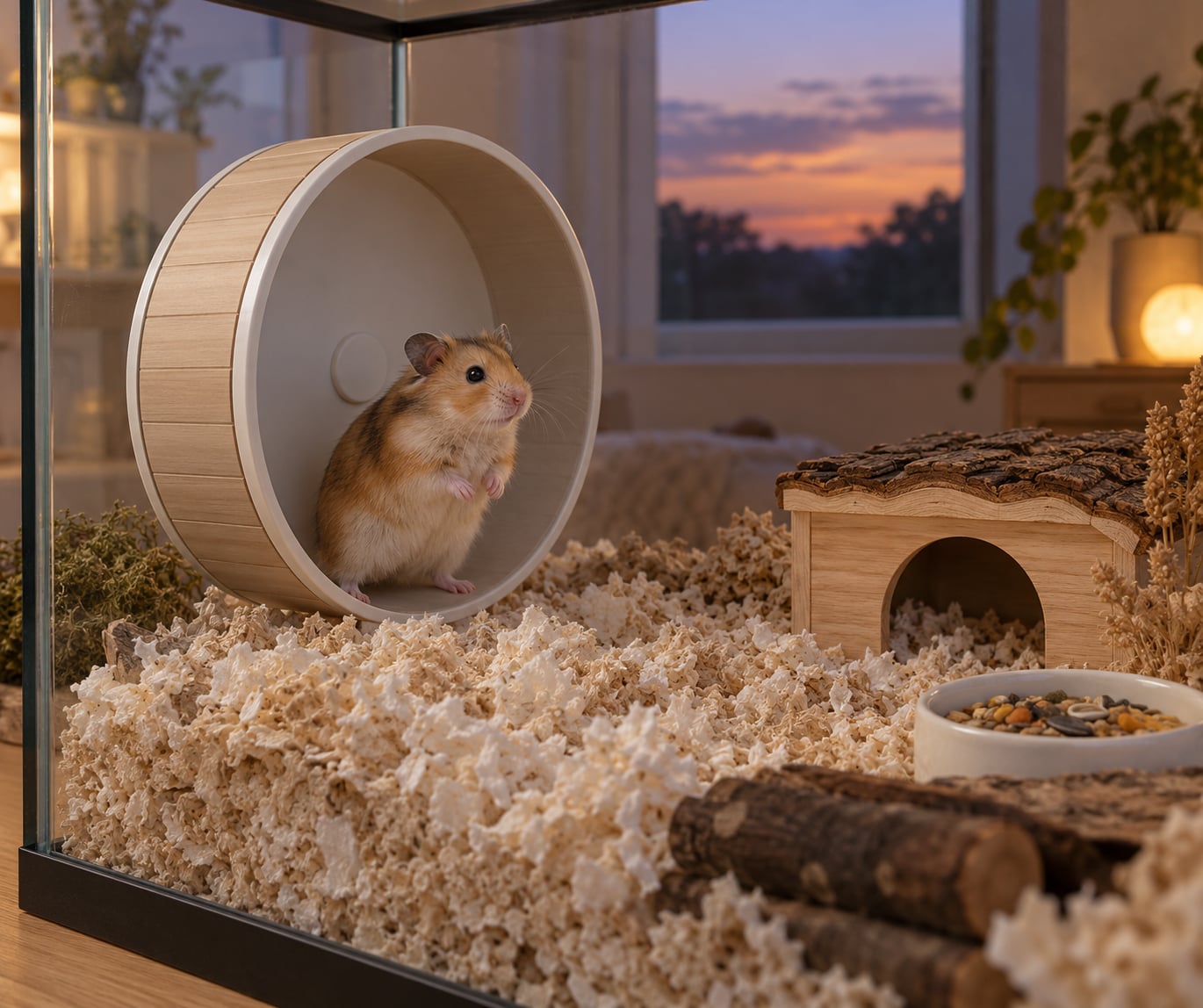
If your hamster is awake and gnawing the bars at night, that is usually two separate things happening at once. Being active after dark is completely normal for a crepuscular or nocturnal animal. Biting the bars is not normal enrichment, it is a signal that something in the setup is missing. The short answer to why is my hamster awake all night and biting the bars is that the activity is normal and the chewing is not, and the fix almost never lives at night. It lives in the cage your hamster spends its daylight hours in.
Having watched this pattern a lot in small-pet groups, the diagnosis is almost boringly consistent: too little space, too little to do, or an environment that stresses the animal. Bar biting is a message, not a bad habit, and you cannot punish a message into silence. This guide walks through how to read the behavior, how to measure whether your enclosure is actually big enough, which changes make the biggest difference first, and the handful of signs that mean a vet, not a bigger cage.
Table of Contents
- Is a hamster awake at night normal?
- Why is my hamster awake all night and biting the bars?
- Common reasons for nighttime activity and bar biting
- How to tell whether the behavior is normal or concerning
- How to stop bar biting without hurting your hamster
- Why nighttime behavior may point to a cage or husbandry problem
- When should you take your hamster to the vet?
- Frequently Asked Questions
- Conclusion
Is a hamster awake at night normal?
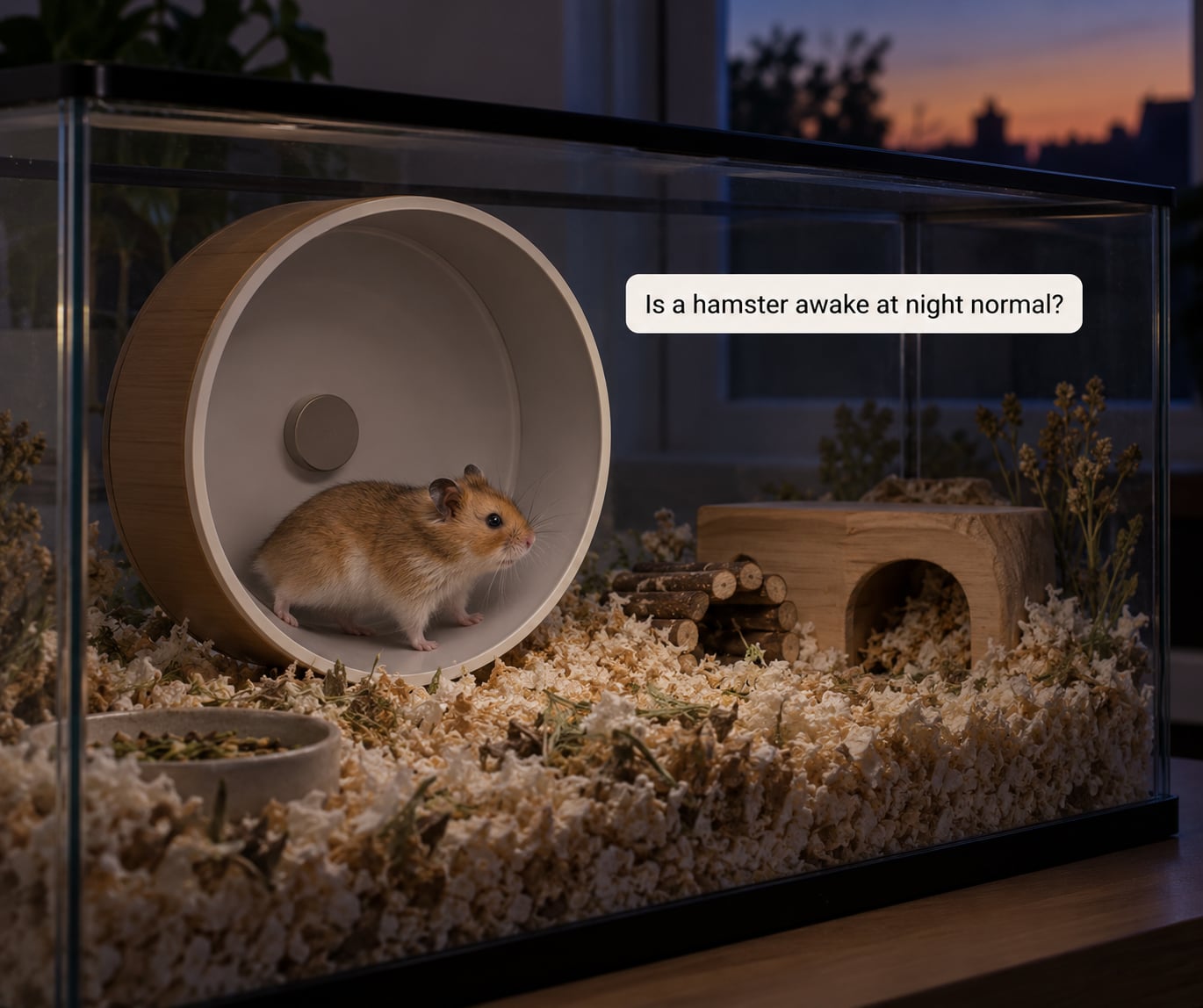
Yes. A hamster awake at night is not a problem in itself. Hamsters are crepuscular and nocturnal, meaning their natural activity peaks around dusk and runs through the dark hours when predators are less likely to find them.
In the wild that pattern is built into the body clock. In captivity nothing changes it. Your hamster will typically sleep roughly 12 to 14 hours spread across the day, wake around dusk, run, dig, forage, groom and wheel until the early hours, then drop again and sleep through the morning.
Typical healthy nightly activity includes running on the wheel, digging into the bedding, rearranging the substrate, climbing and climbing down, and eating and drinking at odd hours. Grooming through the night is also normal.
What you are actually listening for is the sound. A hamster running a wheel makes noise, and a hamster chewing metal bars makes a different, sharper noise. The wheel noise is fine. The chewing noise is the one worth investigating, because it points at an unmet need rather than normal nocturnal energy.
Why is my hamster awake all night and biting the bars?
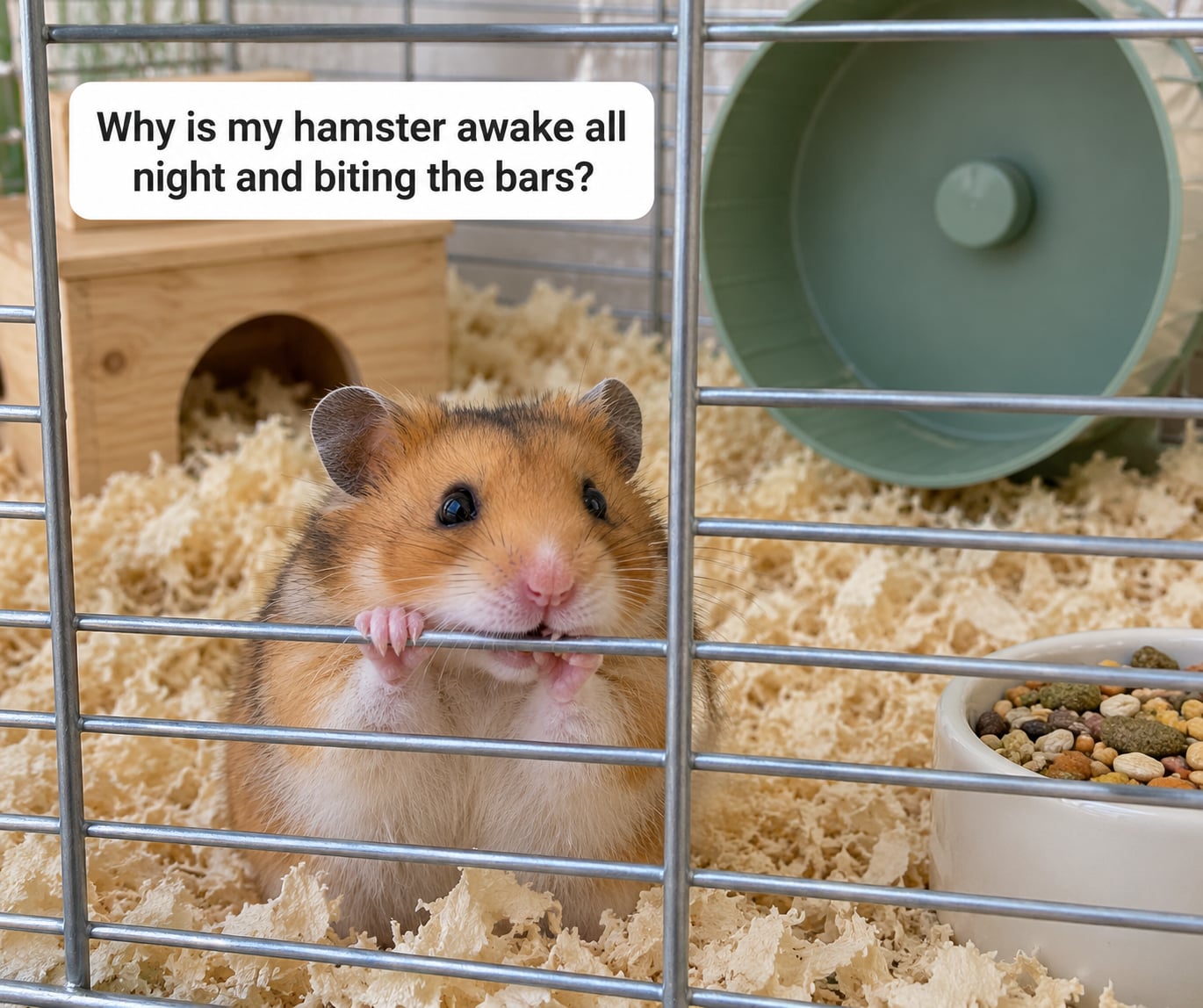
A hamster awake all night and biting the bars is usually telling you that its nocturnal energy has nowhere to go. Bar biting is a displacement behavior: the animal has a strong drive to run, dig, forage or chew, and the bars are the most stimulating object in a barren enclosure. Most often the cause is a small cage, thin enrichment, a mismatched wheel, stress from noise or light, or pain. It is rarely disobedience.
The main causes, roughly in the order they show up in practice:
- The enclosure is too small. Continuous floor space matters more than total size or the number of levels. See the measurement section below.
- Nothing to chew, dig or forage. If the bars are the only chewable thing in the cage, the bars get chewed.
- A missing, undersized or wire-surfaced wheel. No night-time running means the energy has no outlet.
- Stress from the room. A cage beside a television, a busy hallway, a window with street light, or a spot that is too bright or too cold at night.
- Teeth that need wearing down. Incisors grow continuously, and a diet with no hard food can push the animal to gnaw on metal to compensate.
- Discomfort or illness. Bar biting that appears suddenly in an older hamster often accompanies dental pain or other health problems.
That last point is the one people miss. A hamster that has always nibbled occasionally and then starts chewing hard every night, in a large enriched cage, with weight loss, deserves a vet appointment rather than another chew toy.
Common reasons for nighttime activity and bar biting
1. The natural nocturnal schedule
Before you change anything, work out whether the animal is simply awake and busy or awake and stuck. A hamster that wheels, digs, hides, grooms and sleeps in normal cycles through the night is doing exactly what it is built to do.
A useful test is to watch for ten minutes with a light on. Moving between activities, using the whole cage, and settling normally all point to a healthy night routine rather than a problem.
2. Boredom and lack of enrichment
Boredom is the most common driver owners can actually fix. A hamster with no digging depth, no hides to choose from, no foraging challenge and no chew will create its own entertainment, and the bars win by default.
Enrichment that works well: deep substrate for burrowing, several hideouts so the animal always has a choice, tunnels made from cardboard tubes, a sand bath, scatter feeding spread across the bedding instead of a bowl, and foraging toys like a puzzle feeder with seeds hidden inside.
3. An undersized enclosure
This is where guidance conflicts, and the disagreement is worth naming. Some welfare sources quote around 450 square inches of continuous floor space for a Syrian hamster and around 360 for a dwarf. Other organizations, including RSPCA and PDSA, argue for considerably more, in the 600 to 800 square inch range for a Syrian and 450 to 600 for a dwarf.
Both sides agree on the direction. If your hamster is bar biting, measure and see where you fall. The RSPCA and PDSA, two of the welfare bodies most often cited on hamster husbandry, lean toward the higher end of those ranges, and the Merck Veterinary Manual describes dental and behavioral problems that trace back to undersized housing. Treat any figure you read as a baseline to exceed, not a finish line.
Measuring takes a minute: measure the length and the width of the usable floor, multiply, and count only space the hamster can actually move through. Platforms, shelves and levels do not add to the total.
4. Teeth that need wearing down
Hamster incisors grow roughly 1 to 2 mm per week and never stop. In the wild they are worn down by hard seeds, grains and constant digging. A seed-based or soft-food diet with no gnawing material can leave teeth long enough to cause pain when eating.
Chewing the bars in that situation is not a preference. It is the animal trying to fix a dental problem, and the metal can chip the enamel or knock a tooth out of alignment. Once teeth are damaged, the issue becomes dental and needs an exotic vet rather than a cage upgrade.
5. Stress and an uncomfortable environment
Hamsters are prey animals with sensitive hearing. Night-time bar biting shows up often after a move to a new room, a full cage clean, a vet visit or a change in the household. Owners on small-pet forums report exactly this pattern, and it also shows up in the first two to three weeks after adoption.
Other stressors include a cage near a TV or speaker, a hallway light left on, a draft from an air conditioner, a hamster repeatedly woken during the day, and strong smells such as smoke, sprays or cleaning products near the enclosure.
6. Social pressure and boredom-driven repetition
A single corner of the cage gets chewed far more than the rest. Experienced hobbyists read that as scent marking combined with habit, because the corner has become the anchor point where the behavior started.
The fix is to take that corner away as an option. Put a chew, a small hide or a sand dish in that exact spot so the corner is occupied by something better.
One myth to clear up early: a second hamster will not fix this. Syrian hamsters are strictly solitary and must live alone. Some dwarf species can be paired, but only with an adult pair introduced correctly, and even then a companion treats loneliness, not boredom or a small cage.
How to tell whether the behavior is normal or concerning
| What you observe | What it usually means | What to do first |
|---|---|---|
| Runs the wheel, digs, grooms and sleeps in cycles | Normal nocturnal activity | Nothing. Leave it alone. |
| Occasional gnawing on one spot, then moves off | Exploration, teeth maintenance | Add chew sticks and applewood pieces |
| Long bar-biting sessions every night, same corner | Boredom, habit, or an inadequate corner | Fill that corner, add enrichment, review size |
| Frantic running, frantic rearranging, repeated escape attempts | Chronic stress or stereotypic behavior | Fix enclosure size, bedding depth and room placement |
| Drooling, wet chin, weight loss, refusing hard food | Dental overgrowth or malocclusion | Exotic vet, same day if severe |
| Sudden change in a settled older hamster | Pain or illness | Stop troubleshooting and see a vet |
| Patchy hair loss, wounds on nose or mouth | Bar-biting injury or barbering stress | Exotic vet, soften or remove bar access |
Grading it simply: occasional chewing is curiosity, frequent chewing is an unmet need, compulsive chewing with self-injury is a welfare problem that needs professional help. Worry about why is my hamster awake all night and biting the bars when the chewing is constant, when the animal is also eating less, or when the behavior changed suddenly in a hamster that had been calm.
Worth noting too: loud squeaking, freezing, hiding more than usual, or a hamster that no longer climbs, are stress signals even without any bar chewing at all.
How to stop bar biting without hurting your hamster
Change one thing at a time, then watch three nights before moving on. That one habit separates owners who solve this in two weeks from owners who shuffle the cage around for months without knowing which change mattered.
1. Audit the enclosure size first
Measure continuous floor space as described above. If it is under the recommended figure for your species, no amount of decoration compensates. A bigger enclosure is the highest-impact change you can make, and it is the one owners consistently report as the turning point.
2. Add deep substrate
Aim for roughly 6 to 10 inches of bedding deep enough that the hamster can burrow out of sight. Deep bedding gives digging, burrowing and arranging, three of the behaviors a hamster wants most, and it is the cheapest fix in this whole guide.
3. Provide safe chewing material
Good options include applewood sticks, untreated willow branches, coconut shell pieces, seagrass mats, dried loofah, and cardboard tubes or egg cartons. Avoid pine or painted wood, and treat anything scented as a gamble.
Give several options at once. A hamster with one chew gets bored with that chew in a few days, and boredom sends it straight back to the bars.
4. Fit the right wheel
A Syrian hamster generally needs a wheel around 10 to 12 inches in diameter, and a dwarf around 8 to 10 inches. Runners need a solid surface, not wire spokes, which can injure feet and cause fur loss. A hamster that is not running at night is an inactive hamster.
5. Make food a task
Scatter feed rather than filling a bowl, use a puzzle feeder, or hide seeds in the bedding. Foraging takes up far more of a hamster’s waking hours than eating does, and searching fills the night with purpose.
6. Stabilize the room and the light cycle
Keep the cage away from screens, speakers, kitchen smells and busy doorways. Keep the room genuinely dark and quiet at night so the animal’s clock is not being argued with.
7. Do not reinforce the behavior
If your hamster comes to the bars when it hears you, it learns that the bars produce attention. Quietly ignore the bar-biting and reward calm behavior instead, such as sitting quietly while your hamster explores near you.
What not to do
- Do not put vinegar, lemon juice, hot sauce or soap on the bars. Forum advice on this is dangerously split. These substances can burn a hamster’s mouth and it will lick the residue, and most of them simply move the chewing to a different spot.
- Do not remove the wheel. It is the single worst common mistake, and it takes away the only healthy outlet the animal had.
- Do not punish. No shouting, no tapping the bars, no grabbing the nose. You will only add stress and teach the hamster to distrust your hands.
- Do not keep an undersized starter cage. Pet-store starter cages fall far short of what any welfare body recommends.
- Do not rely on bitter deterrent spray as the fix. It may be applied to plastic or wooden chew items under a vet’s advice, but it does nothing about space or boredom.
How long does it take to stop?
Realistic expectations matter for your sleep as much as for the hamster. Forum reports most often describe two to three weeks of reduced chewing after a proper upgrade, and several weeks for a deeply established habit. Some owners never fully stop; they reach a low baseline chewing that is normal curiosity rather than distress.
If your own sleep is the immediate problem, a glass or solid-walled tank is quieter than a wire cage, and earplugs or a white-noise machine are a reasonable bridge while the enclosure changes take effect.
Why nighttime behavior may point to a cage or husbandry problem
When the bar biting is loud, constant and rhythmic, it is usually pointing at the cage rather than at the hamster. Here is the audit, in order.
Too little floor space. Already covered, and the most common finding. Levels do not compensate; a hamster cannot run a full circle in a tower.
A wire cage in a bedroom. Wire is cold, transmits every sound and offers nothing to dig into. A bin cage or a large glass tank with deep bedding is quieter, warmer and more natural, with smooth, solid sides that block the chewing target completely.
Bar spacing that is too wide. This matters most for dwarf hamsters and juveniles. A head or a limb can fit through a gap the adult owner barely notices. Wide gaps also invite edge chewing, because the bar is the only rigid edge in the cage.
The wrong wheel. Undersized, wire-spoked, missing or jammed. If you hear no wheel noise at night, this is the first thing to check.
Shallow bedding. Under a few inches, digging becomes impossible and the animal sits in a bare space with nothing to do.
Placement and lighting. Direct sunlight shifts through a cage all day and disturbs the light-dark cycle. A constantly lit room does the same at night.
Full cage clean-outs. Owners frequently report a spike in bar chewing right after a deep clean. The smell is gone and every familiar landmark is moved. Spot-clean instead and leave the layout mostly alone.
When should you take your hamster to the vet?
Book an appointment with a vet experienced in small mammals or exotic animals if you notice any of the following.
- Drooling, a wet chin or mouth, or facial swelling
- Weight loss, or refusing hard food that it used to eat
- Teeth that look long, crooked, or chipped and misaligned
- Bleeding from the gums, or wounds on the nose or lips from chewing
- Patchy hair loss, or over-grooming
- Diarrhea or wet, droppings stuck to the fur and rear end
- Rapid breathing, laboured breathing, or persistent lethargy
- Sudden behavior change in a hamster that had been settled
- Any hamster that is not eating or not drinking
Sudden onset, especially in an older hamster, deserves same-day attention rather than a list of environment changes to try first.
Never give a hamster human medication. Painkillers such as paracetamol and ibuprofen are toxic to small mammals, and a hamster in pain hides it, so pain is easy to underestimate. Let a vet handle dosing and diagnosis.
This article is general husbandry information and not a substitute for veterinary care. If any red flag above appears, contact an exotic-animal vet or your nearest emergency animal hospital.
Frequently Asked Questions
How do I stop my hamster from chewing the bars at night?
Start with enclosure size: measure continuous floor space and aim well above the minimum for your species, since roughly 600 to 800 square inches is commonly recommended for a Syrian. Add 6 to 10 inches of bedding, a correctly sized solid-surface wheel, several hideouts and safe chews such as applewood sticks. Fix the room lighting so nights stay dark. Change one thing at a time and give each change three nights before judging it.
Why does my hamster bite the bars?
Almost always because of unmet needs: a cage with too little usable space, no deep bedding to dig into, nothing safe to chew, or stress from noise, light or smells. Bar biting is a displacement behavior, meaning the animal redirects a drive it cannot otherwise express. Occasionally the cause is dental pain, especially if the chewing started suddenly in an older hamster or comes with drooling or weight loss.
What does it mean if my hamster is biting the bars?
It is a welfare signal rather than misbehavior. A quick rubbing or brief gnaw is normal curiosity and teeth maintenance. Long nightly sessions in the same corner usually mean boredom or habit. Relentless chewing alongside squeaking, frantic running, hair loss or wounds on the mouth points to chronic stress, and chewing combined with drooling or refusing hard food points to a dental problem that needs a vet.
What are the signs of an unhappy hamster?
Look for changes, not single behaviors. Squeaking, freezing, hiding more than usual, appetite changes, weight loss, over-grooming, patchy hair loss, lethargy, or resting in a corner instead of using the whole cage. Chewed or bleeding nose and lips mean the bar biting has gone too far. A hamster that is suddenly less active is often an unwell hamster, because a healthy one spends most of the night running, digging and foraging.
What smell do hamsters hate?
Strong artificial scents bother them most: smoke, aerosol sprays, air fresheners, scented candles, vinegar, essential oils and heavily perfumed cleaning products. A hamster’s sense of smell is far more sensitive than ours, so a room that smells clean to you may smell overwhelming to them. Keep the cage away from kitchens and sprays, air out fresh paint, and ventilate before returning the animal to its usual spot.
Will getting a second hamster stop my hamster biting the bars?
Usually no. Syrian hamsters are strictly solitary and must live alone, so pairing them risks serious fighting. Some dwarf species can be cohoused as adult pairs, but a companion addresses loneliness, not boredom or an undersized cage. An animal with too little space will chew the bars whether it is alone or not. Fix the enclosure, enrichment and routine first, and only consider a companion for dwarf species with expert guidance.
Conclusion
Nighttime activity is your hamster being normal. Bar biting is your hamster asking for something, and the reason why is my hamster awake all night and biting the bars almost always sits in the cage rather than in the animal. Start by measuring the continuous floor space, then add depth to the bedding, a correctly sized solid wheel and several safe chews. Change one thing at a time and give it three nights before you judge it.
If the chewing comes with drooling, weight loss, wounds, breathing changes or a sudden shift in a hamster that used to be calm, stop adjusting the cage and call an exotic-animal vet. Never give human medication to a hamster.